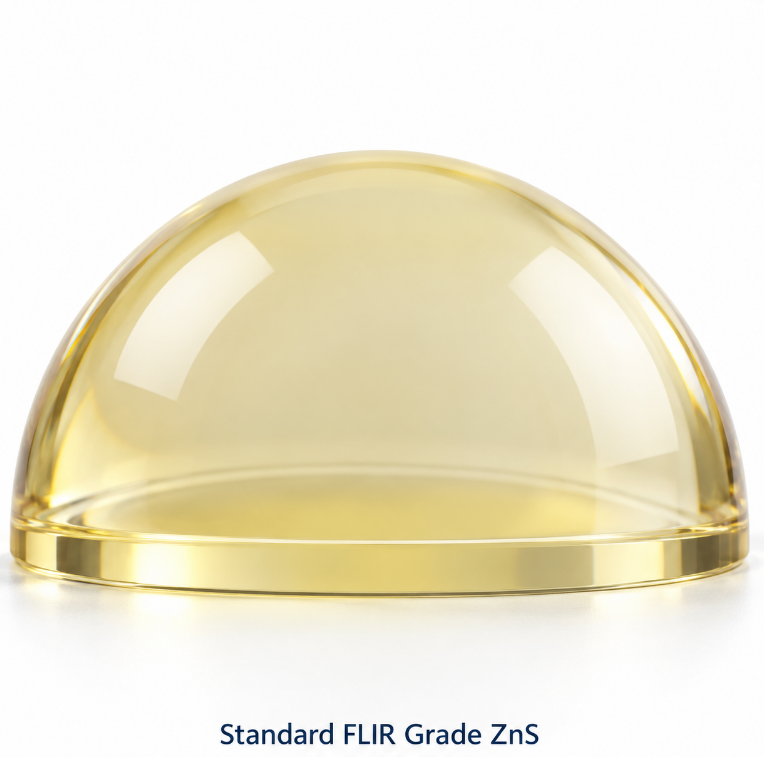
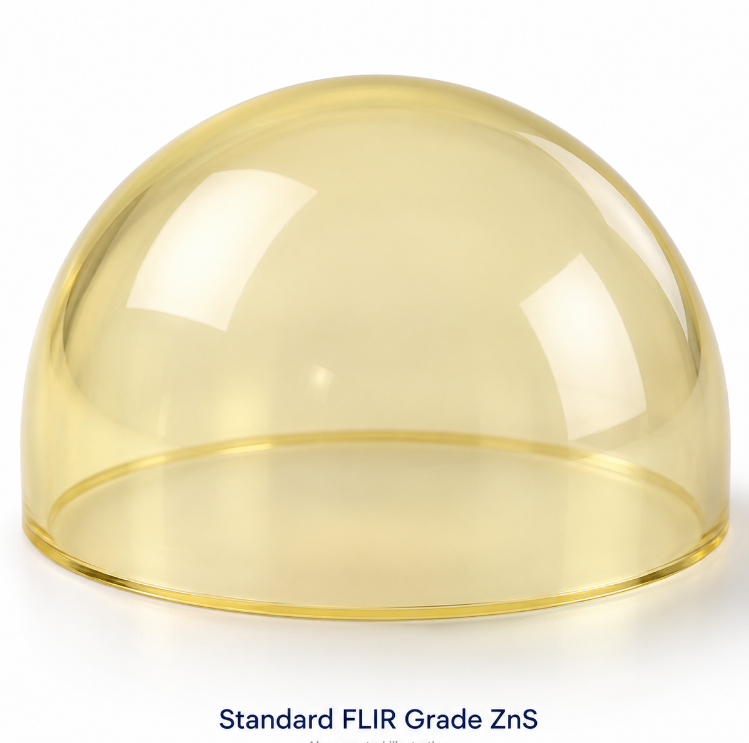
Custom Standard FLIR-Grade ZnS Hemispherical Dome Manufacturer
Source custom CVD zinc sulfide hemispherical domes for thermal infrared cameras and sensor housings. Felix Glass reviews your dome geometry, infrared operating band, polished surfaces and AR-coating requirements together, so the quotation matches the finished component you need. Send a dimensioned drawing for prototype and repeat-order pricing.
Key Parameters
Common Pain Points When Sourcing Standard FLIR-Grade ZnS Hemispherical Domes
Real-world challenges faced by optical engineers, procurement managers, and project teams.
A grade label does not define a finished dome.
Standard, regular and FLIR-grade are common procurement terms. The material source specification, actual thickness and finished optical requirements must still be stated in the order.
Visible appearance can mislead selection.
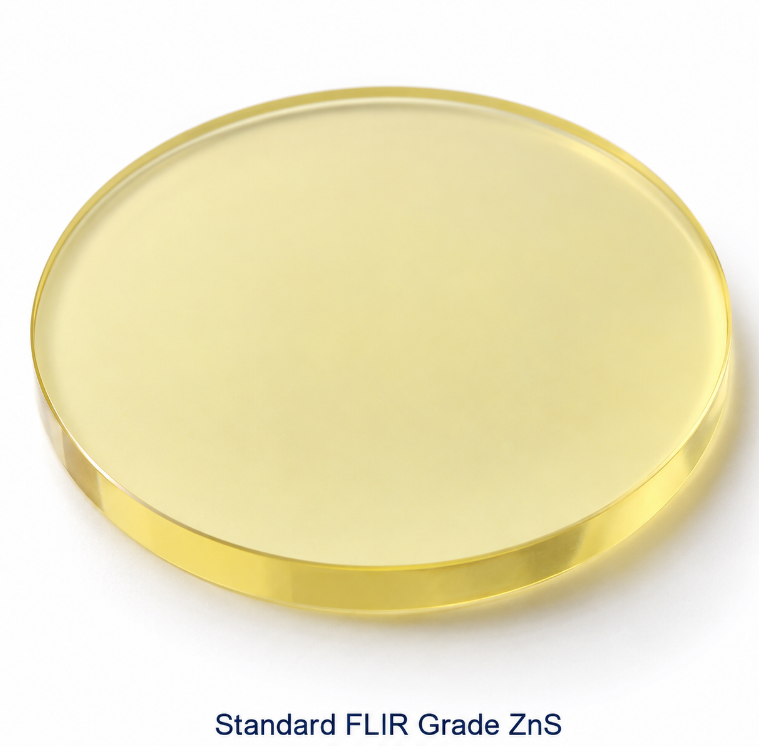
A pale-yellow or hazy appearance is not an infrared transmission test. Select and accept the dome using spectral and optical measurements at the required thermal imaging wavelengths.
An IR coating can miss the system requirement.
A coating specification at normal incidence alone may not cover a wide-field dome. Identify the angle range, clear aperture and complete detector band before coating review.
Targeted Engineering Solutions
Build a quote around the material, geometry and optical acceptance your system actually requires.
Specify standard ZnS for the thermal imaging task
Keep the material callout focused on regular CVD ZnS. If visible imaging through the same dome is required, flag that requirement before material approval rather than assuming this grade will meet it.
Quote the complete mechanical and optical interface
Provide radii, wall thickness, height, rim, datums and the sensor field of view. Agree which dimensions and optical characteristics are critical before discussing price.
Make prototype results useful for repeat orders
Define the drawing revision, coating acceptance and inspection plan in the sample order. Record approved changes so subsequent orders use the same technical basis.
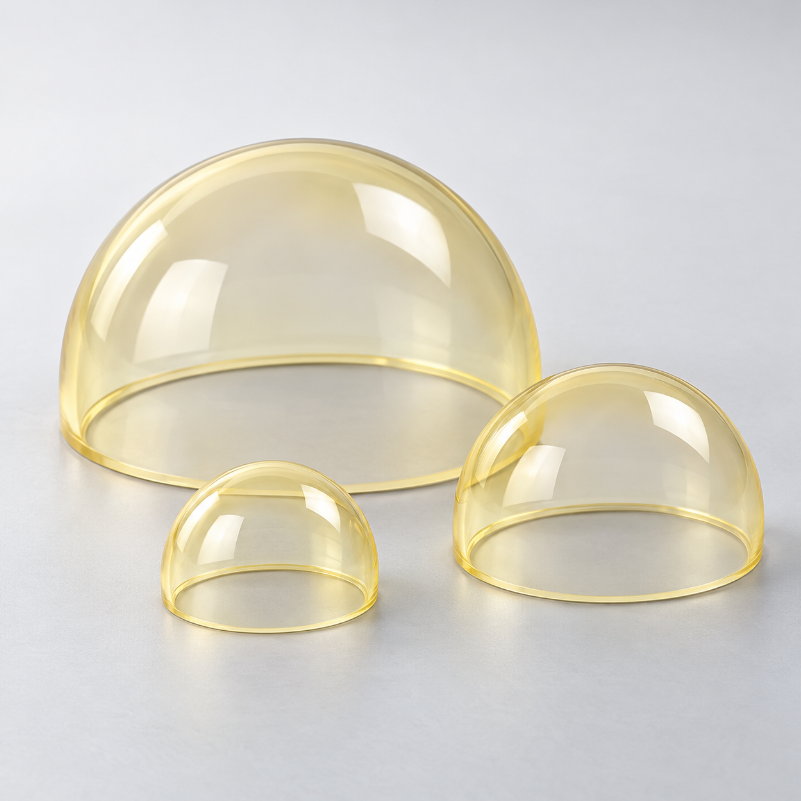
Five Engineering Decisions for a FLIR-Grade ZnS Dome
Five core engineering dimensions that define Standard FLIR-Grade ZnS Hemispherical Domes performance and reliability.
Regular CVD ZnS
Identify the standard / FLIR-grade substrate, supplier specification and source-record requirements.
Hemispherical shell
Define outer and inner radii, wall thickness, height, concentricity and clear aperture.
Optical surfaces
Specify S1 / outer and S2 / inner surface quality, figure and relevant transmitted wavefront.
Thermal IR coating
Set operating band, incidence angles and transmission or reflection requirements for each coated surface.
Inspection & interface
Agree reports and test setups; include mounting, handling and environmental requirements.
Available Configurations
Three configurations within the standard FLIR-grade ZnS dome family. Dimensions and coating scope follow your approved drawing.
Uncoated FLIR-Grade ZnS Dome
For substrate evaluation or systems whose optical budget permits uncoated surfaces.
- Regular CVD ZnS substrate
- Defined polished outer and inner surfaces
- Acceptance includes reflection losses at both surfaces
LWIR AR-Coated ZnS Dome
For thermal imaging with a clearly specified long-wave infrared band.
- Provide exact band limits, such as the required 8–12 µm interval
- Identify S1 / S2 coatings and incidence angles
- Specify finished-dome transmission and verification scope
Custom Rim or Flange ZnS Dome
For drawing-specific thermal sensor housings.
- Define rim or flange geometry and mounting datums
- Identify sealing lands and non-optical zones
- Review loads, edge geometry and assembly qualification
Technical Specifications
Use this specification checklist for your RFQ. Numeric tolerances and performance commitments are confirmed in the quotation and approved drawing.
| Parameter | Value / Specification |
|---|---|
| Product | Custom hollow hemispherical dome made from standard / regular CVD zinc sulfide (ZnS). |
| Material grade | FLIR-grade / regular ZnS, identified by the agreed supplier specification. This page does not specify HIP-treated multispectral ZnS or Cleartran®. |
| Application focus | Thermal infrared imaging and sensing. Visible image transmission is not an acceptance claim for this grade. |
| Spectral selection | Regular ZnS is commonly considered for LWIR operation, including 8–12 µm. Specify your exact interval; material data are not a finished-dome guarantee. |
| Extended LWIR or other bands | For an 8–14 µm requirement, obtain data across the full interval at the proposed thickness and coating. MWIR or other bands require a separate spectral suitability review. |
| Outer / inner dimensions | Provide outer and inner diameters or radii, overall height, wall thickness and concentricity. The dimension set must describe a consistent geometry. |
| Mounting interface | Specify rim width, flange if required, datums, edge chamfers, sealing lands and permitted non-optical zones. |
| Clear aperture / field of view | Mark optical zones on S1 and S2 and provide field angles, sensor placement and any vignetting requirement. |
| Dimensional tolerances | State a tolerance for each critical feature. Manufacturing feasibility is confirmed against the actual drawing. |
| Surface quality | Specify scratch-dig or another agreed inspection criterion and the applicable zones on both optical surfaces. |
| Figure / transmitted wavefront | State PV or RMS, measurement wavelength, aperture and test geometry. A dome needs an agreed optical measurement configuration. |
| Coating specification | Uncoated or application-specific IR AR coating under review. Define surfaces, band, incidence-angle range, polarization where relevant, and environmental test needs. |
| Transmission acceptance | Specify minimum or band-average transmission, spectral interval, angle, wall thickness and whether acceptance applies to the finished dome or an agreed witness sample. |
| Environment / durability | Provide operating temperature, humidity, cleaning, abrasion, pressure differential and mounting loads. Material selection does not establish a qualified assembly rating. |
| Reports / traceability | Agree material documentation, dimensional inspection, surface checks and any spectral or wavefront reports in the quotation. |
| Price / MOQ / lead time | Prototype and production quantities are quoted against the same drawing revision. Tooling, coating development and specialized inspection are identified where applicable. |
Typical Applications
Application examples for engineering evaluation; these are not claims of completed customer projects.
Industrial thermal camera housings
A custom optical shell for cameras monitoring equipment or industrial processes, with transmission matched to the detector band.
Outdoor infrared sensing
A protective dome option for environmental or facility-monitoring sensors. Define weather exposure, cleaning and coating durability requirements.
Wide-field thermal imaging assemblies
Hemispherical geometry reviewed with the sensor position and field of view. Dome shape alone does not guarantee low image distortion.
Research and OEM thermal instruments
Drawing-specific domes for infrared experiments, prototype housings and repeat-production instruments with agreed acceptance criteria.

Manufacturing Capabilities
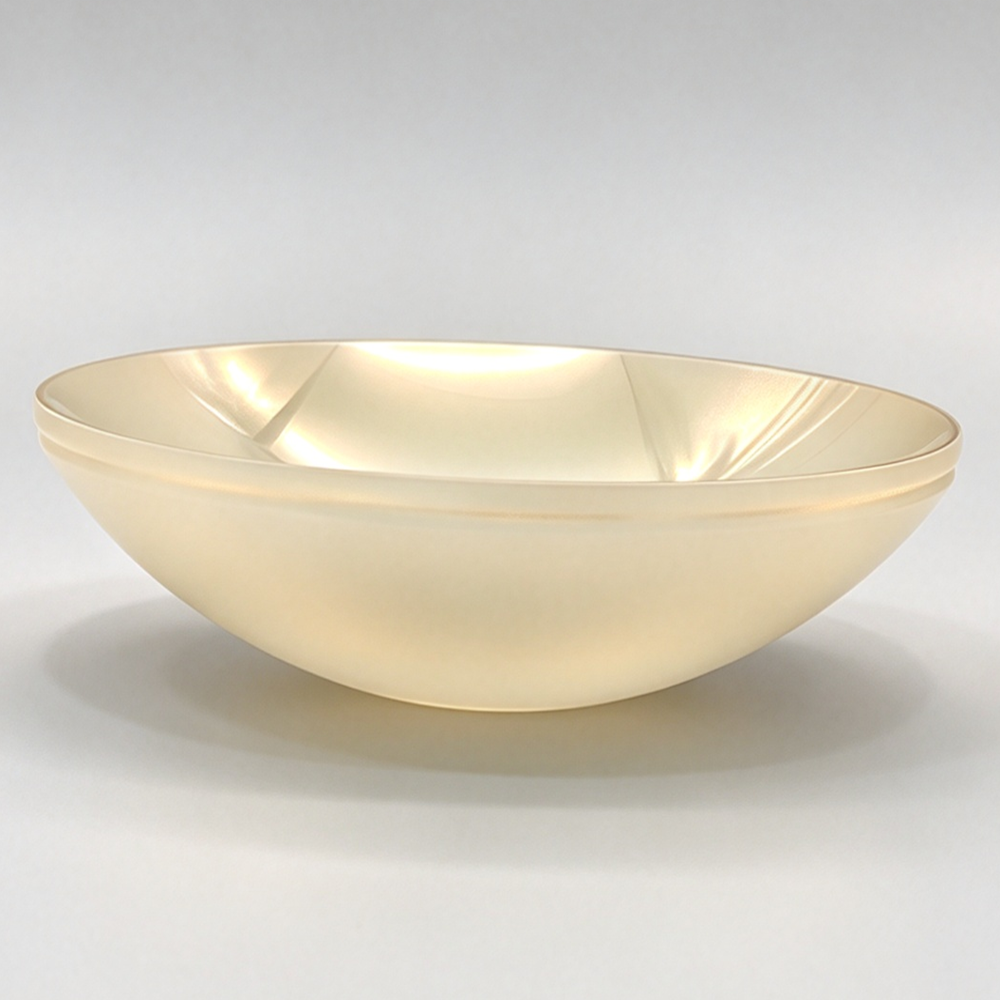
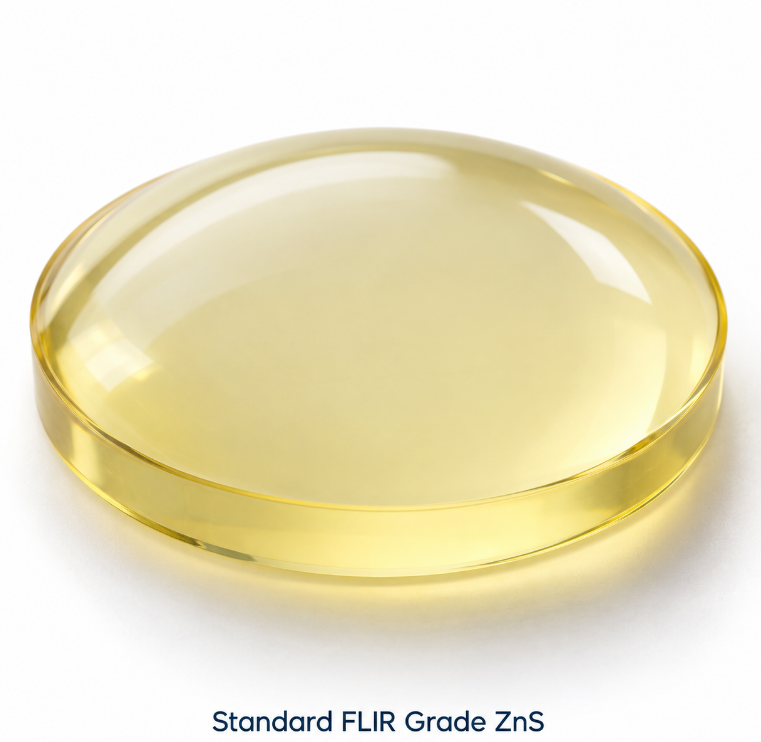
Discuss material sourcing, dome fabrication, coating and inspection with Felix Glass. Product imagery is illustrative; request relevant manufacturing evidence for your project.
Dome Fabrication & Inspection
- Direct project contactDongguan Felix Glass Co., Ltd. Send your drawing and quantities to James for fabrication and quotation review.
- Material specificationConfirm regular CVD ZnS, the source specification and any required material documentation before release.
- Geometry reviewEvaluate radii, wall thickness, rim details, clear aperture and critical tolerances as one component.
- Surface and coating scopeDefine polishing on S1 and S2 and any IR AR coating with the required spectral and angle conditions.
- Inspection agreementIdentify included dimensional and optical checks, sampling, report format and any additional testing charges.
- Shipment protectionAgree packing and handling requirements for the dome and coated surfaces. Request relevant production evidence during quotation.
Delivery Workflow
Standard project steps for custom optical orders, from initial RFQ through final shipment.
Submit RFQ
Drawing, IR band, coating and quantities.
Confirm Scope
Resolve material, geometry and test requirements.
Review Pricing
Check unit price, one-time charges and timing.
Approve Revision
Release the drawing and inspection plan.
Inspect & Ship
Complete agreed checks and protective packing.
Sample / Prototype
Schedule confirmed after drawing and scope review.
Bulk / Mass Production
Schedule confirmed for the approved revision and quantity.
Expedited Service
Feasibility and additional charges require confirmation.
Material & Production Workflow
Regular CVD ZnS and the order-specific fabrication route for a thermal infrared dome.
Standard / regular CVD zinc sulfide
ZnS is a polycrystalline optical material produced by chemical vapor deposition. Regular-grade ZnS is used for infrared optics; its visible appearance should not be used as proof of thermal transmission or component quality.
Separate from multispectral HIP ZnS
This page covers regular FLIR-grade material. HIP-treated multispectral ZnS serves a different optical requirement, particularly where visible transmission matters. Any material change requires a specification review.
Coating and finished-part verification
An AR coating can reduce reflection in its design band. It does not remove bulk absorption or automatically qualify the dome for every IR wavelength, field angle or exposure condition.
01 · Material
Confirm regular CVD ZnS blank and required source documentation.
02 · Geometry
Generate the approved inner and outer dome geometry.
03 · Finish
Polish the optical zones to the agreed surface and figure criteria.
04 · IR Coating
Apply the approved S1 / S2 coating scope where specified.
05 · Inspection
Complete agreed measurements, reporting and packing.
Frequently Asked Questions
Common questions from engineers and procurement teams sourcing Standard FLIR-Grade ZnS Hemispherical Domes.
It is regular-grade CVD zinc sulfide used for infrared optical components. FLIR-grade is a common material designation; the order still needs an identified material specification and finished-part acceptance criteria.
Multispectral ZnS receives additional HIP processing to improve visible clarity and reduce scatter. Standard FLIR-grade ZnS is a separate material choice for infrared use. Do not substitute grades without reviewing the optical and mechanical requirements.
Its visible appearance can differ from water-clear multispectral material. Appearance varies with the material and thickness and does not establish infrared transmission. Use the agreed spectral and optical inspection results for acceptance.
Regular ZnS is commonly used in this LWIR region, but suitability depends on thickness, surface losses, coating, field angles and image-quality requirements. Provide the actual detector band and optical budget for review.
Only an agreed and verified finished-part requirement can be guaranteed. Request spectral data covering the entire interval, especially the long-wavelength end, at the proposed thickness and coating. An LWIR label alone is insufficient.
Do not assume regular FLIR-grade ZnS meets visible image-quality requirements. Identify any visible channel before material selection; a separate multispectral material assessment may be needed.
Specify S1 / outer and S2 / inner surfaces individually. Include band limits, angle range and transmission or reflection criteria. Coating feasibility and verification depend on the actual dome geometry.
Send outer and inner radii or diameters, wall thickness, total height, clear aperture and rim or flange details. Mark datums and tolerances and include a drawing revision. A STEP model may supplement the PDF drawing.
No. Finished-component and assembly behavior depends on geometry, surface condition, mounting, defects and load conditions. Specify the required qualification tests; this page does not assign a pressure or impact rating.
Identify material records, dimensional checks, surface-quality inspection and any spectral or wavefront reports. Measurement methods, sampling and specialist test costs must be agreed in the quotation.
They depend on blank size, geometry, tolerances, coating, inspection and quantity. Submit prototype and repeat-order quantities together. The quote should identify tooling and other one-time charges where applicable.
Email James or use the form with your approved drawing, regular ZnS specification, IR band, coating and quantities. Include expected demand, required reports and delivery destination. Keep the approved revision and any sample-test changes documented.
Still have questions? Our engineering team is ready to help.
Contact Our TeamREQUEST A CUSTOM QUOTE
Send your dimensioned drawing, regular ZnS specification, full IR band, S1 / S2 coating and quantities. James will coordinate the technical and quotation review.