N-BK7 Laser Optical Lenses and Prisms for Industrial Marking Equipment
N-BK7 optical glass provides a balanced combination of visible-spectrum transmission, refractive index uniformity, and practical machining cost for industrial fiber laser marking, engraving, and micro-machining optical systems. Felix Glass Co., Limited supplies drawing-based N-BK7 lenses, beam splitter prisms, and protective windows for US-based industrial laser equipment manufacturers, optical engineering teams, and system integrators who require repeatable optical performance across production quantities.
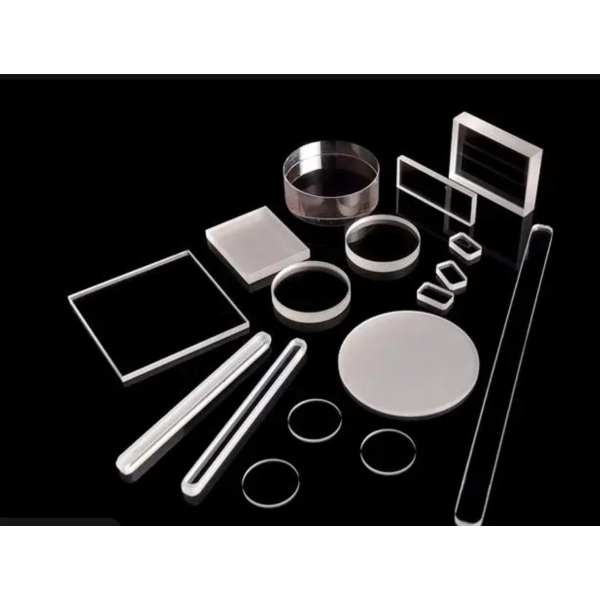
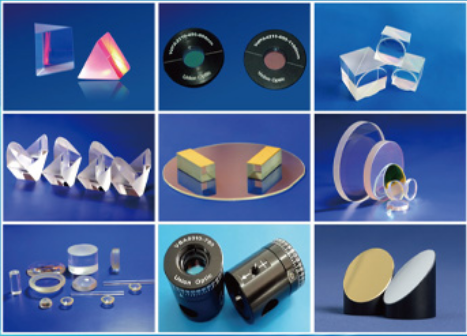
Direct answer: Standard N-BK7 laser optics from Felix Glass include plano-convex and plano-concave lenses, right-angle and beam splitter prisms, and protective windows with visible-band AR coating. Custom diameter, center thickness, radius, surface quality, and coating specifications are reviewed against the customer drawing. Production routing covers CNC curve generation, precision polishing, vacuum coating, and interferometric inspection.
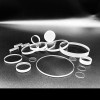
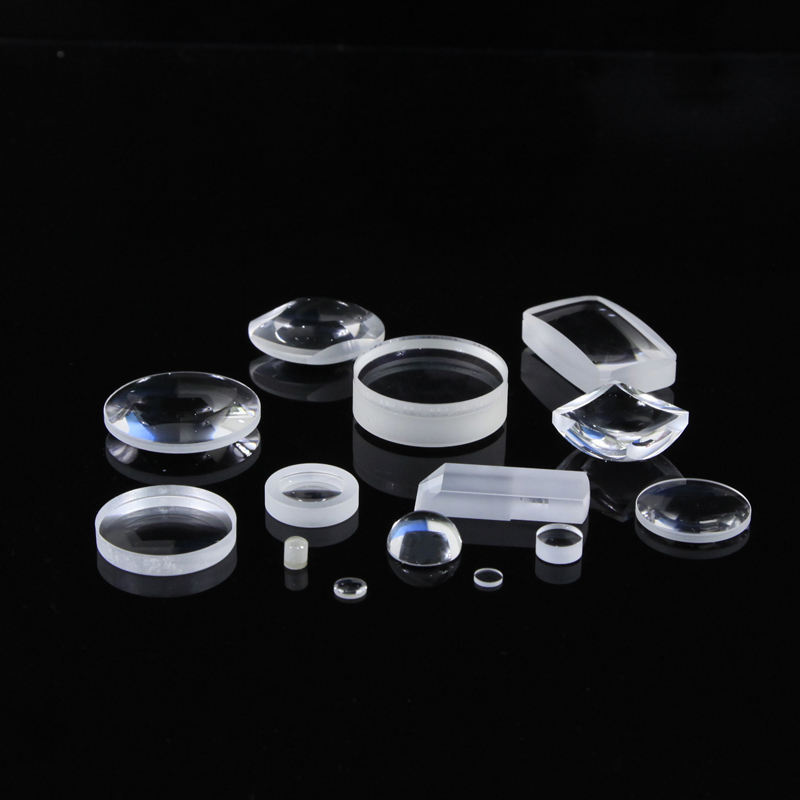
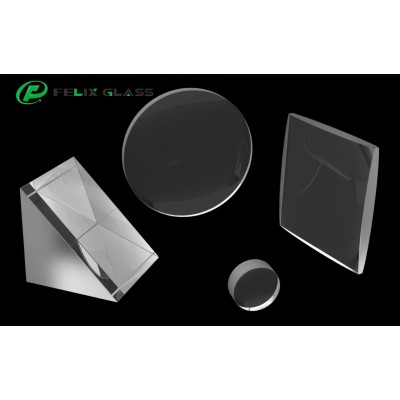
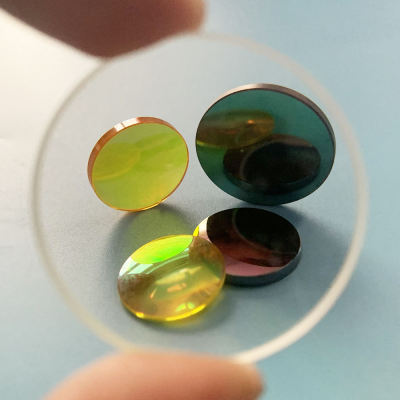
N-BK7 optical components for industrial laser equipment are reviewed by material, geometry, coating, and inspection requirement.
Interest
N-BK7 Laser Optics Technical Specification Table
These values describe typical customization directions for N-BK7 laser optical components. Final tolerances, inspection methods, and acceptance criteria should be confirmed on the approved drawing.
Parameter
Typical Customizable Value
Drawing Review Note
Base material
Schott N-BK7 or equivalent optical glass
Refractive index nd=1.5168, Abbe number vd=64.17 at standard condition.
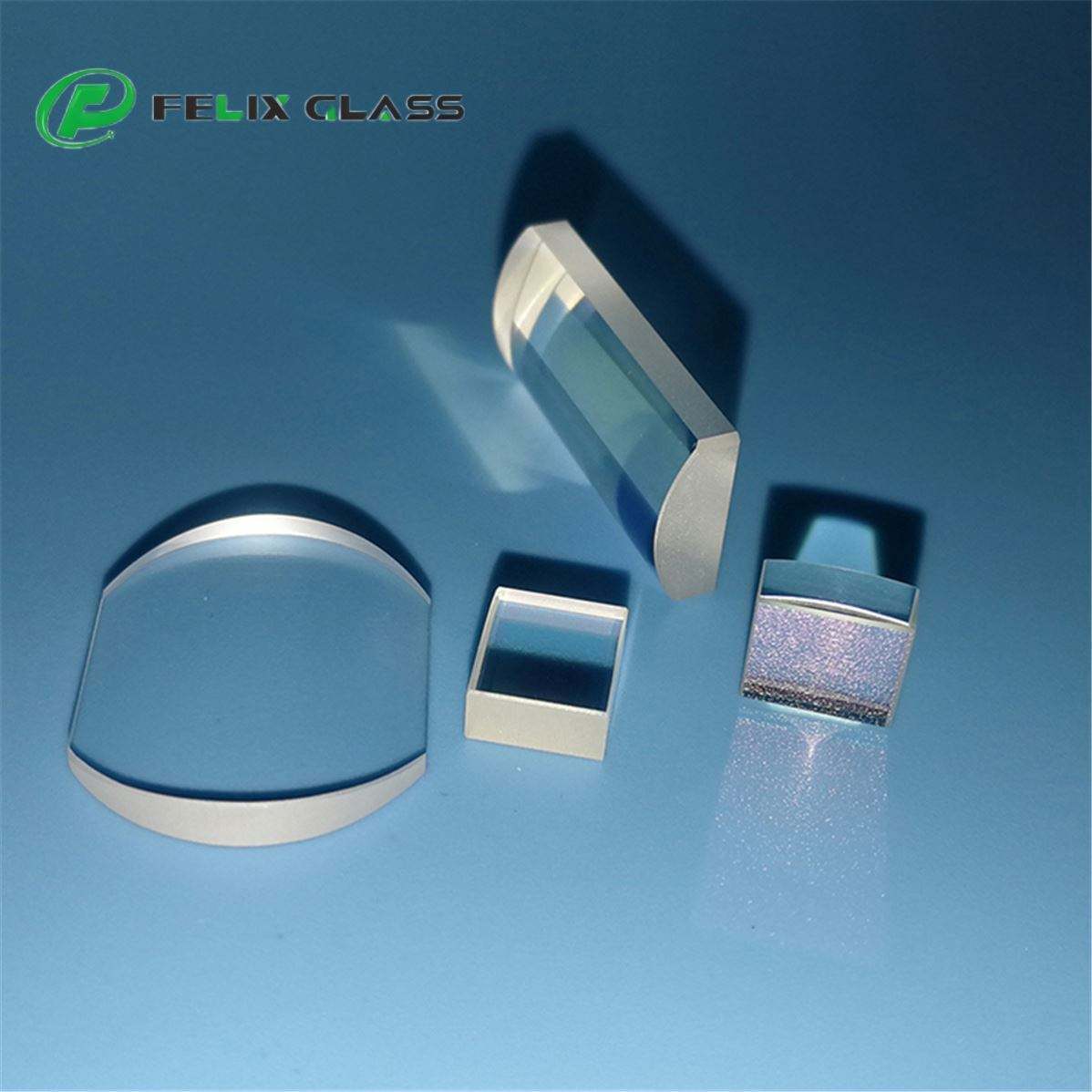
Custom shapes including cylindrical and wedge can be reviewed.
Standard diameter range
3 mm to 300 mm for lenses; 5 mm to 200 mm for prisms and windows
Larger sizes depend on thickness and handling feasibility.
Surface quality
Typical 60-40 scratch-dig; upgraded to 40-20 or 20-10 when specified
Specify inspection standard and clear aperture on the drawing.
Surface flatness
lambda/4 at 632.8 nm standard; lambda/10 available for critical surfaces
Confirm test wavelength and clear aperture.
Coating options
Visible AR coating (400-700 nm), single-wavelength AR, or broadband AR
Provide target wavelength band, incidence angle, and transmission requirement.
Dimensional tolerance
Diameter +/-0.05 mm standard; thickness +/-0.05 mm standard
Tighter tolerances reviewed against geometry and production routing.
Edge processing
Chamfer, bevel, blackened edge, or custom machining
Include edge detail and datum references in the drawing.
Lens radii, center thickness, and diameter are controlled during CNC curve generation and precision polishing.
Interest
Why N-BK7 for Industrial Laser Marking Optics
Uniform Refractive Index for Repeatable Beam Control
N-BK7 provides a well-characterized refractive index of nd=1.51680 with melt-to-melt consistency that supports predictable focal length, beam diameter, and spot size across production batches of laser marking machines.
High Visible Transmittance Through AR Coating
With visible-band anti-reflection coating, N-BK7 optics achieve transmittance above 99% per surface in the 400-700 nm range, reducing power loss and stray reflections in fiber laser marker optical paths.
Practical Machining Cost for OEM Production
N-BK7 is not a soft glass that degrades quickly under laser exposure. Its hardness supports CNC grinding and polishing routines that produce consistent surface figures at a cost structure suitable for serial OEM component supply.
Stable Thermal Performance Within Operating Range
With a coefficient of thermal expansion of 7.1e-6/K, N-BK7 maintains dimensional and optical stability within the typical ambient-to-warm temperature range of industrial laser marking enclosures.
Low Bubble and Inclusion Content
Optical-grade N-BK7 raw material is selected for low inclusion and striae content, reducing scatter and absorption sites that could create hot spots under focused laser beams.
Certified Raw Material Traceability
Material certificates with melt data and refractive index measurement are available for projects that require documented traceability from raw glass to finished optical component.
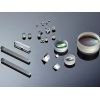
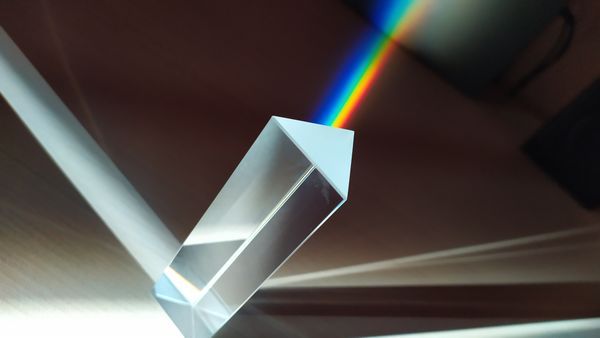
Prism geometry, angular tolerance, and coating specification are reviewed for the intended laser wavelength and beam path.
Interest
N-BK7 Component Types for Fiber Laser Marking Systems
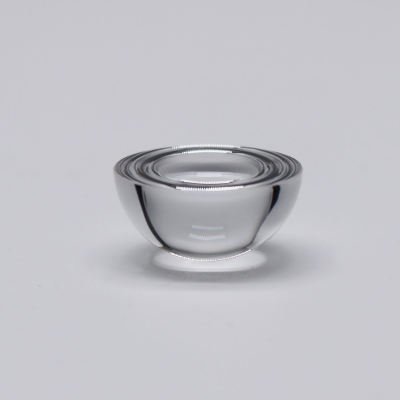
Plano-Convex Focusing Lenses
Positive focal length lenses for focusing collimated fiber laser output to a precise marking spot. Available in standard and custom diameters from 10 mm to 150 mm with visible AR coating for 1064 nm frequency-doubled green laser markers and visible pilot beam systems.
Plano-Concave Beam Expander Lenses
Negative lenses for beam expansion stages in galvanometer scanning heads. Tight center-thickness tolerance and low surface irregularity support consistent beam profile across the marking field.
Beam Splitter Prisms
N-BK7 cube and plate beam splitters with partial-reflection coating for power monitoring, alignment, and dual-path optical configurations in industrial laser workstations.
Right-Angle Prisms
90-degree beam deviation prisms with reflective hypotenuse coating for compact optical path folding in laser marking heads and beam delivery modules.
Laser Protective Windows
Flat N-BK7 windows with AR coating serve as replaceable protective barriers between the laser source and the work area. Custom thickness, diameter, and edge chamfer matched to OEM housing design.
Custom Wedge and Special-Shape Optics
Drawing-defined wedge prisms, cylindrical lenses, and irregular-profile optical components for proprietary laser system designs reviewed on a project basis.
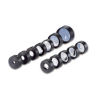
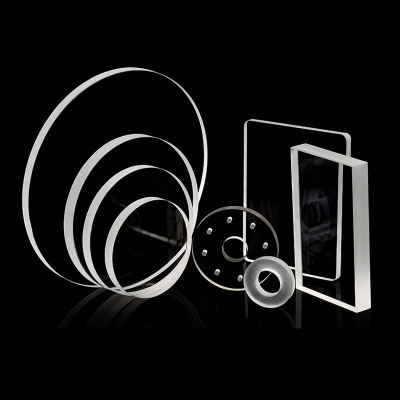
Protective windows are produced with controlled parallelism, surface quality, and edge finish to match OEM mounting requirements.
Interest
Visible AR Coating for N-BK7 Laser Optics
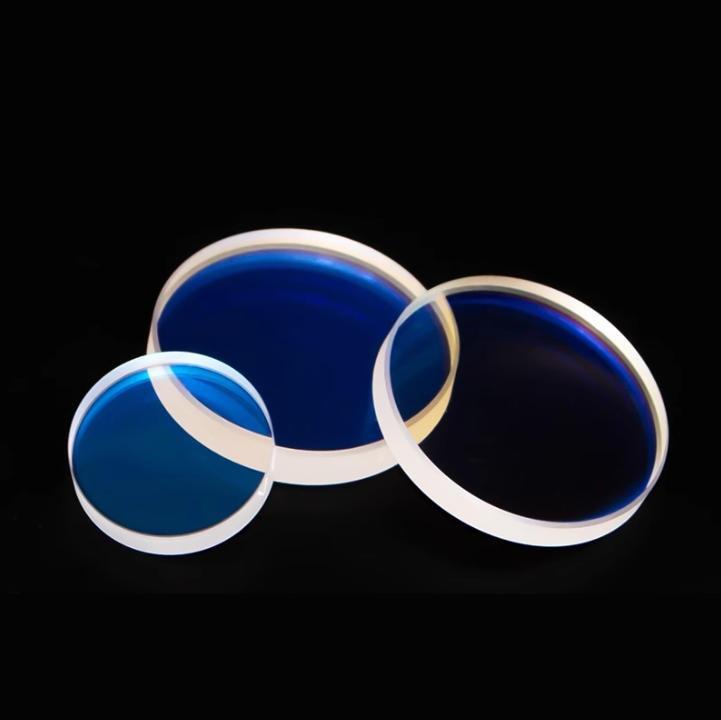
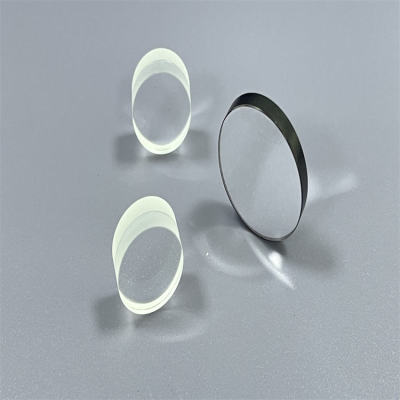
Anti-reflection coating is applied to N-BK7 laser optics using vacuum deposition technology. The coating design is selected for the operating wavelength band of the target laser system.
Broadband Visible AR (400-700 nm)
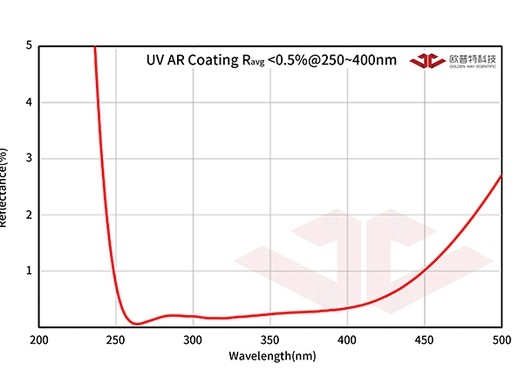
Multi-layer dielectric coating achieving reflectance below 0.5% per surface across the visible spectrum, suitable for green laser markers, visible alignment beams, and multi-wavelength inspection systems.
Single-Wavelength AR Coating
Optimized for one specific laser wavelength such as 532 nm, 633 nm, or 1064 nm, achieving minimum reflectance at the design wavelength for maximum throughput.
Dual-Band AR Coating
AR coating designed for two distinct wavelength regions, commonly 532 nm for green marking and 1064 nm for infrared pilot or measurement channels.
Coating Durability
Standard AR coatings pass adhesion, abrasion, and humidity tests per MIL-PRF-13830B or ISO 9211. Hard-coated options are available for optics exposed to frequent cleaning or handling.
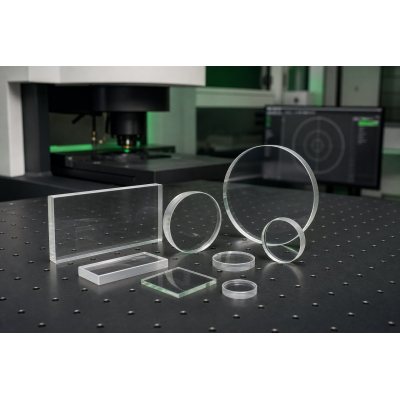
Surface figure and quality are verified with interferometry and visual inspection before coating and final QC.
Desire
CNC Manufacturing and Inspection Workflow for N-BK7 Laser Optics
Felix Glass follows a structured production and quality control workflow for N-BK7 laser optical components, from raw material verification through finished part inspection.
Material Selection and VerificationN-BK7 blank material is inspected for refractive index, internal transmission, striae grade, and bubble content per the project specification.
CNC Curve GenerationLens radii, prism angles, and flat surfaces are generated on five-axis CNC optical grinding equipment with in-process dimensional measurement.
Precision PolishingSurfaces are polished to the specified scratch-dig rating and surface figure using pitch-polishing or CNC-polishing method depending on geometry and tolerance.
Pre-Coating InspectionSurface figure, roughness, and cosmetic quality are inspected by interferometer and visual review before coating chamber loading.
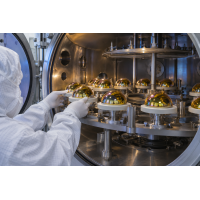
Vacuum Coating DepositionAR coating is applied under vacuum with in-situ optical monitoring to achieve target spectral performance.
Final QC and DocumentationCoated optics undergo transmission measurement, surface inspection, and dimensional verification. Inspection reports are supplied according to the purchase specification.
Manufacturing capability covers prototype quantities and serial OEM production across a 75000 sqm optical fabrication base.
Desire
Industrial Laser Equipment Applications for N-BK7 Optics
Fiber Laser Marking Machines
N-BK7 focusing lenses, protective windows, and beam splitter optics for desktop and gantry-type fiber laser marking and engraving systems used in metal, plastic, and ceramic part identification.
Green Laser Markers (532 nm)
Visible AR-coated N-BK7 optics for frequency-doubled green laser markers used in silicon wafer marking, glass engraving, and reflective metal surface processing.
CO2 Laser Beam Delivery Modules
N-BK7 beam steering and protective window components for CO2 laser optical paths, with coating selected for the 10.6 um wavelength or visible alignment channel when combined with ZnSe optics.
Laser Cleaning System Optics
Protective windows and beam delivery optics for pulsed fiber laser cleaning systems, where replaceable N-BK7 windows protect internal galvo and focusing assemblies from debris and fume.
Laser Welding Optical Modules
N-BK7 protective glass and beam splitter optics for handheld and automated fiber laser welding heads operating in visible and near-infrared wavelength ranges.
Optical path components are reviewed against the galvo scanner specification and housing interface drawing.
Desire
Inspection Standards and Quality Assurance for Laser Optics
Each batch of N-BK7 laser optical components goes through a defined inspection sequence before release. The standard inspection plan can be adjusted to match customer-specific quality requirements.
Interferometric Surface Figure Testing
Transmission and reflection interferometry at 632.8 nm for measuring surface figure error, irregularity, and transmitted wavefront distortion.
Spectrophotometric Transmission Measurement
Coated optics are measured for transmission across the design wavelength range using a calibrated spectrophotometer, with spectral curves included in inspection reports when required.
Dimensional and Geometric Verification
Calibrated digital micrometers, optical comparators, and CMM equipment measure diameter, center thickness, wedge angle, and parallelism per the drawing specification.
Documentation and Certification
Certificate of conformance, material certification, and dimensional inspection reports are available. ISO 9001 quality management system supports documentation requirements for international equipment purchasing.
Desire
Drawing Information Required for N-BK7 Laser Optics Quotation
To provide an accurate feasibility review and project quotation, the following information helps the engineering team evaluate material, geometry, coating, and inspection requirements.
Optical component type, quantity, and target lead time
Diameter, center thickness, edge thickness, and radius or focal length
Surface quality scratch-dig specification and surface figure requirement
Coating wavelength band, incidence angle, and transmission target
Operating laser wavelength, power level, and beam diameter
Mounting method, clear aperture, and environmental conditions
Inspection report format, packaging, and labeling requirements
Drawing file in PDF, STEP, or DXF format for geometry review
Trust
Why US Industrial Laser Manufacturers Choose Felix Glass for N-BK7 Optics
Dedicated Optical Manufacturing Infrastructure
75000 sqm manufacturing facility with independent CNC optical grinding, precision polishing, vacuum coating, and metrology departments. Production capacity supports both prototype samples and serial OEM supply.
ISO 9001 Certified Quality System
Quality management processes follow ISO 9001 standards with documented incoming material inspection, in-process control, and final QC release procedures.
In-House Optical Metrology Laboratory
Equipped with Zygo and 4D Technology interferometers, Agilent spectrophotometers, and calibrated dimensional measurement instruments for independent optical performance verification.
International Shipping and Documentation Support
Experience with FOB, CIF, and DDP shipping terms to US ports. Certificates of origin, packing lists, commercial invoices, and compliance documentation prepared for US customs clearance.
English-Language Engineering Communication
Direct technical communication with optical engineers in English for drawing review, tolerance discussion, coating specification, and inspection planning without translation delay.
Repeat Order Consistency
Production process control and material lot management support consistent optical performance across repeat orders, which matters when the same N-BK7 optic is integrated into a serial-production laser marking machine.
Company background and manufacturing details are available on the About Felix Glass page.
Trust
Frequently Asked Questions About N-BK7 Laser Optics
What N-BK7 optical components does Felix Glass supply for laser marking machines?
Standard catalog includes plano-convex focusing lenses, plano-concave beam expander lenses, right-angle prisms, beam splitter prisms, and flat protective windows. Drawing-defined custom geometries can be reviewed for OEM projects.
Can N-BK7 lenses handle the power levels of industrial fiber lasers?
N-BK7 is suitable for the visible wavelength range and moderate-power near-infrared applications. For high-average-power or high-peak-power 1064 nm fiber laser transmission, fused silica may be recommended. Please provide the laser power, beam diameter, and operating wavelength for a material suitability review.
What surface quality is available for N-BK7 laser optics?
Standard scratch-dig is 60-40. Upgraded specifications of 40-20 or 20-10 are available for optics in the beam waist region or where scatter control is important for marking contrast.
How is the AR coating specified for a laser marking application?
Provide the operating wavelength, angle of incidence, polarization state if applicable, and the required transmission or reflectance value. The coating design is then selected from standard visible AR, single-wavelength AR, or dual-band AR options.
Can Felix Glass supply prototype quantities before committing to production volumes?
Yes, prototype and small-batch orders are supported. Engineering review, material procurement, and process planning follow the same workflow for prototypes and production, so prototype results are representative of serial production capability.
Action
Request Engineering Review for N-BK7 Laser Optical Components
Felix Glass provides drawing-based N-BK7 optical component manufacturing for US-based industrial laser equipment builders and system integrators. Submit the optical drawing, quantity, coating specification, and inspection requirements through the inquiry form for an engineering feasibility review and project quotation.
We supply Industrial Glass, Sapphire Optics, Optical Lenses/Prisms/Filters, Infrared IR Optics, Functional & Display Glass, N-BK7/H-K9L Optical Glass, supporting OEM mass production and laboratory custom prototypes. Flexible MOQ & free sample service available. Fill in the form to download full datasheets and get factory wholesale price within 24 hours.
CONTACT US NOW FOR A QUOTE
We will respond promptly within 1 to 5 hours and provide an optimal, formal quotation within 1 to 2 days. Partnering with us is the smartest choice—start a mutually beneficial partnership today!
*Email
Name
*Title
*Content
Upload
Only supports .rar/.zip/.jpg/.png/.gif/.doc/.xls/.pdf, maximum 20MB.
What is the minimum order quantity for custom precision optical glass components?
FELIX OPTICAL GLASS offers highly flexible MOQs to support customer projects, including prototype testing, small-batch trial orders, and high-volume production. All products can be fully customized to your drawings, tolerances, and application standards. Please send us your specifications, and we will reply within 1-5 hours and provide an accurate quotation after careful evaluation within 1-2 days.
Can I get free glass samples for testing before bulk order?
Yes, our FELIX GLASS factory supports sample testing for a wide range of precision optical glass components and assemblies. The lead time for sample production is 3 to 7 working days. Please contact us today to arrange samples and obtain a customized solution that meets your needs.
What is the production lead time for custom optical glass components?
A: The production cycle for standard samples is 3-10 working days, while mass production requires 15-35 working days, depending on the complexity of the product and the order quantity. We provide reliable precision optical glass components and fast delivery services for orders from industries such as defense, industrial equipment, medical devices, shipbuilding, robotics, automotive, and aerospace. Please submit your project details so we can provide you with an accurate delivery schedule.
Are your optical glass products ISO, CE and RoHS certified?
All precision optical glass components from FELIX OPTICAL GLASS comply with ISO quality system standards as well as CE and RoHS requirements. We provide comprehensive test reports, spectral graphs, material certificates, and inspection documents for customer review. Please feel free to request complete certification details and a formal quotation at any time.
Do you offer one-stop custom optical glass processing services?
Yes. We offer a full range of precision optical glass component processing services, including CNC machining, precision grinding, optical polishing, chemical/physical tempering, vacuum coating (AR anti-reflective coating, AF anti-fingerprint coating, AG anti-glare coating, IR infrared coating), and screen printing. From raw materials to finished products, every step is completed in our own factory. Please tell us your needs, and we will provide you with the most cost-effective solution.
CONTACT US NOW FOR A QUOTE
We will respond promptly within 1 to 5 hours and provide an optimal, formal quotation within 1 to 2 days. Partnering with us is the smartest choice—start a mutually beneficial partnership today!
*Email
Name
*Title
*Content
Upload
Only supports .rar/.zip/.jpg/.png/.gif/.doc/.xls/.pdf, maximum 20MB.
Felix Glass manufactures custom ZnS, ZnSe, sapphire domes & fused silica IR windows. Fast prototype and AR coating available. Get your technical quote within 24h for thermal imaging & laser systems.
Selecting the right substrate impacts DMS camera lifespan & image quality. This guide compares aluminosilicate and borosilicate glass. Felix Glass provides both substrates with printing and coating.