Dongguan Felix Glass Co., Ltd. E-mail: james@felixglass.com - Tel: +86 185 6503 2888
Home / All / Optical Comparison Center | Engineering Material Selection Hub / Optical Filters | Bandpass & Spectral Filter Coating Guides

Optical Filters | Bandpass & Spectral Filter Coating Guides

Oct 21,2026

Optical Filters

Find technical content on thin-film spectral filters, bandpass coating specifications, surface quality and long-term stability under high-temperature operating conditions.

Technical Articles In This Category


Infrared Bandpass Filter Coating Specifications

Overview

Infrared bandpass filters rely on dielectric multilayer thin-film coatings to transmit a narrow IR waveband while blocking out-of-band stray light. They are core components for thermal imaging, machine vision, gas detection and multi-spectral sensing. Felix Glass customizes bandpass coatings for NIR, MWIR and LWIR wavebands on sapphire, silicon, germanium, ZnS and ZnSe substrates.

Core Optical Parameters

  • CWL (Central Wavelength): The peak transmission wavelength; tolerance typically ±1~±3 nm for narrowband IR filters. Temperature rise causes wavelength shift toward shorter wavelengths.
  • Bandwidth (FWHM): Full width at half maximum transmission; available from 1% up to 50% of CWL. Narrow bandwidth improves signal-to-noise ratio for precision detection.
  • Peak Transmittance: ≥80% for standard IR bandpass filters; high-grade coatings reach above 90% with minimal ripple inside the passband.
  • Out-of-Band Blocking (OD): Optical Density; OD3~OD6 deep blocking suppresses background noise. Blocking range covers UV, visible and adjacent infrared bands.
  • Angle Sensitivity: Oblique incidence shifts CWL bluewards. Hard-sputtered coatings minimize wavelength drift under large field-of-view angles.

Coating Technology & Substrate Matching

  • Ion-Assisted E-Beam Evaporation: Low cost for prototypes, suitable for medium-temperature indoor equipment.
  • Magnetron Sputtering: Dense, low-moisture hard coatings; excellent thermal stability and adhesion for airborne, outdoor and high-temperature applications.
  • Substrate Selection
    • Silicon / Germanium: MWIR & LWIR (3–14 μm) thermal band filters
    • Sapphire: UV–MWIR, high hardness for rugged outdoor use
    • ZnS/ZnSe: Long-wave infrared thermal imaging filters, often paired with DLC protective overcoat

Common Design Pitfall

Without thermal compensation, narrowband IR filters will suffer obvious CWL blue shift when working above 70°C, resulting in signal attenuation. Always specify spectral testing at actual operating temperature for high-temperature systems.


Spectral Filter Environmental Durability Test

Overview

Thin-film filter coatings easily delaminate, develop haze or suffer wavelength drift under high temperature, high humidity and thermal shock. Environmental qualification verifies long-term spectral stability and coating adhesion before mass production, following ISO 9211 and MIL-STD-810G standards.

Standard Test Items & Acceptance Criteria

  1. Adhesion Tape Test (Cross-Hatch): 3M high-strength tape applied 10 times vertically; no peeling, flaking or film detachment after test.
  2. Damp Heat Test: 60°C, 95% RH for 48 hours; no coating whitening, delamination; CWL shift ≤2 nm, transmittance change <3%.
  3. Thermal Cycling Test: -55°C ↔ +125°C, 30 cycles with 30 min dwell time; no spectral drift beyond specified tolerance, no coating cracking.
  4. Abrasion Resistance: 50 strokes with cheesecloth under 5N load; no visible scratches on the clear aperture.
  5. Solvent Immersion: Soak in ethanol and acetone for 5 minutes; no film damage or spectral degradation after cleaning.

Long-Term Thermal Stability Control

High-temperature operation causes thin-film layer expansion and moisture infiltration, leading to wavelength drift. Two reliable solutions: 1. Use magnetron-sputtered dense coatings to reduce water absorption; 2. Add a protective top coat (SiO₂ or DLC) to seal the multilayer stack, locking spectral performance over years of field use.

RFQ Specification Tip

When submitting filter drawings, clearly separate optical specs (CWL, bandwidth, blocking OD) and environmental test requirements. List full test conditions, cycle counts and maximum allowable wavelength shift to avoid performance inconsistency after delivery.


Custom Optical Filter Coating Service
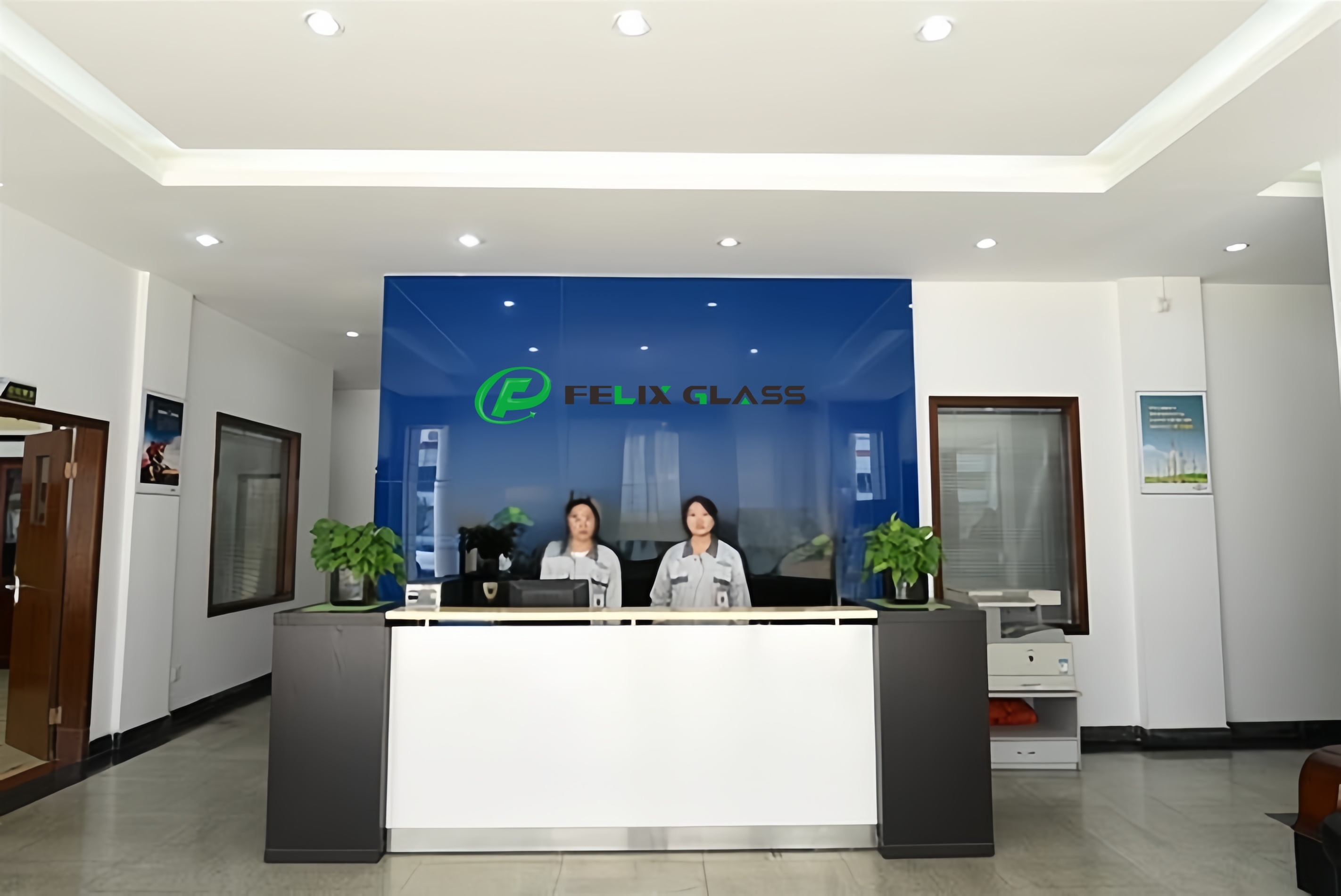
We design narrowband & broadband IR bandpass filters with full environmental qualification for thermal imaging and multi-spectral instruments.

Send Your Filter Specs

James Fu, Sales Director of FELIX OPTICAL GLASS, and a poster displaying contact information for an optical glass deep-processing factory.James Fu, Sales Director of FELIX OPTICAL GLASS, and a poster displaying contact information for an optical glass deep-processing factory. 2
Learn more from our FAQ
What is the minimum order quantity for custom precision optical glass components?

FELIX OPTICAL GLASS offers highly flexible MOQs to support customer projects, including prototype testing, small-batch trial orders, and high-volume production. All products can be fully customized to your drawings, tolerances, and application standards. Please send us your specifications, and we will reply within 1-5 hours and provide an accurate quotation after careful evaluation within 1-2 days.

Can I get free glass samples for testing before bulk order?

Yes, our FELIX GLASS factory supports sample testing for a wide range of precision optical glass components and assemblies. The lead time for sample production is 3 to 7 working days. Please contact us today to arrange samples and obtain a customized solution that meets your needs.

What is the production lead time for custom optical glass components?

A: The production cycle for standard samples is 3-10 working days, while mass production requires 15-35 working days, depending on the complexity of the product and the order quantity. We provide reliable precision optical glass components and fast delivery services for orders from industries such as defense, industrial equipment, medical devices, shipbuilding, robotics, automotive, and aerospace. Please submit your project details so we can provide you with an accurate delivery schedule.

Are your optical glass products ISO, CE and RoHS certified?

All precision optical glass components from FELIX OPTICAL GLASS comply with ISO quality system standards as well as CE and RoHS requirements. We provide comprehensive test reports, spectral graphs, material certificates, and inspection documents for customer review. Please feel free to request complete certification details and a formal quotation at any time.

Do you offer one-stop custom optical glass processing services?

Yes. We offer a full range of precision optical glass component processing services, including CNC machining, precision grinding, optical polishing, chemical/physical tempering, vacuum coating (AR anti-reflective coating, AF anti-fingerprint coating, AG anti-glare coating, IR infrared coating), and screen printing. From raw materials to finished products, every step is completed in our own factory. Please tell us your needs, and we will provide you with the most cost-effective solution.

CONTACT US NOW FOR A QUOTE
We will respond promptly within 1 to 5 hours and provide an optimal, formal quotation within 1 to 2 days. Partnering with us is the smartest choice—start a mutually beneficial partnership today!
*Email
Name
*Title
*Content
Upload
  • Only supports .rar/.zip/.jpg/.png/.gif/.doc/.xls/.pdf, maximum 20MB.
Address

With 19 years of experience as a precision optical glass expert, we provide comprehensive and satisfactory customized solutions.

Navigation
News