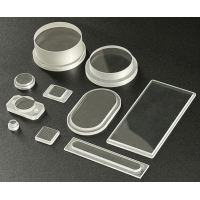
APPLICATION GUIDE | INDUSTRIAL FURNACE OPTICS
Custom Sapphire Furnace Viewports: Material Selection, Thermal Design and OEM Specifications
A furnace observation window must provide a usable optical path while operating within the thermal, mechanical and chemical limits of its complete assembly. Sapphire is a candidate for demanding viewport applications, but selecting the material is only one part of the design.
This guide explains what equipment manufacturers should review when specifying a custom sapphire window for furnace or kiln monitoring, from local window temperature and mounting stresses to inspection and prototype validation.
1. Define the Furnace Monitoring Application
Start with the purpose of the viewport: direct visual observation, camera imaging, flame detection or optical temperature measurement. Identify the required field of view and wavelength band, then define the surrounding furnace conditions.
The component specification should address the window and its interface with the housing. A polished sapphire disc alone does not define a qualified furnace viewport assembly.
2. Separate Furnace Temperature from Window Temperature
A furnace temperature is not automatically the temperature of the observation window. The window's local thermal conditions depend on its position, radiative exposure, surrounding structure, cooling or purge arrangement and operating cycle.
Provide the measurement location, exposure duration and available temperature records. Where the window temperature is unknown, the OEM should establish it through thermal analysis and suitable prototype measurements.
3. Investigate Why an Existing Viewport Failed
Cracking, clouding and leakage can have different causes. Before changing materials, inspect the failed part and review the assembly conditions. A replacement material may not resolve excessive mounting restraint, edge damage, uneven heating or a seal problem.
- Record where cracks originate and whether they align with mounting contacts.
- Review heating and cooling rates, shutdown events and purge changes.
- Check edge condition, gasket contact, assembly preload and alignment.
- Distinguish surface deposits from permanent changes in the substrate.
- Document pressure differences and chemical exposure.
4. Compare Sapphire and Fused Silica Fairly
| Material | Relevant Characteristics | Review Before Selection |
|---|---|---|
| Single-crystal sapphire | High hardness and useful optical transmission in selected UV, visible and infrared bands; properties can depend on crystal orientation. | Actual window temperature, thermal gradients, orientation, loading, surface condition and required transmission. |
| Fused silica / fused quartz | Very low thermal expansion is an important advantage when managing temperature changes. | Exact grade, exposure duration, temperature, contamination, mechanical loading and optical band. |
| Other optical glasses | May be appropriate where local window conditions and optical requirements fall within the specific grade's limits. | Manufacturer data and assembly qualification; do not apply a single temperature rating to every optical glass. |
There is no universal “best” viewport material. Fused silica should not be described as inherently weak under thermal shock, and sapphire should not be described as immune to cracking. Compare the candidate materials in the actual geometry and mounting arrangement.
5. Specify the Sapphire Material and Optical Band
Identify the required material grade and crystal orientation where relevant to the optical or mechanical design. Sapphire is not transparent at every wavelength. An uncoated surface removes a coating from the design but does not provide unrestricted full-spectrum transmission.
For a camera or sensor, provide the detector band and required transmission. For optical temperature measurement, account for the window in the instrument's calibration and consider changes caused by contamination or operating temperature.
6. Review Thickness and Pressure Loading Together
Window thickness should follow the structural and optical requirements of the assembly. Clear aperture, support geometry, pressure difference, temperature distribution and material condition all matter.
A thicker window is not automatically more resistant to thermal shock. The equipment designer should evaluate combined thermal and mechanical loading and establish appropriate design margins. No pressure or thickness rating is implied by this article.
7. Design the Mounting and Sealing Interface
Specify the housing interface, support surfaces, edge details and sealing arrangement. Differential thermal expansion between the optic and its mount must be considered when defining assembly clearances and restraint.
Precision edge machining can support the intended fit, but it does not by itself guarantee gas-tight or hermetic sealing. Define the allowable leak rate, test conditions and responsibility for assembly-level verification.
8. Evaluate Cooling, Purging and Thermal Cycling
If the installation uses cooling or purge flow, provide the flow conditions and their expected variation. Review normal operation, startup, shutdown and foreseeable interruptions. A sudden change in cooling or purge conditions can alter the thermal gradients across the window.
The qualification plan should reproduce the relevant temperature changes and dwell periods. A continuous-duty requirement should include maintenance and inspection provisions rather than assume unlimited service life.
9. Define Optical Surfaces and Coating Requirements
Specify clear aperture, surface quality, surface form and any parallelism or wedge requirement. Select tolerances that support the observation or measurement task.
An uncoated sapphire window may be worth evaluating where a coating would add an unsuitable environmental constraint. If AR coating is required, review its wavelength performance, temperature exposure, atmosphere and durability independently of the substrate.
High hardness does not eliminate deposits, abrasion or handling damage. Define cleaning methods and access to the window as part of the equipment design.
10. Agree Manufacturing and Inspection Requirements
Before ordering, align the component drawing with the inspection plan. Relevant checks may include dimensions, edge condition, optical surface quality and transmission in the specified band.
- Use a controlled drawing revision and identify critical dimensions.
- Define the clear aperture and acceptance criteria for edge defects.
- Specify any orientation or material traceability requirements.
- Agree the measurement methods and sampling scope.
- Confirm which reports are included in the quotation.
Component inspection supports acceptance of the supplied optic. The installed viewport still requires validation under the OEM's operating conditions.
11. Validate the Prototype in the Complete Assembly
A useful prototype evaluation considers the optic, mount, seals and thermal-management arrangement together. Establish the acceptance criteria before testing.
| Evaluation Area | Evidence to Record |
|---|---|
| Thermal exposure | Measurement locations, temperature histories, ramp rates and dwell periods. |
| Mechanical and sealing performance | Assembly configuration, applied loads and leak-test results where relevant. |
| Optical function | Visibility, camera performance or sensor response before and after exposure. |
| Surface condition | Cracks, edge damage, deposits and changes after cleaning. |
| Service evaluation | Operating hours, number of units, inspection intervals and maintenance events. |
Results apply to the tested configuration and conditions. Changes in aperture, thickness, mount or operating cycle may require further evaluation.
12. Prepare a Complete Viewport RFQ
| Information | What to Send |
|---|---|
| Application | Furnace type; visual observation, imaging or measurement purpose. |
| Temperature | Chamber and window temperatures separately; normal and peak values; exposure duration. |
| Operating cycle | Heating/cooling rates, cycling frequency and shutdown conditions. |
| Atmosphere and pressure | Gas composition, contaminants and maximum differential pressure. |
| Geometry | Drawing, diameter, thickness, clear aperture, edge profile and tolerances. |
| Mounting | Housing drawing, support arrangement, seal design and assembly constraints. |
| Optical requirements | Wavelength band, transmission target, surface quality and coating preference. |
| Cooling / purge | Available arrangements, operating conditions and interruption scenarios. |
| Commercial scope | Prototype and production quantities, required documentation, delivery date and destination. |
13. Frequently Asked Questions
Can a sapphire viewport be used on a furnace operating at 1700°C?
That furnace temperature alone is insufficient to approve a viewport. The actual window temperature, gradients, duration, atmosphere, pressure and complete mounting arrangement must be evaluated. A project-specific design and qualification are required.
Is sapphire always more resistant to thermal shock than fused silica?
No universal ranking applies to every assembly. Fused silica's very low thermal expansion is valuable, while sapphire offers a different combination of properties. Geometry, restraint, surface condition and temperature distribution affect the outcome.
Does an uncoated sapphire window transmit the full spectrum?
No. Transmission remains limited by the material, thickness, wavelength and operating conditions. Define the band needed by the observer, camera or sensor.
Does a precision-machined edge guarantee hermetic sealing?
No. Sealing depends on the complete assembly, including the seal material, contact geometry, preload and temperature. Specify and verify the required leak performance.
Will a sapphire window eliminate maintenance?
No material choice establishes a maintenance-free lifetime. Define inspection, cleaning and replacement criteria based on the application and service results.
Can FELIX GLASS review a custom viewport inquiry?
Send the component drawing, operating conditions and quantities to James. Manufacturing feasibility, inspection scope and delivery terms will be reviewed for the specific part.
14. Related Products and Technical References
Published material information can support initial selection. It does not replace a component drawing, supplier agreement or assembly qualification.
- Crystran: Sapphire optical material data — optical and physical reference properties.
- Heraeus Covantics: Fused silica for analytical instruments — optical transmission and low thermal expansion.
15. Discuss Your Custom Sapphire Viewport
Share your drawing and operating conditions with FELIX GLASS for a manufacturing review. If the design is still being developed, identify the fixed requirements and the dimensions or specifications that remain open.
James | International Sales Director
Dongguan Felix Glass Co., Ltd.
james@felixglass.com