How do I choose the right optical material for my application?
Professional optical material selection is a critical foundation for achieving ideal optical transmission efficiency, stable thermal performance, and long-term reliable system operation, which mainly depends on three core factors: working wavelength range, thermal resistance capability, and actual application environment. Different optical substrates feature unique spectral transmittance, mechanical strength, temperature resistance, and chemical stability, making customized material selection essential to match various optical system requirements and maximize overall equipment performance. BK7 optical glass is the most widely used standard optical material for visible light optical systems. Featuring excellent visible spectral transmittance, uniform optical performance, low bubble and impurity rate, and stable processing adaptability, BK7 glass is ideal for conventional visible optical lenses, optical windows, prisms, and general industrial optical components. With cost-effective performance and mature processing technology, BK7 remains the preferred material for standard visible-light optical applications. Fused silica, also known as quartz glass, delivers outstanding performance for ultraviolet (UV) applications and high-temperature working environments. It possesses excellent UV transmittance, extremely low thermal expansion coefficient, and superior high-temperature resistance. Fused silica optical components can maintain stable optical and structural performance under high heat, intense UV radiation, and rapid temperature changes, making them the optimal choice for UV optical instruments, laser systems, and high-temperature industrial optical equipment. Sapphire optical material stands out for its extreme surface hardness, exceptional scratch resistance, and outstanding mechanical durability. Compared with ordinary optical glass, sapphire features stronger pressure resistance, impact resistance, and chemical corrosion resistance. It performs stably in severe environments such as high pressure, strong friction, and long-term outdoor exposure, widely applied in high-end aerospace, surveillance, and precision protective optical systems. For infrared optical systems requiring long-wave infrared transmission, ZnSe (Zinc Selenide) and ZnS (Zinc Sulfide) are the most professional and reliable infrared optical materials. Both materials provide excellent infrared spectral transmittance with low optical absorption and uniform infrared imaging performance. They are extensively utilized in infrared imaging devices, thermal detection systems, laser infrared equipment, and military night vision optical components. Accurate and reasonable optical material selection ensures optimized light transmission, minimized optical loss, stable thermal resistance, and consistent long-term system performance, helping customers achieve higher precision, better stability, and longer service life for customized optical projects

- What is the minimum order quantity for custom precision optical glass components?
FELIX OPTICAL GLASS offers highly flexible MOQs to support customer projects, including prototype testing, small-batch trial orders, and high-volume production. All products can be fully customized to your drawings, tolerances, and application standards. Please send us your specifications, and we will reply within 1-5 hours and provide an accurate quotation after careful evaluation within 1-2 days.
- Can I get free glass samples for testing before bulk order?
Yes, our FELIX GLASS factory supports sample testing for a wide range of precision optical glass components and assemblies. The lead time for sample production is 3 to 7 working days. Please contact us today to arrange samples and obtain a customized solution that meets your needs.
- What is the production lead time for custom optical glass components?
A: The production cycle for standard samples is 3-10 working days, while mass production requires 15-35 working days, depending on the complexity of the product and the order quantity. We provide reliable precision optical glass components and fast delivery services for orders from industries such as defense, industrial equipment, medical devices, shipbuilding, robotics, automotive, and aerospace. Please submit your project details so we can provide you with an accurate delivery schedule.
- Are your optical glass products ISO, CE and RoHS certified?
All precision optical glass components from FELIX OPTICAL GLASS comply with ISO quality system standards as well as CE and RoHS requirements. We provide comprehensive test reports, spectral graphs, material certificates, and inspection documents for customer review. Please feel free to request complete certification details and a formal quotation at any time.
- Do you offer one-stop custom optical glass processing services?
Yes. We offer a full range of precision optical glass component processing services, including CNC machining, precision grinding, optical polishing, chemical/physical tempering, vacuum coating (AR anti-reflective coating, AF anti-fingerprint coating, AG anti-glare coating, IR infrared coating), and screen printing. From raw materials to finished products, every step is completed in our own factory. Please tell us your needs, and we will provide you with the most cost-effective solution.
- Name
- *Title
- *Content
With 19 years of experience as a precision optical glass expert, we provide comprehensive and satisfactory customized solutions.
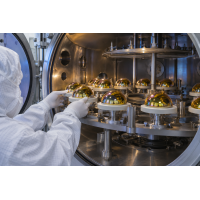 Felix Glass Expands IR Optics Production | Faster Lead Time for Custom ZnS, ZnSe, Sapphire & Fused Silica WindowsFelix Glass manufactures custom ZnS, ZnSe, sapphire domes & fused silica IR windows. Fast prototype and AR coating available. Get your technical quote within 24h for thermal imaging & laser systems.
 DMS Cover Glass Material Selection: Aluminosilicate vs Borosilicate Glass for In-Cabin CameraSelecting the right substrate impacts DMS camera lifespan & image quality. This guide compares aluminosilicate and borosilicate glass. Felix Glass provides both substrates with printing and coating.