

Products · Custom ITO Conductive Glass
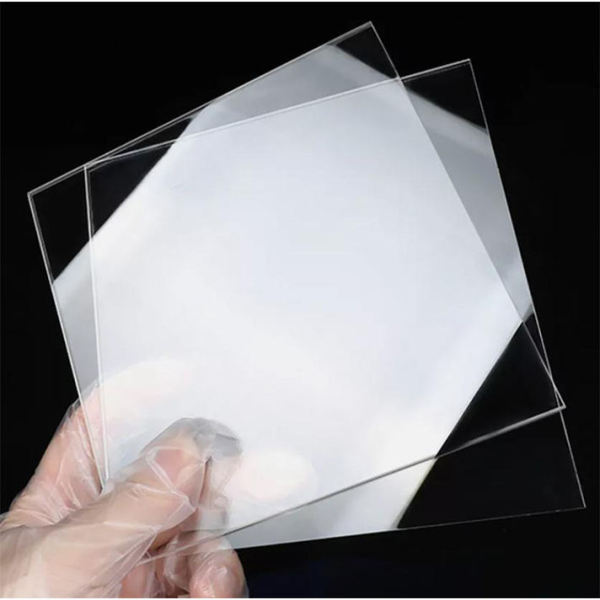
Medical Grade ITO Conductive Glass
Custom conductive glass components for medical equipment development
Custom ITO glass for medical equipment projects, with defined optical, electrical, cleaning and documentation requirements for the intended device configuration.
View Custom Specifications1. Custom Conductive Glass for Medical Equipment Projects
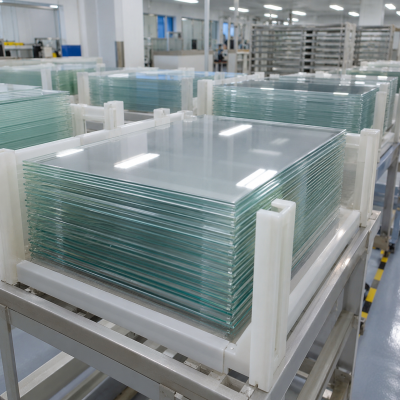
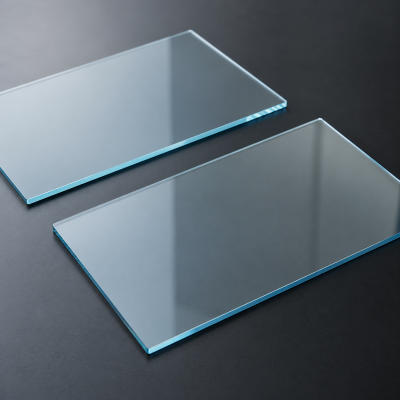
Felix Glass supports inquiries for custom ITO-coated glass components intended for integration into medical equipment, diagnostic instruments and related development projects. Indium tin oxide provides a conductive surface while preserving optical transmission within a specified spectral range.
The product designation “Medical Grade ITO Conductive Glass” refers to a project-specific supply requirement. It does not by itself establish biocompatibility, sterility, regulatory authorization or suitability for direct patient contact. The approved drawing and qualification requirements define the component supplied.
2. Customization Specification Overview
| Parameter | Specification basis |
|---|---|
| Component format | Windows, cover panels, slides or custom outlines to drawing |
| Glass substrate | Soda-lime, borosilicate or fused silica grade subject to review |
| Dimensions | Outline, thickness, holes, edges and tolerances |
| Conductive layer | ITO coverage, coated face and exclusion zones |
| Electrical performance | Sheet resistance, uniformity and contact requirements |
| Optical performance | Transmission band, reflection, haze and imaging requirements |
| Functional options | Electrode patterns, contact pads and compatible optical layers by review |
| Exposure | Cleaning chemistry, temperature, humidity and process conditions |
| Documentation | Agreed traceability, inspection data and qualification support |
| Use classification | Non-contact, sample-contact or patient-contact configuration identified by customer |
No universal electrical, optical or biological specification applies to every medical equipment application. Define the targets for the actual configuration.
3. Define the Installed Role and Contact Conditions
Explain whether the glass is an enclosed optical window, operator interface, heater substrate, sensing electrode or another component. Identify every surface that contacts users, patients, samples, fluids or cleaning agents.
A sample-contact component may need low contamination and assay compatibility without being a patient-contact material. An enclosed conductive layer has different exposure conditions from an exposed electrode. Provide the full layer and interface arrangement so the appropriate review can be planned.
4. Select the Glass Substrate
Select substrate grade around the operating spectrum, optical quality, mechanical interfaces and thermal processing. Borosilicate and fused silica may be considered where their properties fit the design; they are not automatically required simply because the equipment has a medical application.
Specify thickness, edge quality, permitted defects and any strengthening requirement. Include substrate composition or barrier-layer requirements when ion migration, surface chemistry or sample contamination could affect the device.
5. Specify Optical Performance
Define the transmission band and whether acceptance is based on minimum, average or point-specific performance. Identify the complete coated component as the test article when that is what the instrument uses.
For optical diagnostics, include relevant scatter, fluorescence, reflection and wavefront requirements. A visible transmission value does not establish UV or near-infrared behavior. If the part is a display cover, assess readability and appearance using the intended display and lighting conditions.
6. Specify Electrical Performance
State sheet resistance in Ω/□, allowed variation, measurement temperature and sampling locations. Define contact geometry separately: resistance between terminals includes geometry and contact effects as well as the conductive film.
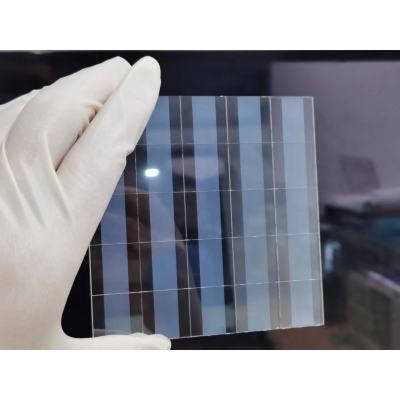
For patterned electrodes, provide artwork showing tracks, pads and isolation gaps. Agree on continuity, isolation and contact-resistance checks where relevant. Electrical acceptance should reflect the installed function rather than relying only on a nominal film thickness.
7. Transparent Heating Applications
ITO can be evaluated as a resistive heating layer for optical windows or controlled-temperature instrument interfaces. Provide supply voltage, power budget, thermal environment, warm-up requirements and maximum permissible temperature.
Temperature uniformity depends on the current path, electrode placement and heat loss to the assembly. Validate the mounted configuration under relevant operating conditions. The coated glass is not inherently a temperature-controlled device; sensing, control, wiring and protection scope must be agreed.
8. Electrodes, Shielding and Device Integration
ITO may serve as a transparent electrode or conductive interface in a compatible instrument design. Specify grounding, contact locations, masking and electrical isolation from accessible surfaces as required by the system.
If electromagnetic attenuation is required, define frequency range and assembly-level targets. Sheet resistance alone does not establish shielding effectiveness. Openings, seams, connections and enclosure construction also influence the result.
A conductive coating should not be assumed to provide electrical insulation or a protective barrier. Specify additional layers and interfaces according to their actual function.
9. Compatible Optical and Protective Layers
AR, optical matching or protective layers can be reviewed with the ITO film. Each layer may affect transmission, adhesion, surface chemistry or contact accessibility, so the finished stack must be qualified as a whole.
For touched interfaces, AG or AF treatments can be considered where compatible with display requirements and the cleaning procedure. Do not place a textured treatment over an imaging aperture without assessing its scattering effects. Identify bonding and contact zones on the drawing.
10. Cleaning, Disinfection and Reprocessing
Provide the intended cleaning or disinfection agents, concentrations, exposure times, temperatures and cycle counts. Assess optical appearance, adhesion, resistance and contact integrity after representative exposure.
If sterilization is required, specify the actual process and acceptance criteria for the final configuration. Suitability for steam, radiation or chemical sterilization must not be inferred from the substrate name. Coatings, contacts, adhesives and packaging can respond differently from the bare glass.
Clean packaging is not a sterile barrier system. Delivery cleanliness, sterilization and sterile packaging are separate scopes that require explicit agreement.
11. Biological and Sample Compatibility
For patient-contact designs, the device manufacturer should establish the biological evaluation requirements for the intended contact and finished device. Consider the actual exposed materials, manufacturing residues, processing and any reprocessing history rather than assuming compatibility from the word “glass.”
For analytical or sample-contact applications, identify contaminants, extractables, adsorption or background signals that could affect the method. Define suitable acceptance tests for the assay or instrument.
No generic biocompatibility or clinical-use claim is made for the ITO layer on this page. Required evidence and responsibilities must be agreed for the specific component and device configuration.
12. Quality Documentation and Traceability
Specify the records needed for supplier qualification and incoming acceptance: material identification, lot traceability, controlled drawing revision, dimensional results, optical data and electrical measurements as applicable.
ISO 13485 addresses medical-device quality management systems; it is not a substitute for component performance testing. If a certified quality-system scope is mandatory, request current evidence and confirm applicability before ordering. This page does not claim Felix Glass certification to that standard.
Agree on change notification for substrate, coating stack, contact materials and relevant processes. Define report sampling and distinguish finished-part measurements from witness-sample results.
13. Prototype Review and RFQ Checklist
Use representative prototypes to assess the optical, electrical, mechanical and exposure requirements together. Identify which tests are component-level and which require the final device or assembly.
Confirm the accepted specification, open qualification items, supply scope and delivery schedule before production. Development samples do not by themselves establish readiness for clinical use.
14. Frequently Asked Questions
What does “medical grade” mean for this product?
It must be defined by the project specification and required evidence. The label alone does not establish clinical suitability or certification.
Is ITO glass automatically biocompatible?
No. Biological evaluation depends on the intended contact and the finished device configuration, including processing and exposed layers.
Is sterile supply included?
No sterile-supply claim is made here. Sterilization and sterile packaging must be separately specified and confirmed.
Can the glass withstand repeated disinfection?
It must be tested with the specified chemicals, conditions and cycle count, including optical and electrical acceptance afterward.
Can I request a transparent heater?
Yes. Provide power, temperature, uniformity and mounting requirements, and define whether contacts, leads and controls are included.
Can ITO be combined with AR or protective layers?
A compatible stack can be reviewed. Electrical access, optical response and durability need validation together.
Does a quality-system certificate approve the finished device?
No. Quality-system certification, component acceptance and device authorization are distinct matters.
What documentation can be supplied?
Project-specific inspection and traceability documentation can be discussed. Confirm the available scope and required qualification evidence in the quotation.
15. Discuss Your Medical Equipment Glass Requirements
Send your controlled drawing and application requirements to Felix Glass for a component-level technical review. Identify any mandatory quality-system, patient-contact, sterilization or regulatory-documentation requirements at the inquiry stage.
Dongguan Felix Glass Co., Ltd.
Email: james@felixglass.com