Buying Guide for Custom Fused Silica Quartz Glass Tube
Buying Guide for Custom Fused Silica Quartz Glass Tube — Select Right Optical Glass Components For Your Project
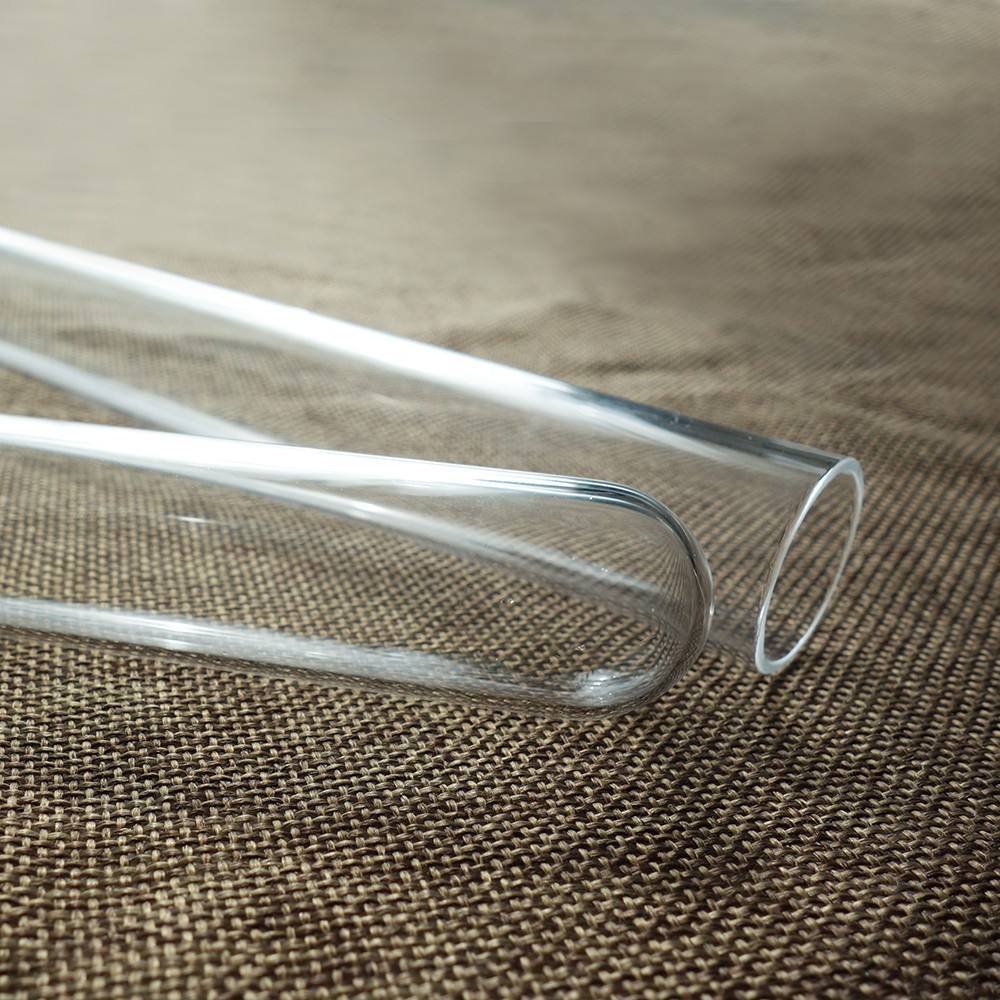
Improper selection of custom fused silica quartz glass tube often leads to prototype failure, unexpected production downtime and extra project costs. Many engineers and procurement teams overlook optical glass grade differences, dimension tolerance limits, thermal‑chemical constraints and feasible secondary processing before sending RFQ. Based on real‑world manufacturing experience from Felix Optical Glass Co., Limited (Felix Glass), this complete buying guide walks you through core selection criteria, typical pitfalls and full RFQ preparation checklist to help you source reliable fused silica optical glass parts for your industrial system. You can review our custom fused silica quartz glass tube & quartz glass capillaries for our actual custom manufacturing capacity.
1. Why Fused Silica Optical Glass Stands Out For Custom Quartz Tube Manufacturing
Fused silica optical glass is a high‑purity amorphous silica material widely used for high‑end custom quartz tube and capillary production. Compared with ordinary glass materials, fused silica optical glass delivers outstanding high‑temperature resistance, broad UV‑IR optical transmission, ultra‑low thermal expansion coefficient and excellent chemical inertness, which makes it irreplaceable for semiconductor, laser optics, analytical instrumentation and high‑temperature furnace equipment.
| Material Type | Max Continuous Temperature | UV Cut‑off | Chemical Resistance | Typical Usage |
|---|---|---|---|---|
| Fused Silica Optical Glass | 1100‑1200℃ | 185‑240nm | Excellent | Custom quartz tube, precision optical glass components |
| Borosilicate Glass | 500℃ | 315nm | Good | General lab glassware |
| Soda‑lime Glass | 450℃ | 350nm | Moderate | Common household glass product |
2. How To Pick Proper Material Grades for Custom Fused Silica Quartz Glass Tube (JGS1/JGS2/JGS3)
JGS series are mainstream industrial grades for fused silica optical glass. Different grades vary greatly in hydroxyl content, impurity level and spectral transmission. Wrong grade selection will cause transmission loss or early‑stage component failure even if your dimension drawing is fully correct.
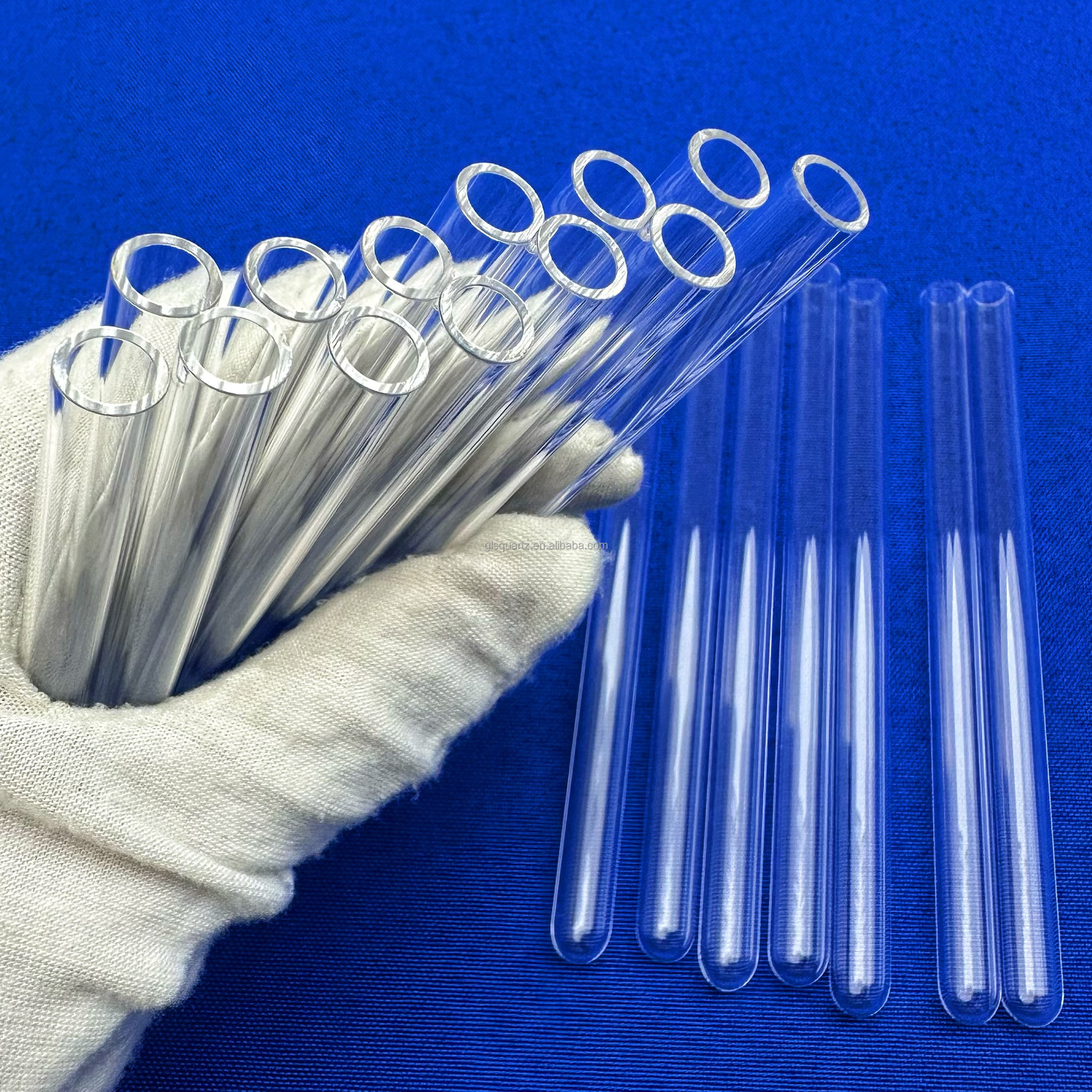
| Grade | OH Content | UV Transmission Cut‑off | Recommended Application |
|---|---|---|---|
| JGS1 (UV‑Grade Synthetic Fused Silica) | Low‑OH controlled | ~185nm | Deep‑UV laser, UV spectroscopy, high‑end optical glass components |
| JGS2 (General‑Purpose Optical Grade) | 150‑400ppm | ~220nm | Most custom quartz tube & capillaries, lab instrument, optical testing |
| JGS3 (IR‑Grade Fused Silica) | High‑OH | ~350nm | Infrared heating tube, visible‑IR furnace sleeve, not for UV‑working scenarios |
Felix Glass Tip: Confirm your working wavelength range before ordering custom optical glass quartz tube. Do not blindly pursue higher grade without real requirement, which will bring unnecessary cost increase.
3. Critical Dimension & Tolerance Requirements for Custom Quartz Tube & Capillaries
For custom fused silica quartz glass tube and fine‑bore capillaries, dimension accuracy directly decides assembly fit performance. Many RFQ problems happen because buyers omit tolerance requirements only provide nominal size values.
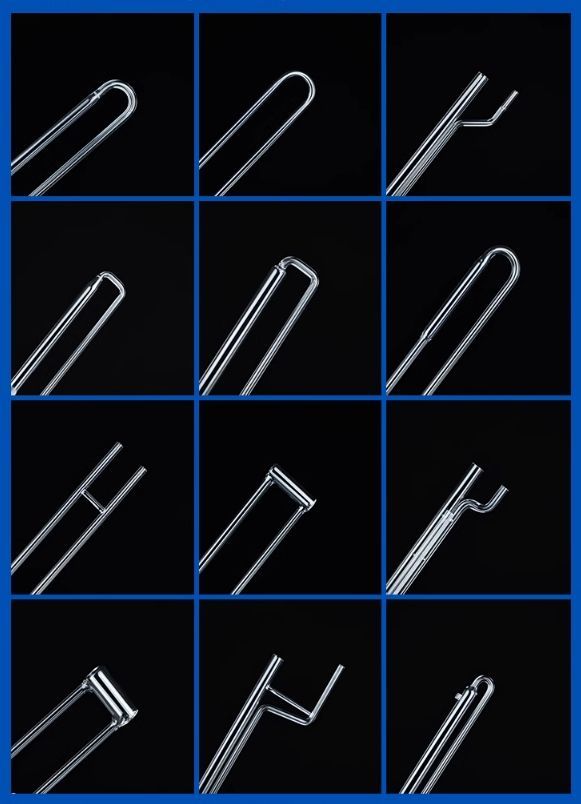
- Outer Diameter (OD): Nominal value plus tolerance; fine‑bore capillary needs tighter tolerance than large‑bore tubing.
- Inner Diameter (ID): Inner bore precision is critical for fluid‑flow capillary parts. For ID below 0.2mm, confirm manufacturer’s minimum achievable bore capability.
- Wall Thickness: Uniform wall thickness reduces thermal stress risk during high‑temperature cycling.
- Total Length & End‑face Treatment: Cut, ground or fire‑polished end face will affect mechanical strength and sealing performance.
4. Thermal‑Shock & High‑Temperature Performance For Industrial Optical Glass Parts
Fused silica optical glass owns extremely low thermal expansion coefficient, delivering excellent thermal‑shock resistance. However, fused silica quartz components still have clear working‑temperature limits you have to respect.
- Max continuous operating temperature: 1100℃ for most JGS1/JGS2 custom quartz tube; short‑term peak temperature can reach 1250℃.
- Avoid long‑time running above 1100℃, otherwise devitrification will occur and cause surface crystallization, brittleness and component failure.
- Even with premium fused silica optical glass, sharp local temperature gradient can still trigger cracking, especially for thin‑wall capillary structures.
Felix Glass engineering note: If your optical glass components work under frequent thermal cycling, we will add stress‑relief annealing process after hot‑forming to eliminate internal residual stress.
5. Chemical Compatibility Considerations of Fused Silica Optical Glass
Fused silica optical glass features outstanding chemical inertness against most acids, water and organic solvents. But it is not completely corrosion‑proof, some special medium will damage quartz glass tube gradually in long‑term operation.
| Medium | Compatibility Status |
|---|---|
| Most inorganic acids, organic solvents, pure water | Excellent resistant |
| Hydrofluoric acid (HF) | Strong corrosion, avoid contact completely |
| Hot concentrated alkali solution | Slow surface erosion, reduce service life |
6. Available Custom Fabrication Services for Fused Silica Quartz Glass Tube
Raw straight fused silica tube can be processed into complex custom optical glass components via thermal forming and precision machining. Different secondary processing will affect cost, yield and lead‑time significantly.
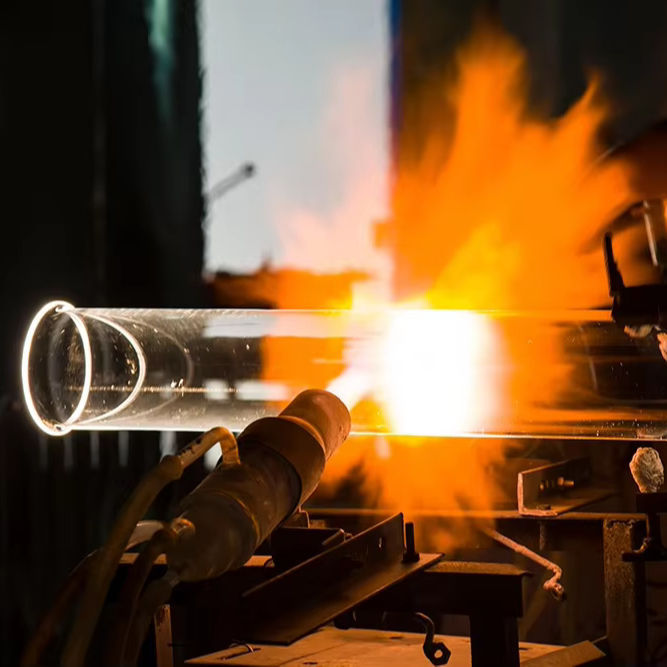
- Fire‑polishing: Eliminate micro‑cracks on tube end face, improve mechanical strength and sealing performance.
- Hot bending & tapering: Bend tube to specific angle; make tapered transition bore for capillary assemblies.
- Precision drilling & slotting: Side hole opening for gas‑liquid flow channel.
- Fused sealing & welding: Assemble multi‑part optical glass quartz assemblies.
- Stress‑relief annealing: Remove internal thermal stress after hot‑working to prevent spontaneous cracking.
Complex hot‑forming will increase production difficulty. Please provide 2D engineering drawing with dimension annotations instead of only text description for your custom order.
7. Typical Industrial Applications of Custom Fused Silica Quartz Glass Tube & Capillaries
Custom fused silica quartz glass tube and capillaries are core optical glass components across multiple high‑end industrial verticals. Different application scenarios set completely different priority requirements for material grade, tolerance and surface finish.
- Semiconductor manufacturing: Diffusion furnace liner, gas flow capillary parts, high‑purity material requirement.
- Analytical & laboratory instrument: Sample capillary tube, thermal analysis furnace liner, strict inner‑bore precision demand.
- Laser & optical photonics: UV‑IR light transmission tube, laser protective sleeve, focus on optical transmission performance.
- Industrial high‑temperature furnace: Heating sleeve, observation tube, focus on thermal shock resistance.
- Sensor & fluid‑gas detecting equipment: Fine‑bore quartz capillary for micro‑fluid channel.
8. Common Costly Mistakes When Sourcing Custom Optical Glass Quartz Components
From Felix Glass real‑world custom optical glass manufacturing projects, we summarize frequent mistakes that cause rework, extra cost and delayed delivery for custom fused silica quartz glass tube orders:
- Only give nominal dimension value without tolerance requirement, resulting in assembly mismatch after delivery.
- Select wrong fused silica optical glass grade: e.g. using JGS3 for UV working system, causing serious light absorption.
- Ignore devitrification risk, set long‑term working temperature exceed 1100℃ continuously.
- Order complex hot‑forming parts without engineering drawing, only describe requirement via simple text message.
- Omit end‑face treatment requirement, get rough cut surface with hidden micro‑cracks.
9. Complete RFQ Checklist: What To Prepare Before Contacting Optical Glass Manufacturer
Incomplete inquiry information is the main reason for slow quotation and misunderstanding for custom optical glass quartz tube orders. Before sending RFQ to your supplier, prepare information below:
- Fused silica optical glass grade requirement (JGS1 / JGS2 / JGS3).
- Full dimension set: outer diameter, inner diameter, wall thickness, total length plus tolerance range.
- End‑face treatment requirement: fire‑polished / cut / ground / chamfered.
- Secondary processing: hot bending, tapering, drilling, welding or other special operations.
- Actual working environment: continuous operating temperature, working wavelength, contacting medium.
- Order quantity: prototype sample quantity and mass‑production batch quantity.
- 2D engineering drawing (PDF format preferred).
Frequently Asked Questions
Q1: What is the difference between fused silica optical glass and ordinary quartz glass?
A: Fused silica optical glass is high‑purity synthetic fused silica material with low impurity content, excellent UV‑IR transmission performance, specially for precision optical glass components. Ordinary natural quartz may contain more trace metal impurities, not fit for high‑precision optical scenarios.
Q2: Can custom fused silica quartz glass tube work continuously at 1200℃?
A: Short‑term peak temperature can reach 1250℃, continuous long‑term working temperature should not exceed 1100℃ to avoid devitrification crystal precipitation.
Q3: What is the MOQ for custom quartz glass capillaries?
A: Felix Glass supports small‑batch prototype sample and mass‑production order. MOQ depends on dimension complexity and secondary processing difficulty.
Q4: Is fire‑polished end face mandatory for all custom fused silica quartz tube?
A: Not mandatory, but fire‑polishing removes micro‑cracks on cutting surface, greatly improving mechanical strength for high‑temperature or vacuum application.
Ready To Source Custom Fused Silica Quartz Glass Tube & Capillaries
Felix Optical Glass Co., Limited (Brand: Felix Glass) focuses on custom precision optical glass and fused silica components. We provide full‑service custom manufacturing from prototype sample to mass‑volume production, support JGS series fused silica material, various hot‑forming and precision finishing services. Submit your drawing and specification for professional quotation. Visit our custom optical glass quartz tube product page to view manufacturing capability details.