How to Select Optical Window Materials for LiDAR, ROV & Laser Systems
Published: August 12, 2026
Optical windows are critical protective components for modern industrial sensing and laser equipment. The wrong glass material will cause low light transmittance, signal distortion, coating burnout, water pressure failure, or short service life in harsh working conditions. For LiDAR sensors, underwater ROV/AUV systems, and high‑power laser machines, material selection directly determines equipment stability and project qualification.
This guide helps mechanical engineers and project buyers quickly choose the right optical window material for industrial customized projects.
1. Optical Window Material Selection for LiDAR Systems
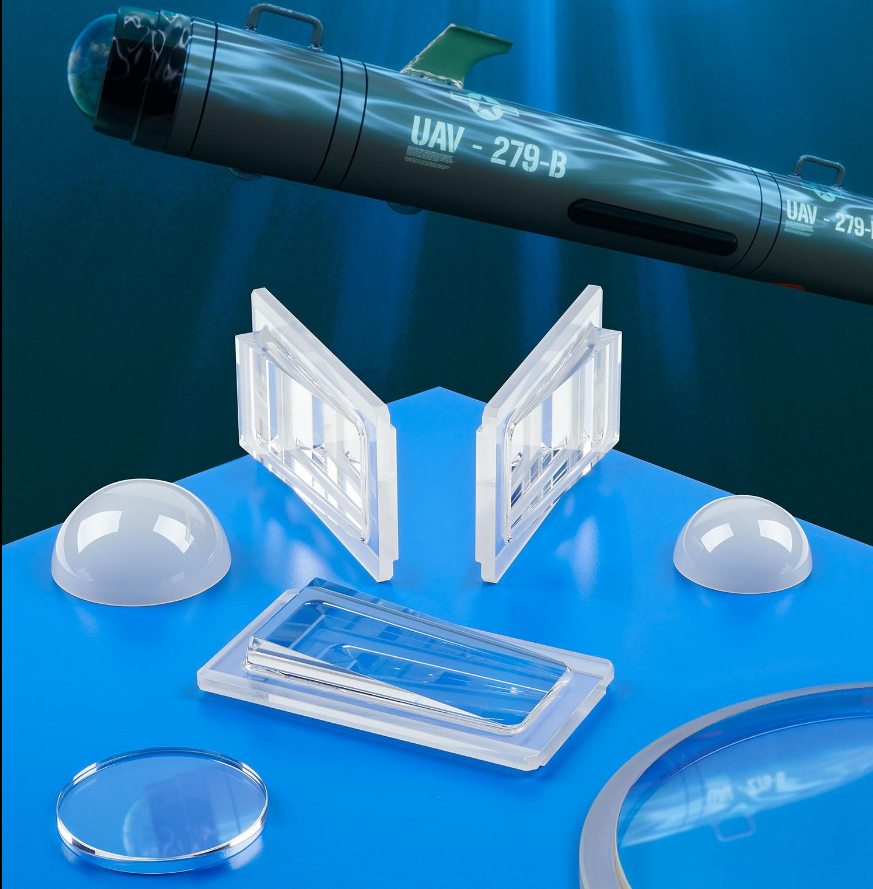 LiDAR optical windows require high infrared transmittance, low scattering, strong weather resistance, and anti‑pollution performance. The commonly used substrates are fused silica, borosilicate glass, and sapphire.
Fused Silica
Fused silica provides excellent transmittance for 850nm and 905nm infrared laser bands. It features low thermal expansion, high temperature resistance, and stable optical performance in vehicle vibration and outdoor temperature changes. It is the most cost‑effective solution for solid‑state LiDAR and industrial robot LiDAR windows.
Borosilicate Glass
Borosilicate glass offers good mechanical strength and chemical stability. It is suitable for low and medium‑range LiDAR devices with conventional environmental requirements and supports anti‑scratch and anti‑fouling coating customization.
Sapphire Glass
Sapphire has ultra‑high hardness and abrasion resistance. It is widely used for vehicle‑grade high‑end LiDAR that requires long‑term outdoor operation and strong impact resistance.
Key customization options: IR anti‑reflection coating, hydrophobic anti‑fouling coating, precise edge chamfering, flatness tolerance control. If you need custom sizes and optical coatings, check our LiDAR optical window product page for detailed parameters.
2. Underwater Optical Window Material Selection for ROV & AUV
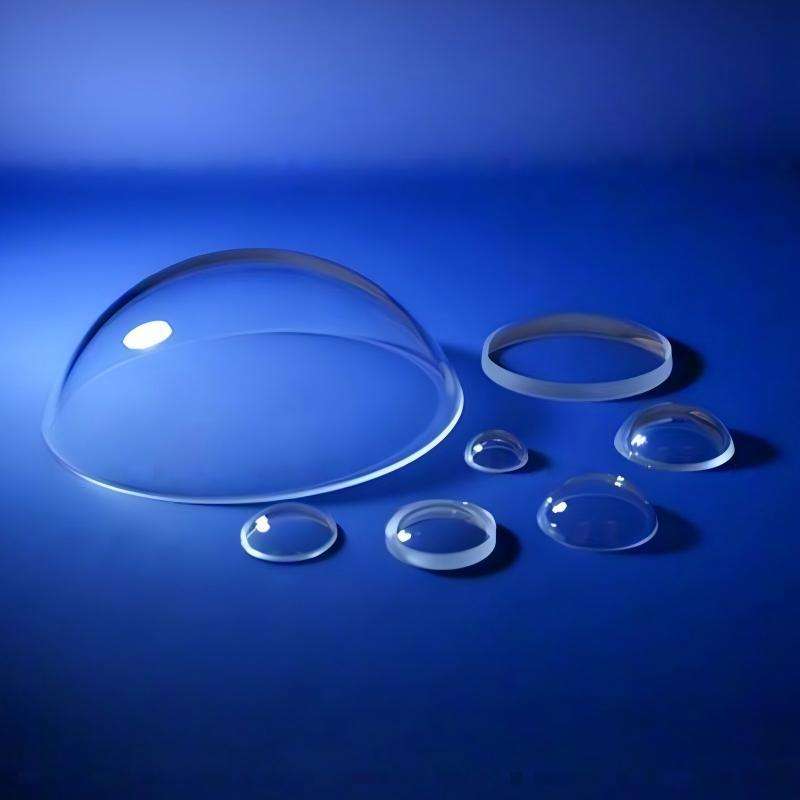 Underwater detection equipment faces extreme challenges such as deep water pressure, seawater corrosion, and underwater light refraction. ROV and AUV optical windows must balance pressure resistance, optical performance, and long‑term seawater adaptability.
High‑Pressure Borosilicate Glass
It is the mainstream material for medium‑depth underwater viewports. It has excellent pressure resistance, stable physical properties, and low cost for mass customization. It is widely used in underwater camera windows and shallow‑sea robot observation windows.
Sapphire Dome & Flat Window
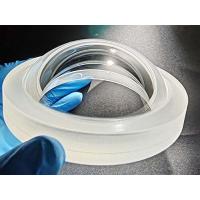
Sapphire features ultra‑high compressive strength, seawater corrosion resistance, and high light transmittance. It is the preferred material for deep‑sea ROV optical domes and high‑definition underwater imaging systems. It effectively avoids image distortion and pressure rupture in deep water environments.
Core process advantages: deep‑sea anti‑corrosion coating, high‑precision arc dome processing, thick‑wall pressure‑resistant customization. Learn more from our ROV underwater optical window and dome customized solutions.
3. High‑Power Laser Protection Window Material Selection
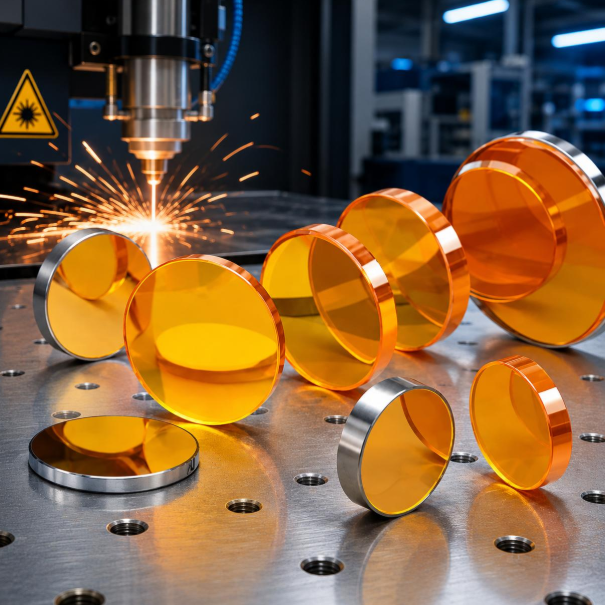 Laser protection windows are core consumable parts for laser cutting, welding, and marking equipment. Different laser bands must match specific substrate materials to avoid laser absorption, thermal deformation, and burst damage.
Fused Silica Laser Window
Perfect for fiber laser 1064nm band. It has high laser transmittance, low thermal absorption, and strong thermal shock resistance. It is the most common protective window for industrial fiber laser machines.
ZnSe (Zinc Selenide) Window
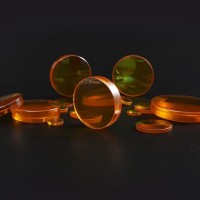
Special material for CO₂ laser 10.6μm far‑infrared band. It shows pale yellow appearance and excellent far‑infrared transmittance, which cannot be replaced by ordinary glass. Widely used in CO₂ laser cutting and engraving equipment.
Sapphire Laser Window
Used for ultra‑high‑power laser equipment that requires extreme abrasion resistance and high‑temperature resistance. It is suitable for high‑end industrial laser systems with strict service life requirements.
We provide coated laser protection windows with high damage threshold and customized diameters and thicknesses. Visit our laser protection window product page for specification sheets.
4. Quick Material Selection Comparison Table
| Material | Best Application Scenario | Key Advantages |
|---|---|---|
| Fused Silica | LiDAR & Fiber Laser | High light transmittance, excellent thermal stability |
| Borosilicate Glass | Conventional LiDAR & Medium‑depth Underwater Equipment | Cost‑effective, stable chemical performance |
| Sapphire | Deep‑sea ROV & High‑end LiDAR & Ultra‑high‑power Laser | Ultra‑high hardness, long service life, pressure‑resistant |
| ZnSe | CO₂ Laser Systems | Superb far‑infrared transmission performance |
5. Why Custom Industrial Optical Glass Needs Professional Manufacturer Support
Most industrial optical window projects are non‑standard customized solutions. Ordinary architectural glass or consumer‑grade glass cannot meet industrial optical tolerance, coating uniformity, pressure resistance, and laser damage threshold requirements.
We support custom drawings, small‑batch prototyping, MOQ flexible service, and professional optical coating processing for global industrial integrators and engineering contractors.
If you are selecting optical window materials for your LiDAR, underwater ROV, or laser equipment project, send us your specifications or drawings. We will provide a free professional material selection proposal and customized quotation within 24 hours.