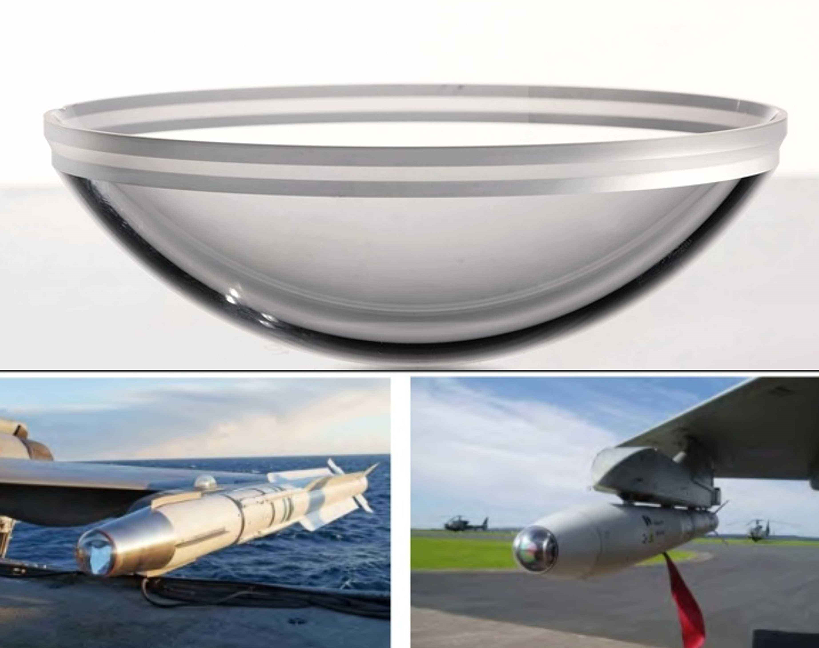
Whether deployed on UAV airborne turrets, ground vehicle platforms, or naval maritime monitoring systems, EO/IR optical components determine the overall sensitivity, imaging clarity, and operational reliability of defense equipment.
Unlike commercial optical systems, military-grade EO/IR optics must withstand extreme temperature fluctuations, continuous vibration, salt fog corrosion, sand erosion, and long-duration field deployment. Selecting the correct optical material is the foundation of high-performance defense EO/IR system design.
This article systematically introduces the core optical materials widely used in modern defense EO/IR systems, their spectral transmission characteristics, mechanical advantages, and typical military application scenarios.
1. Single Crystal Sapphire — UV to MWIR Hardened Defense Optics
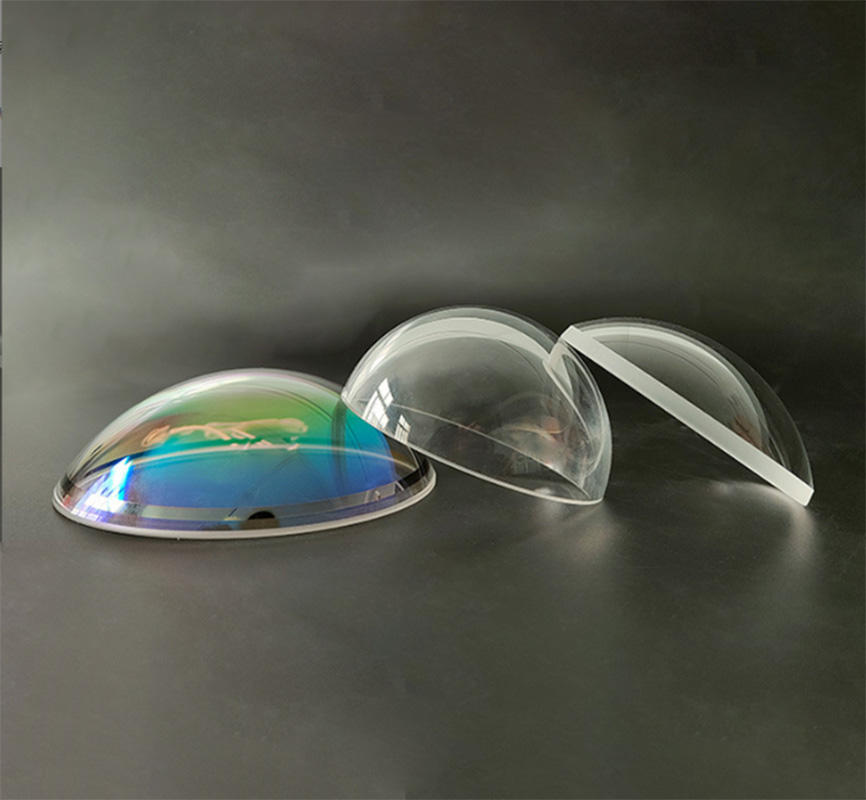
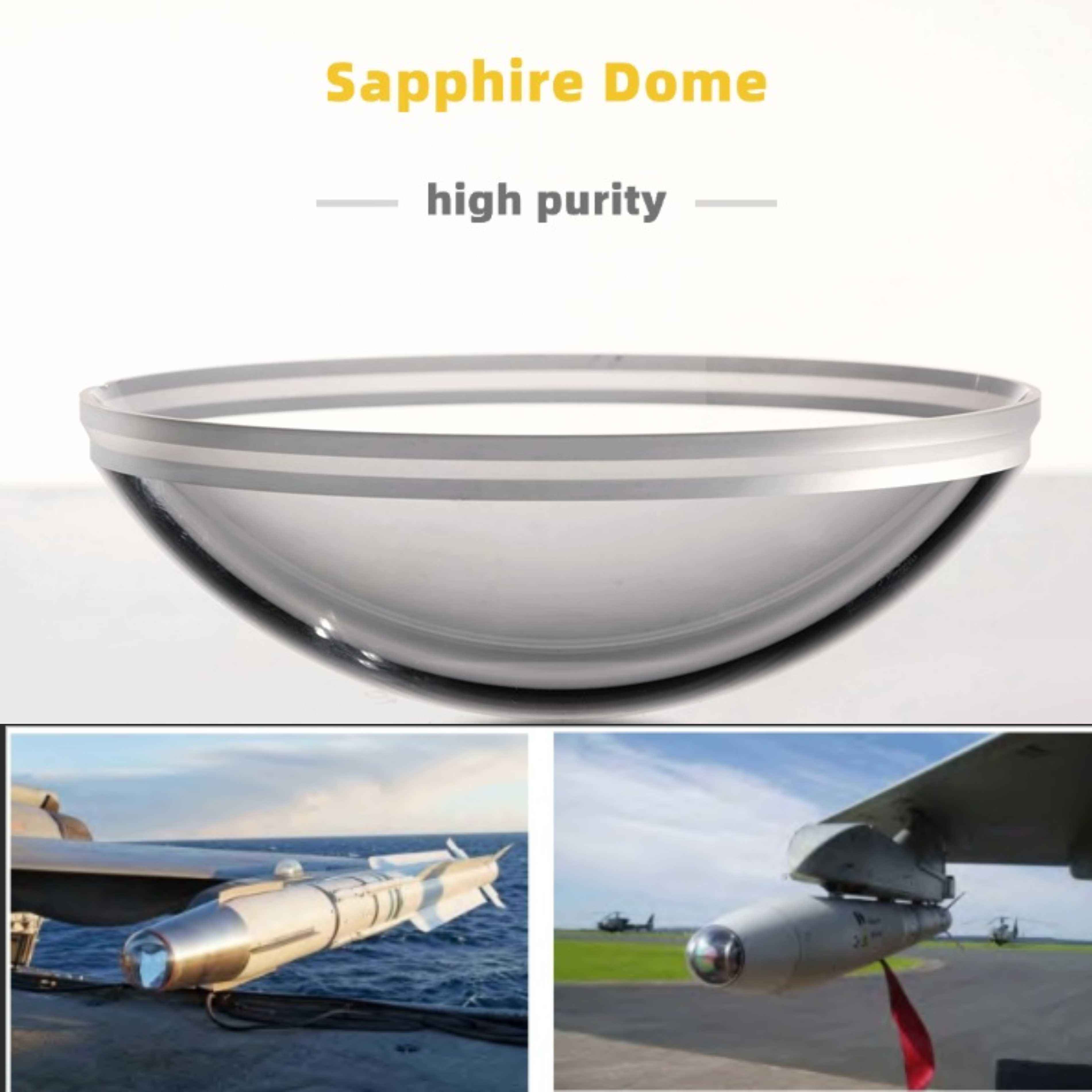
Sapphire is the most widely used high-hardness optical material for military protective windows and surveillance domes. With a Mohs 9 hardness rating, sapphire provides superior scratch resistance against sand, dust, and high-speed particle impact, making it ideal for airborne and harsh-field defense platforms.
Core Advantages
- Broad transmission covering UV, visible, NIR, and MWIR bands up to 5.5 μm
- Extremely high thermal conductivity, resisting thermal shock during aerodynamic heating
- Chemical inertness against salt fog, fuel, and hydraulic fluids
- Zero birefringence orientation available for polarization-sensitive sensors
Typical Defense Applications
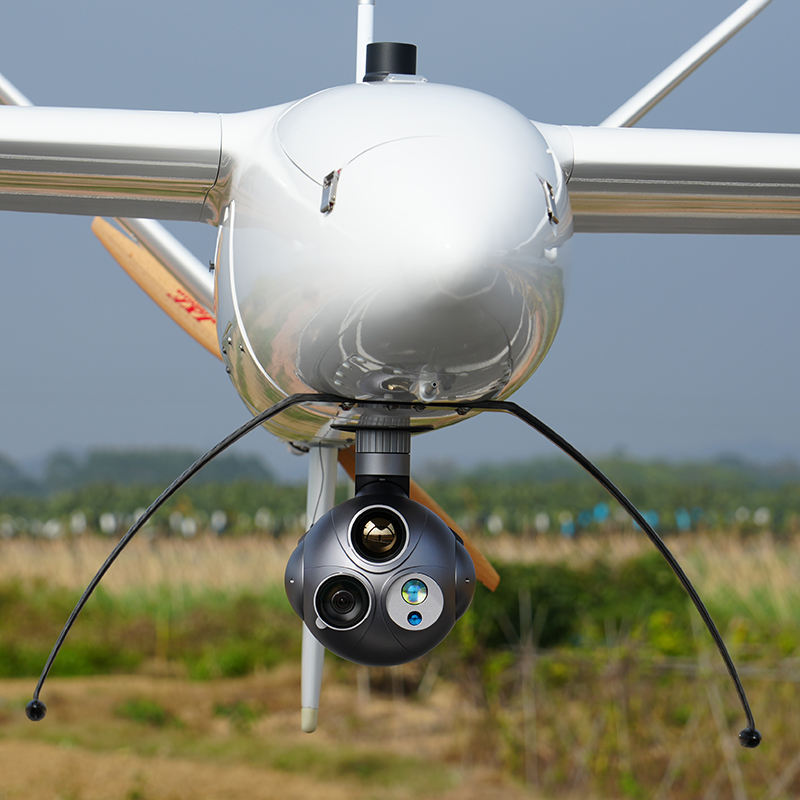
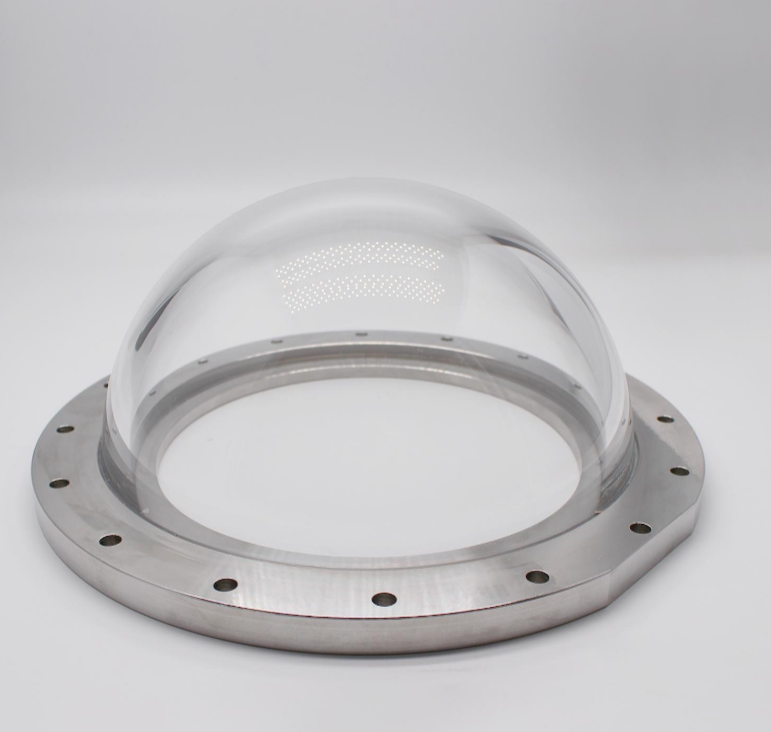
UAV surveillance domes, airborne EO/IR turret windows, naval maritime protective optics, and high-speed aircraft sensor covers.
2. Zinc Sulfide (ZnS) — Multispectral IR Material for All-Weather Surveillance
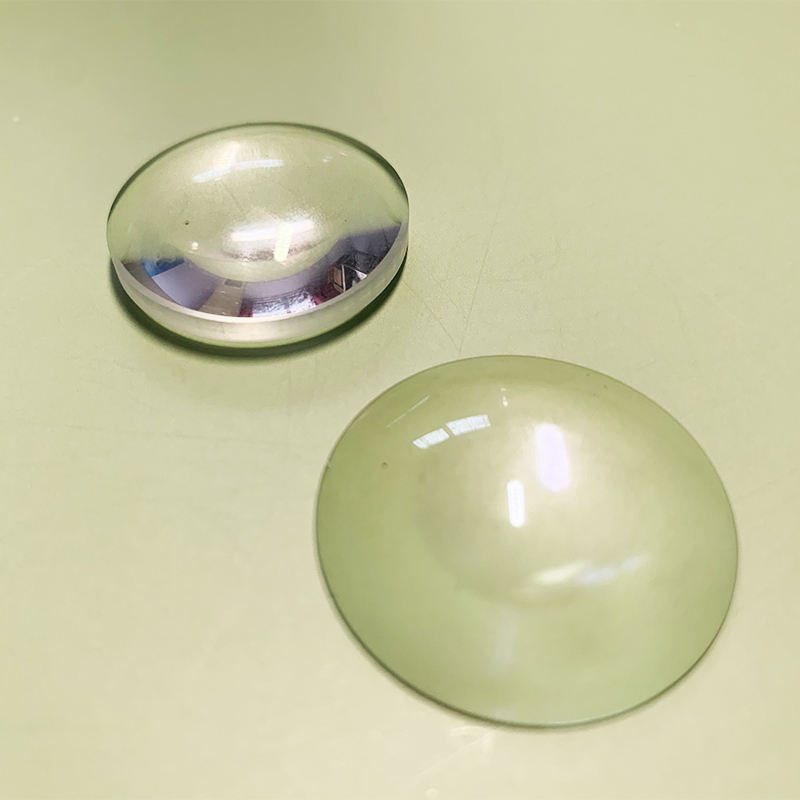
ZnS is a standard multispectral infrared material favored for military dual-band day-and-night imaging systems. It balances optical performance, mechanical stability, and cost-effectiveness for mass defense equipment deployment.
Core Advantages
- Stable transmission across visible, SWIR, MWIR, and LWIR spectra
- Excellent uniformity for thermal imaging detection
- Strong adaptability for humid and coastal environments
Typical Defense Applications
MWIR/LWIR thermal imaging domes, vehicle-mounted surveillance windows, and general military infrared optical substrates.
3. Zinc Selenide (ZnSe) — High-Precision MWIR & Laser Optics
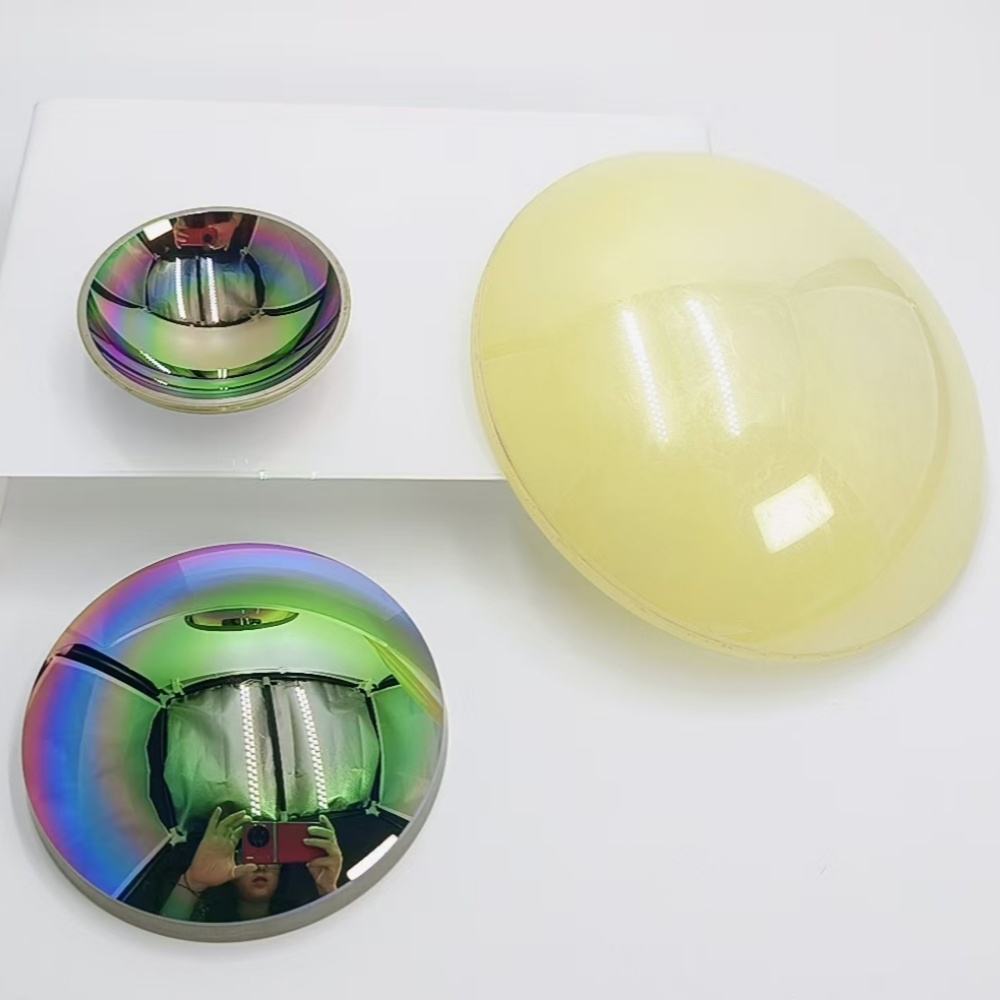
ZnSe features extremely high transmittance in the mid-wave infrared spectrum and low optical absorption, making it the preferred material for high-end military targeting and laser transmission systems.
Core Advantages
- Ultra-high MWIR transmittance
- Low thermal distortion under high-energy laser working conditions
- Ideal for dual-band AR coating optimization
Typical Defense Applications
Military laser targeting systems, precision thermal imaging cameras, and airborne infrared detection payloads.
4. Germanium (Ge) — Professional LWIR Thermal Imaging Material
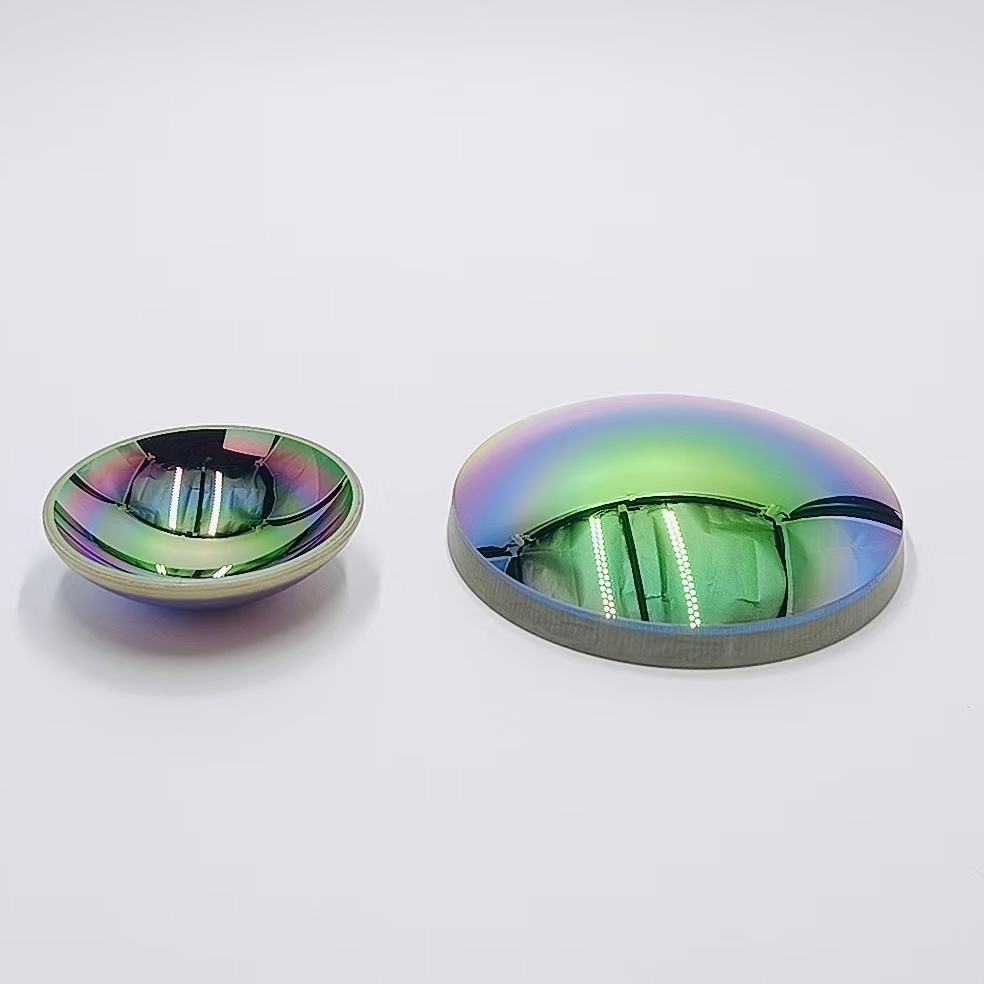
Germanium is the core material for long-wave infrared thermal imaging, widely used in high-sensitivity military night vision and temperature detection systems.
Core Advantages
- Exclusive LWIR transmission from 8 μm to 14 μm
- High refractive index for compact military optical lens design
- Excellent thermal imaging resolution
Typical Defense Applications
Military night vision devices, long-range infrared reconnaissance systems, and cooled thermal imaging detectors.
5. Fused Silica, BK7 & K9 — UV-VIS-NIR Defense Observation Optics
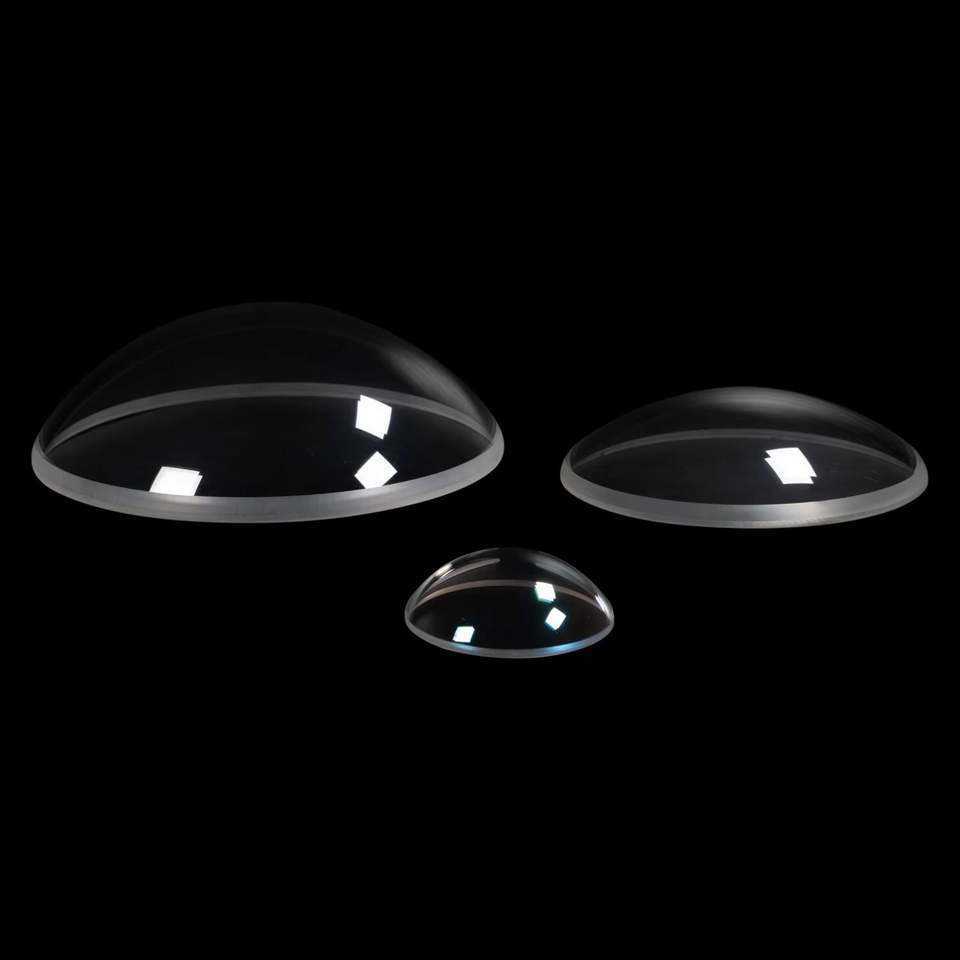
For UV calibration, visible light observation, and near-infrared auxiliary monitoring in defense systems, fused silica, BK7, and K9 remain essential due to their ultra-high surface quality and stable optical uniformity.
Core Advantages
- High UV transmittance
- Low internal impurity and excellent surface flatness
- Mature ultra-precision polishing process for military-grade flat windows and prisms
Typical Defense Applications
Defense optical calibration windows, sighting systems, observation lenses, and optical prisms.
6. How to Select EO/IR Optical Materials for Defense Systems
Military optical engineers typically select materials based on three core dimensions:
1. Operational Spectral Band
- UV-VIS-NIR missions: Fused Silica, BK7, K9
- MWIR thermal detection: Sapphire, ZnSe
- LWIR night vision: ZnS, Germanium
- Full-spectrum multi-band surveillance: Sapphire, multispectral ZnS
2. Working Environment
- High-speed airborne platforms: Priority sapphire (anti-shock, thermal shock resistance)
- Coastal & naval systems: Sapphire and corrosion-resistant IR substrates
- Ground battlefield environments: ZnS and hardened coated optics
3. System Precision Requirements
High-precision targeting and laser systems require ZnSe and germanium; general surveillance systems adopt sapphire and ZnS for balanced performance.
7. Military-Grade Coating Technology for EO/IR Optics
Material performance is further enhanced by professional military optical coatings:
- Dual-band BBAR coating: Improve transmittance for day-night dual-spectrum systems
- DLC hard carbon coating: Enhance abrasion and environmental resistance
- Hydrophobic anti-fog coating: Adapt to marine high-humidity environments
- MIL-STD qualified coatings: Ensure long-term battlefield stability
8. Conclusion
Modern defense EO/IR systems require customized optical material solutions based on wavelength band, environmental conditions, and system precision. Sapphire dominates high-hardness multi-band defense protection, while ZnS, ZnSe, and germanium form the core infrared material system for military thermal imaging.
Felix Glass provides full-spectrum custom EO/IR optical components, including sapphire domes, infrared windows, IR lenses, and military-grade coating services, fully compliant with MIL-STD environmental testing standards for global defense and aerospace system integrators.
FAQ
Q1: Which material is best for military all-weather EO/IR domes?
Sapphire is the top choice for harsh environments, while multispectral ZnS is ideal for cost-effective dual-band thermal surveillance.
Q2: What is the difference between ZnS and ZnSe in defense optics?
ZnS offers balanced multispectral performance, while ZnSe provides higher transmittance for MWIR laser and high-precision thermal systems.
Q3: Does military EO/IR optics require customized coating?
Yes. Military-grade AR, BBAR, and DLC coatings are essential to reduce light loss and improve environmental durability.
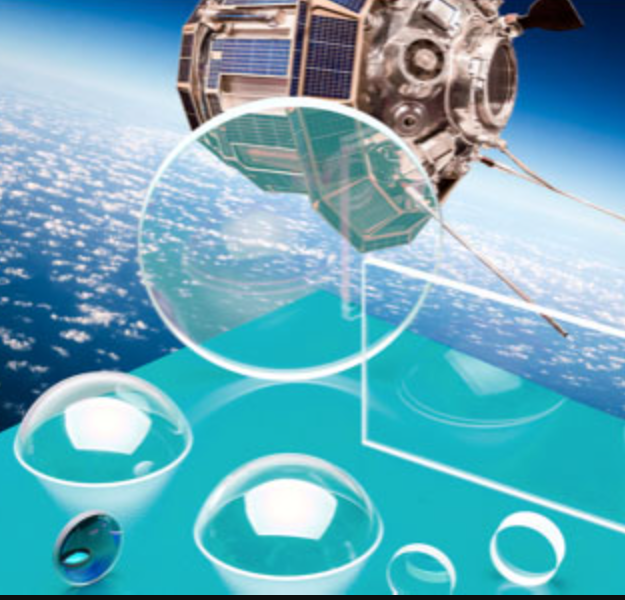
Related Custom Precision Optical Domes
Custom EO/IR Optical Components for Defense Projects
Share your spectral requirements, working environment and drawing specifications. Our optical engineers offer material selection consultation and customized manufacturing solutions.
Request Technical Quotation & Material Advice