Sapphire Windows for High Temperature Industrial Thermal Sensing
Single crystal sapphire observation windows engineered for sustained operation inside industrial furnaces, combustion chambers, and high temperature process vessels. Designed for thermal imaging, infrared pyrometry, and continuous process monitoring in US thermal processing facilities.
What Is a Sapphire Thermal Sensing Window
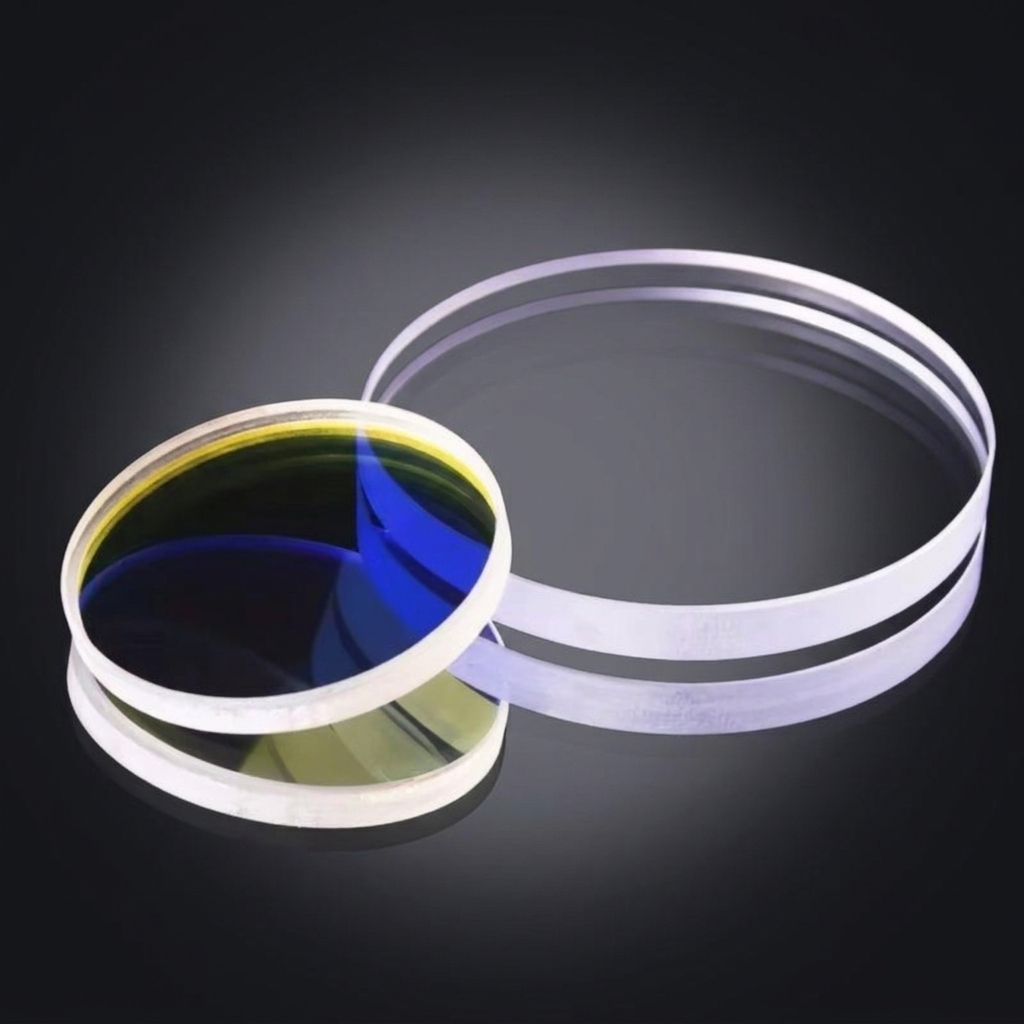
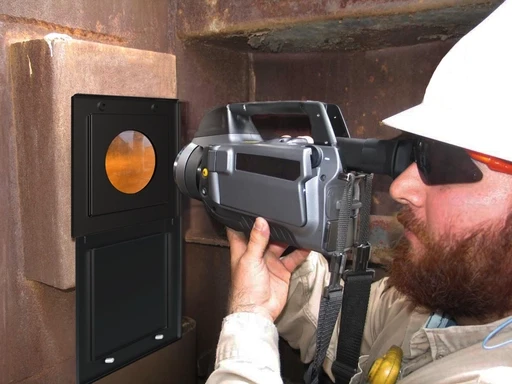
A sapphire thermal sensing window is a single crystal aluminum oxide (Al₂O₃) viewport installed in the wall of a furnace, boiler, kiln, or reactor. It transmits infrared radiation from the hot process zone to an external thermal camera, pyrometer, or process spectrometer, while the window itself remains at a stable temperature far below the process gas temperature.
For thermal system engineers, furnace equipment procurement managers, and industrial optics designers selecting viewports for high temperature service, sapphire is the practical upper bound for optical transmission plus mechanical strength. It holds its form, surface figure, and IR transmission at sustained operating temperatures that would soften, devitrify, or crack fused quartz and borosilicate glass.
Felix Glass manufactures custom sapphire windows for these applications in sizes from 10 mm to 300 mm diameter or major axis, with optical figure, coatings, and edge mounting configured to the sensor and the process.
Why Single Crystal Sapphire for High Temperature Environments
Sapphire's combination of melting point, thermal conductivity, and hardness is the reason it is specified where fused quartz, borosilicate, and standard IR glasses fail.
Melting Point 2040 °C
Sapphire melts at approximately 2040 °C, well above the 1200 °C softening point of fused quartz and the 820 °C softening point of borosilicate glass. For sustained service in the 600 °C to 1600 °C window-mount temperature band, sapphire is the standard reference material.
High Thermal Conductivity
At room temperature sapphire conducts heat at roughly 35 W/m·K, more than 25 times that of fused quartz. Higher conductivity means the window edge stays cooler under one-sided heat flux, which reduces thermal gradient stress across the disk.
Mohs 9 Hardness
Sapphire is the hardest commercially available optical material after diamond. The polished surface resists particle abrasion from combustion gases, slag dust, and process particulates that would frost softer window materials within hours of service.
Thermal Shock Resistance
The combination of high strength, moderate thermal expansion (5.0 × 10⁻⁶/K parallel to the c-axis), and high conductivity gives sapphire a figure of merit for thermal shock that exceeds that of tempered borosilicate by more than an order of magnitude.
For the underlying material data sheet, see Sapphire Optical Glass on Felix Glass.
Operating Temperature, Thermal Shock, and Mechanical Stability
Thermal system engineers selecting a window for a specific process usually need three numbers: the maximum continuous service temperature, the maximum thermal gradient the window can sustain, and the differential pressure it can hold at that temperature.
Felix Glass rates sapphire thermal sensing windows against the following design limits when mounted in a clamped metal ferrule with a graphite or metallic gasket:
- Maximum continuous window-mount temperature: 1600 °C in inert or oxidizing atmosphere, 1900 °C in inert atmosphere short term.
- Maximum thermal gradient (one side cold, one side hot): 200 K sustained, 400 K transient during upset events.
- Maximum differential pressure at 800 °C window-mount temperature: 0.5 MPa for 5 mm thickness, 0.3 MPa for 3 mm thickness.
- Surface figure after 100 thermal cycles (room temperature to 800 °C): λ/4 peak-to-valley at 633 nm, no measurable change in surface roughness.
For each application Felix Glass runs an FEA thermal-stress check on the proposed geometry and mounting, and returns a design report with the predicted temperature distribution and stress margins.
Optical Transmission Across MWIR, LWIR, and SWIR Bands
Sapphire transmits from the ultraviolet cutoff near 200 nm through the mid-wave infrared (MWIR) and into the long-wave infrared (LWIR) out to roughly 5 μm. This covers the spectral bands used by most industrial thermal imaging cameras and process pyrometers.
| Spectral Band | Wavelength Range | Typical Application | 3 mm Window Transmission |
|---|---|---|---|
| Visible (VIS) | 400 – 700 nm | Visual flame inspection, color cameras | ≥ 85% |
| Short-wave infrared (SWIR) | 0.9 – 1.7 μm | Glass temperature, semiconductor processing | ≥ 85% |
| Mid-wave infrared (MWIR) | 3 – 5 μm | Combustion monitoring, furnace imaging | ≥ 80% |
| Long-wave infrared (LWIR) | 8 – 14 μm | General thermal imaging cameras | Not applicable (sapphire absorbs beyond 5 μm) |
For LWIR-band thermal cameras operating in the 8 – 14 μm window, sapphire is not the right material. Felix Glass supplies germanium, zinc selenide, or chalcogenide windows for those applications, and helps customers choose the right material based on the camera band and the process temperature.
AR, IR, and DLC Coating Options for Thermal Imaging
Anti-reflection coatings raise the in-band transmission by 8 to 12 percentage points, which directly improves the signal-to-noise ratio of the thermal camera and reduces the required exposure time. For high temperature service the coating must survive thermal cycling and resist chemical attack from the process atmosphere.
Felix Glass offers four coating configurations that are qualified for sustained high temperature service on sapphire:
- Broadband VIS-NIR AR (400 – 900 nm): MgF₂/LaF₃ stack, qualified to 600 °C, used for flame monitoring and visual inspection.
- MWIR AR (3 – 5 μm): ZnS/YbF₃ stack, qualified to 800 °C, used for combustion imaging and furnace temperature mapping.
- Diamond-like carbon (DLC) outer protective layer: 200 nm to 800 nm DLC overcoat, raises surface hardness to > 80 GPa, qualified to 1200 °C in oxidizing atmosphere, used where particulate abrasion is the dominant failure mode.
- Index-matched wedged optic: 0.5° to 2.0° wedge on the outer face to redirect back-reflected energy away from the sensor, used in laser-based pyrometry where back-reflection is a measurement noise source.
Custom Sizes, Shapes, and Edge Machining
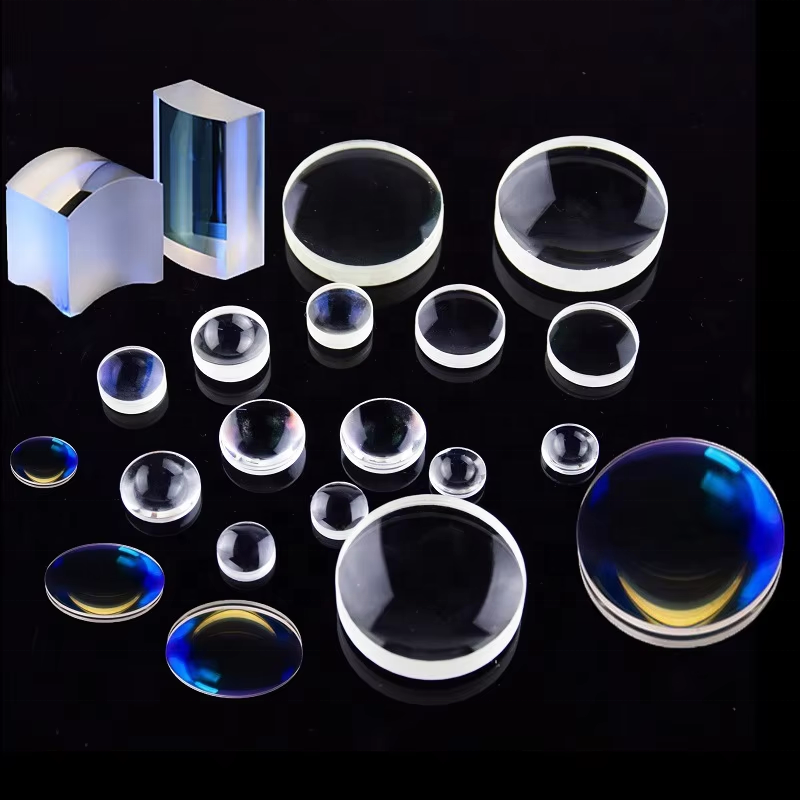
Sapphire windows for thermal sensing are rarely off-the-shelf. The diameter, thickness, edge profile, and mounting flange are matched to the port in the furnace wall and the camera envelope.
Round Disks
10 mm to 300 mm diameter. Standard thicknesses 1.0 mm, 1.5 mm, 2.0 mm, 3.0 mm, 5.0 mm, 6.0 mm, 8.0 mm. Diameter tolerance ± 0.05 mm for diameters up to 100 mm, ± 0.10 mm above.
Rectangular Plates
Up to 200 mm × 150 mm. Used where the port opening is rectangular or where a larger field of view is needed for a single camera. Edges ground and chamfered, no sharp corners.
Slots and View Tubes
Long aspect ratio windows for slot-style observation ports in continuous furnaces, slab reheat furnaces, and continuous annealing lines. Lengths up to 500 mm have been delivered.
Mounting Flanges
Stainless steel, Inconel, or titanium mounting flanges brazed or metallized to the sapphire edge. KF, CF, ANSI, and DIN flange styles supported. Custom flange drawings accepted.
For a representative product configuration, see Sapphire Window for High Temperature Industrial Sensor.
Integration with Thermal Cameras, Pyrometers, and Process Sensors
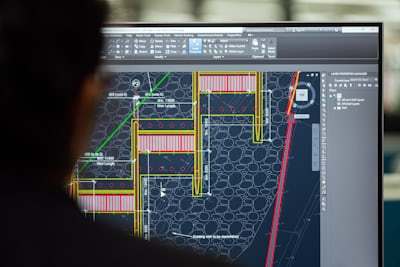
For thermal system engineers, the window is one element in a chain that includes the camera or pyrometer, the lens, the air purge, the cooling jacket, and the mounting boss. The transmission, refractive index, and wedge of the window all have to be accounted for in the radiometric calibration of the sensor.
Felix Glass supplies the following data with every custom thermal sensing window, formatted for direct import into common camera calibration software:
- Per-surface in-band transmission curve, 0.4 μm to 5.0 μm, 10 nm step.
- Index of refraction versus wavelength at the design temperature (room temperature and the rated service temperature).
- Wedge angle and orientation with respect to the mounting reference feature.
- Recommended air purge flow rate and purge gas dew point to keep the window free of condensation and particulate fouling.
For pyrometers and narrow-band radiometers, Felix Glass also supplies witness coupons of the same sapphire lot for periodic in-service calibration checks.
Installation in Furnaces, Boilers, and Process Vessels
A sapphire window is mechanically strong, but it is still a ceramic. The mounting design, the gasket, and the torque sequence are what determine whether the window survives the first thermal cycle and the last.
Verify the Mounting Boss
The mounting boss must be flat to within 0.05 mm across the sealing face, and the bolt circle must be round within 0.1 mm. Felix Glass provides a step-by-step boss preparation checklist on request.
Select the Gasket
For oxidizing atmospheres up to 1000 °C, annealed copper or Inconel 600 spiral-wound gaskets. For reducing atmospheres or service above 1000 °C, graphite gaskets with a stainless steel inner ring. Do not use organic or composite gaskets in high temperature service.
Torque in a Cross Pattern
Torque the bolts in a star pattern to the value specified on the drawing in three passes: 30%, 70%, 100%. Re-torque after the first thermal cycle once the assembly has returned to room temperature.
Start the Air Purge Before Heat-Up
Start the clean dry air purge on the cold face before lighting the furnace. The purge prevents condensation and keeps combustion byproducts from depositing on the outer face of the window during the first heat-up cycle.
Manufacturing Process, Inspection, and Material Traceability
For procurement managers, the documentation behind the part is as important as the part itself. Felix Glass issues the following documentation with every custom sapphire thermal sensing window:
- Material certificate with boule source, growth method (Kyropoulos, edge-defined film-fed growth, or heat-exchanger method), and lot number.
- Dimensional inspection report, including thickness map, parallelism, and surface figure interferogram.
- Coating run data, including the coating chamber log, spectral transmission scan, and adhesion test result.
- 100% visual inspection at 10× magnification for edge chips, surface scratches, and inclusion defects.
- Optional: helium leak test report, accelerated thermal cycle test report, and First Article Inspection per AS9102.
The Felix Glass quality system is certified to ISO 9001, and the sapphire production line is separately audited to AS9100D for aerospace and defense thermal imaging applications.
Industry Applications Across US Thermal Processing Facilities
Sapphire thermal sensing windows from Felix Glass are in service in the following process industries in the United States.
Steel and Metals
Reheat furnace temperature mapping, continuous casting mold monitoring, ladle metallurgy station observation, and slab edge temperature measurement.
Glass Manufacturing
Float bath temperature monitoring, forehearth observation, and gob temperature measurement in container glass and fiberglass lines.
Cement and Lime
Kiln burning zone temperature monitoring, preheater tower observation, and calciner inspection in cement and lime production.
Semiconductor and Solar
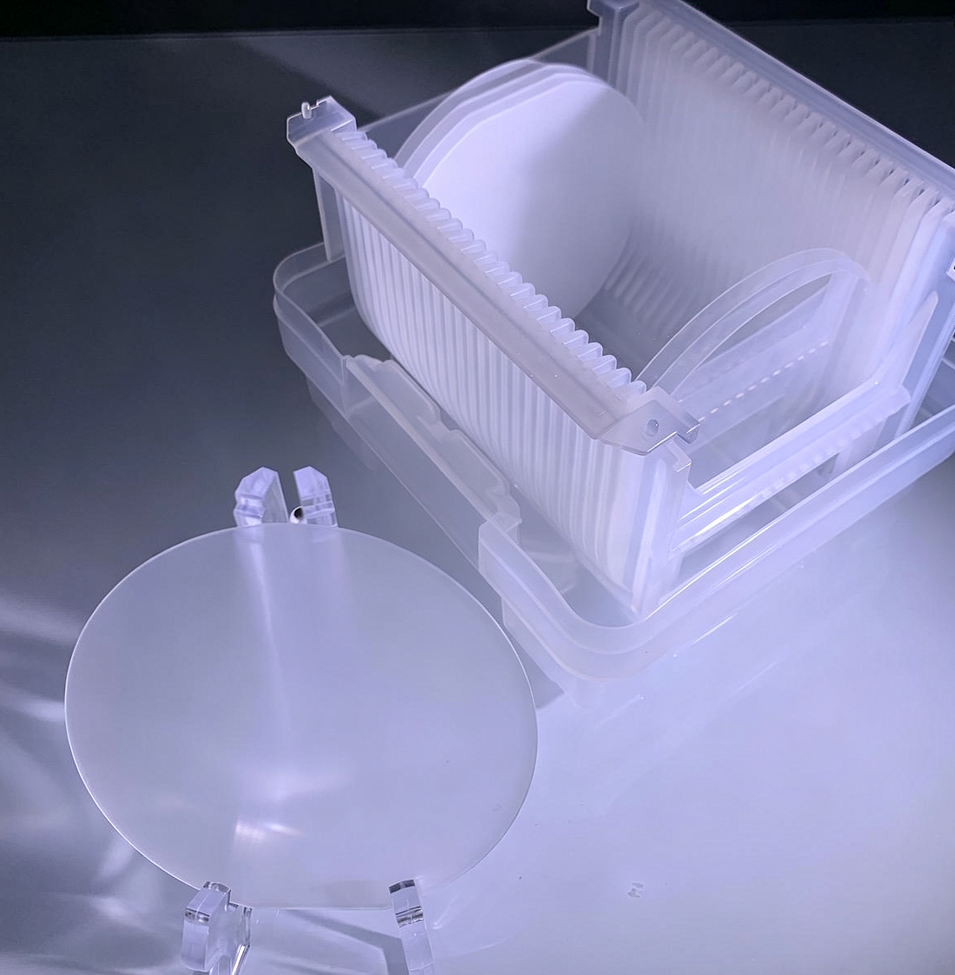
Single-crystal silicon growth furnace observation, MOCVD reactor viewports, and high temperature wafer processing chambers.
Petrochemical and Refining
Fluid catalytic cracker observation, fired heater inspection, ethylene cracking furnace monitoring, and sulfur recovery unit viewports.
Power Generation
Coal-fired boiler observation, waste-to-energy furnace inspection, and biomass combustion monitoring.
A working example of sapphire window installation in a US steel reheat furnace is documented in the case study Sapphire Window Solution for Industrial Furnace Camera Protection.
Buyer's Specification Checklist for Sapphire Thermal Windows
Send this list with your RFQ. Felix Glass returns a fixed-price quotation and a lead time within two business days.
1. Process Data
- Window-mount temperature, continuous and peak
- Process atmosphere composition
- Maximum differential pressure across the window
- Expected thermal cycles per year
2. Optical Data
- Spectral band of interest (VIS, SWIR, MWIR)
- Camera model and lens focal length
- Required field of view
- Wedge and back-reflection requirements
3. Mechanical Data
- Window diameter or width × height
- Window thickness or pressure rating
- Mounting flange standard and bolt pattern
- Air purge port size and location
4. Commercial Data
- Annual quantity and forecast horizon
- Required delivery date
- Quality documentation requirements
- Target unit price band (USD)
Why Felix Glass for Industrial Sapphire Window Manufacturing
Felix Glass is a China-based precision optics manufacturer with a dedicated sapphire window production line for industrial thermal sensing applications. The factory has produced more than 80,000 custom sapphire windows since 2013, with current production capacity of 6,000 custom parts per month.
For thermal sensing windows, Felix Glass holds the relevant working reference with the following equipment lines and US-based customers. Specific customer references and signed NDAs are available on request under a mutual confidentiality agreement.
Single crystal sapphire growth through edge-defined film-fed growth (EFG) and heat-exchanger method (HEM) partners, with boule source qualification per lot.
Double-sided polishing, MRF finishing, and in-house surface figure metrology to λ/20 PV at 633 nm.
In-house coating chambers for VIS-NIR AR, MWIR AR, and DLC, with coating design reports issued per build.
Engineering support in US business hours through the Wuhan and Dongguan engineering teams, with sample shipments from Hong Kong or Shenzhen typically arriving at US destinations in 5 to 8 business days.
Frequently Asked Questions About Sapphire Thermal Sensing Windows
What is the maximum continuous operating temperature of sapphire windows?
Felix Glass rates sapphire thermal sensing windows for 1600 °C continuous service in oxidizing or inert atmosphere, and short-term exposure to 1900 °C in inert atmosphere. The limit is set by the mounting hardware and the gasket material, not by the sapphire itself.
How does sapphire compare to quartz and borosilicate glass for thermal sensing?
Sapphire has a higher melting point (2040 °C vs 1200 °C for fused quartz and 820 °C for borosilicate), higher thermal conductivity (about 25 times quartz), and higher surface hardness (Mohs 9 vs Mohs 5.5 for quartz). For sustained high temperature service sapphire lasts longer and holds its surface figure better.
What coating options are available for thermal imaging applications?
Felix Glass offers broadband VIS-NIR AR for flame monitoring, MWIR AR for combustion imaging, DLC overcoat for abrasion resistance, and wedged optics for laser pyrometry. Each coating is qualified to a specific maximum service temperature and is shipped with a spectral scan and adhesion test report.
What is the typical lead time for custom sapphire thermal windows?
Standard geometry round disks in stock diameters ship within 5 to 7 business days from the Shenzhen factory. Custom geometry, custom coatings, and metallized flanges are typically delivered in 3 to 4 weeks. Larger engineering builds with FEA thermal-stress reports run 5 to 7 weeks.
Can sapphire windows be reused after thermal cycling or shock events?
Yes, provided the window passes a visual inspection and a surface figure measurement after the event. Sapphire does not fatigue in the metal sense, and small surface marks from thermal events do not affect optical performance. Felix Glass provides a free re-qualification service for windows returned after a thermal event.
Request a Quote or Engineering Sample
Send the four items in the specification checklist above to the Felix Glass engineering team. For a working sample, the engineering team can ship a 25 mm or 50 mm standard MWIR-coated window from stock within five business days for US-based trial installations.