Medical Sensor Optical Windows & Biocompatible Optics for US Medical Equipment OEMs
Felix Glass supplies custom medical sensor optical windows, biocompatible sapphire viewports and AR-coated fused silica windows to US medical device manufacturers building wearable patient monitors, clinical diagnostic analyzers and non-invasive detection instruments. Our optical windows are CNC-machined to your OEM dimensions, double-side polished to λ/10, and shipped with material lot traceability, dimension reports and biocompatibility documentation your regulatory team can file.
- Sapphire, fused silica, BK7, borosilicate
- ±0.025 mm CNC tolerance, λ/10 surface
- ISO 13485-aligned documentation
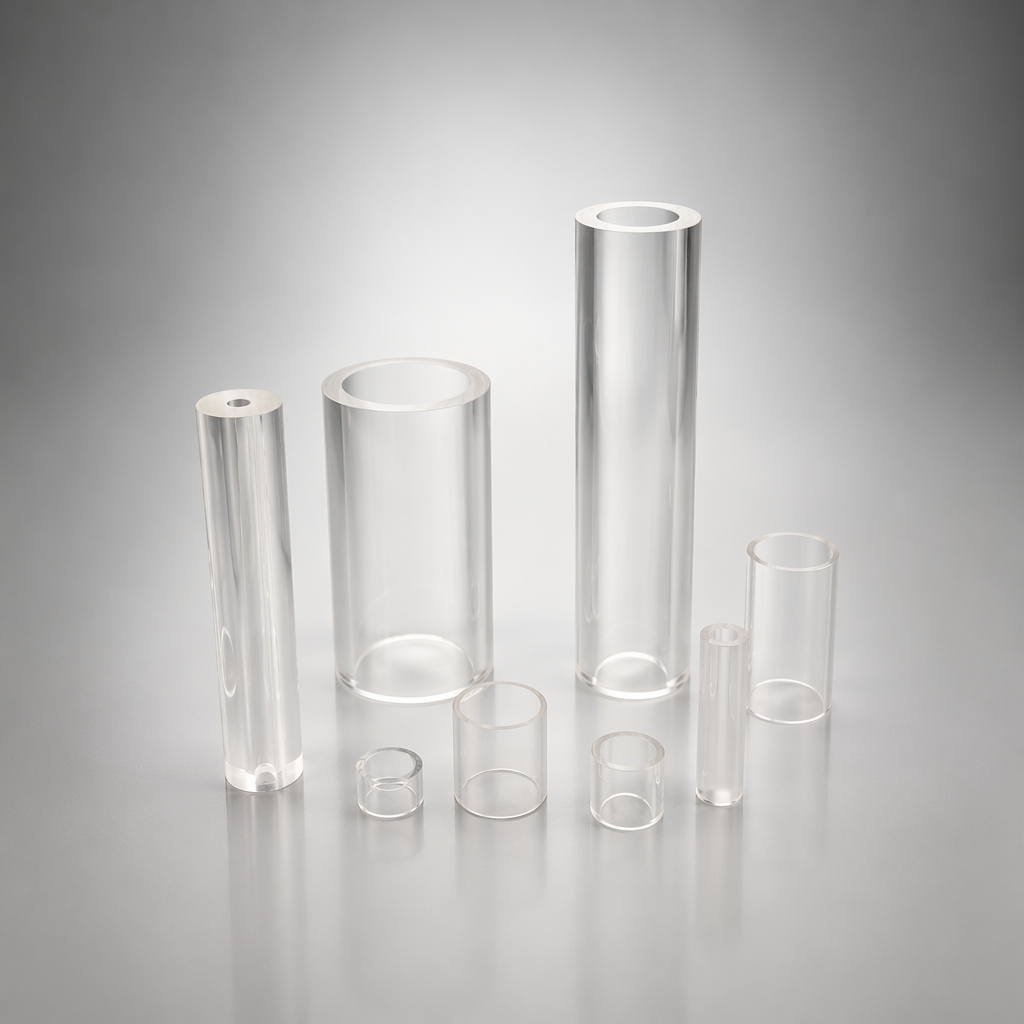 Felix Glass optical windows are specified into US medical sensor programs from prototype to production lot.
Why Medical Sensor Optics Need Different Engineering Than Industrial Optics
An optical window in a medical sensor is not a window in a laser scanner. Patient contact, sterilization cycles, body fluid exposure, regulatory documentation and tight signal‑to‑noise requirements all change the design constraints. Felix Glass engineers optical windows against the full medical device context, not just the optical spec sheet.
Patient‑contact constraints
Materials in wearable and skin‑contact sensors need to clear USP Class VI or ISO 10993 cytotoxicity testing. We document material grade, lot number and surface finish on every shipment so your regulatory team can build a Device Master Record without reverse‑engineering the supply chain.
Sensor signal integrity
A scratch, subsurface damage layer or coating non‑uniformity on the optical window will show up directly in the photodetector signal. We hold surface roughness under 1 nm Ra on sapphire and 0.5 nm Ra on fused silica to keep your sensor noise floor where the analog front end expects it.
Regulatory traceability
FDA 21 CFR 820 and ISO 13485 buyers expect material certificates, dimension reports, coating transmission curves and inspection records with every lot. Our standard shipment package includes the documents your QA team needs to close out an incoming inspection on the first pass.
Biocompatible Material Options for Patient‑Contact Optical Windows
Most US medical device programs we work with specify one of four substrate families. The right choice depends on the wavelength range, the sterilization method and the mechanical environment of the sensor.

Synthetic sapphire (mono‑crystalline Al₂O₃)
Mohs 9 hardness, 200 nm to 5000 nm transmission, autoclavable. The default choice for reusable patient‑contact sensors, endoscope distal windows and any application that sees repeated sterilization.
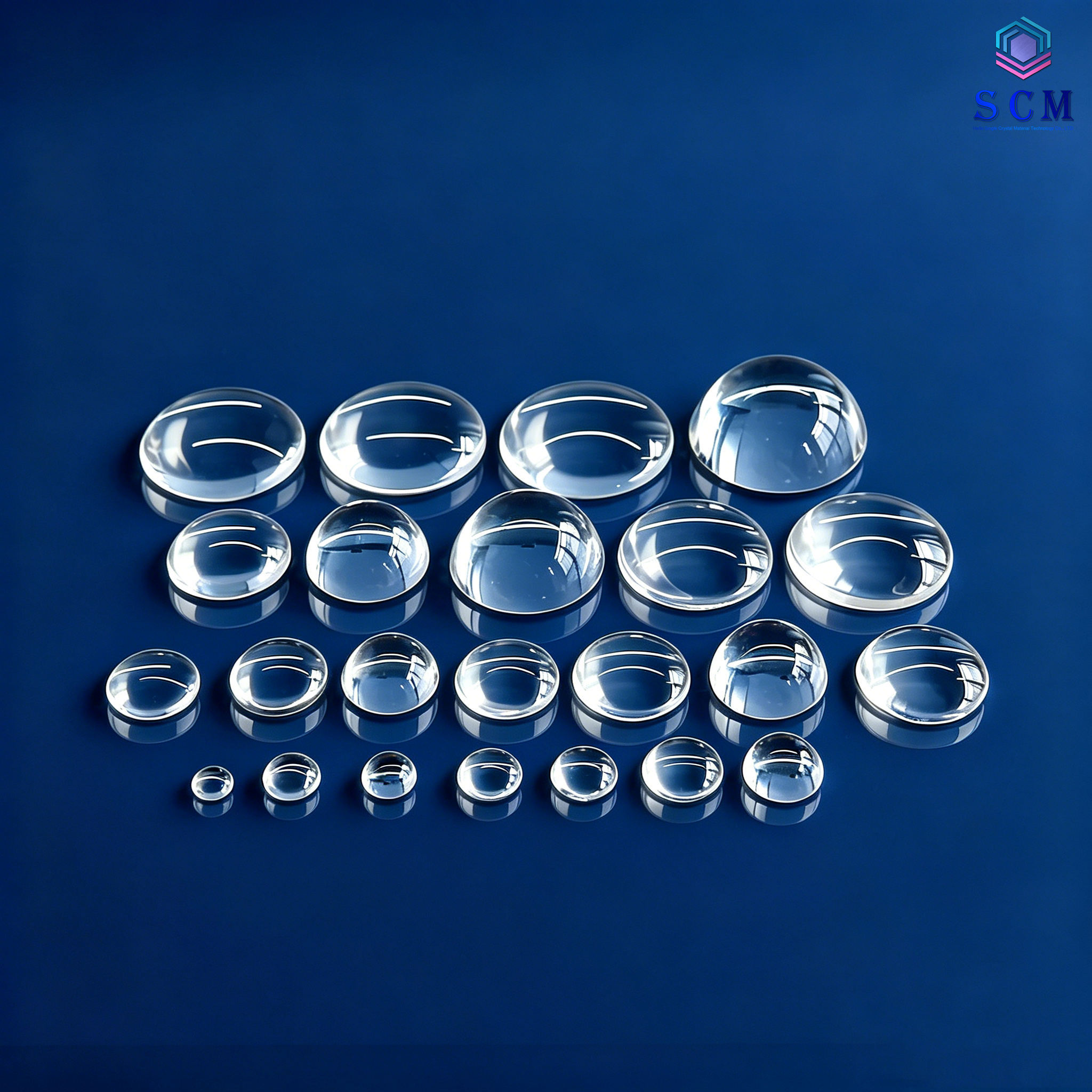
Fused silica (UV‑grade)
180 nm to 2500 nm transmission, low fluorescence, low thermal expansion. The choice for UV‑Vis spectroscopy flow cells, fluorescence‑based diagnostic readers and lab‑on‑chip optical interfaces.
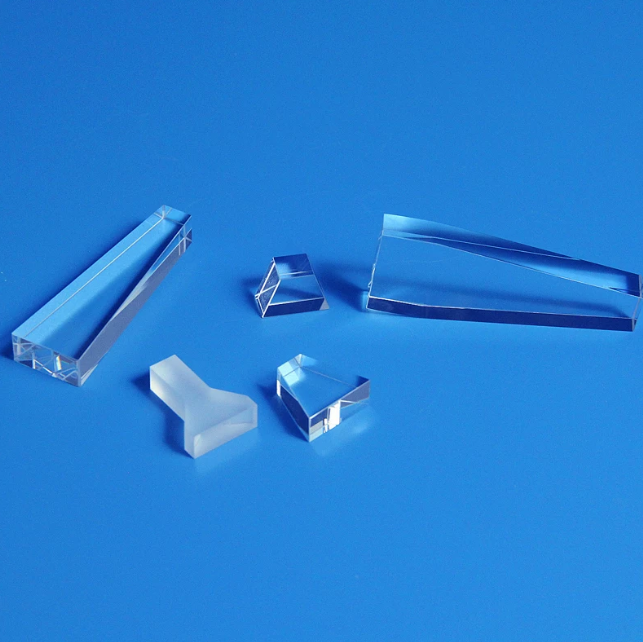
Borosilicate (B 270 / D 263T)
Cost‑effective for high‑volume disposable diagnostic cartridges and lateral‑flow readers where biocompatibility is required but the optical demands are in the visible band only.
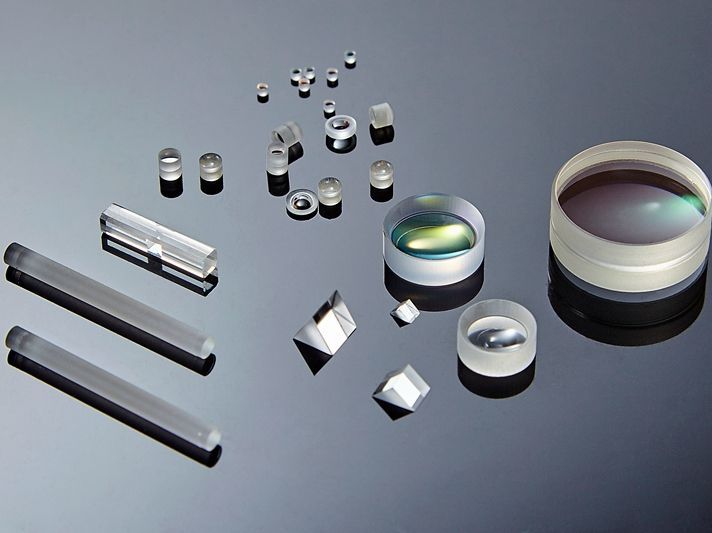
N‑BK7 optical glass
Visible and near‑IR transmission with good polishability. Common in clinical instrument internal optics and reference windows that sit behind a patient‑contact sapphire cover.
See full substrate data on our sapphire optical glass material page or the medical‑grade sapphire optical window product family.
Sapphire vs Fused Silica: How to Choose for Your Sensor
We supply both materials in volume to US medical OEMs. The short decision rule: if your sensor window has to survive abrasion, scratch or repeated sterilization, specify sapphire. If your sensor depends on deep UV transmission or low fluorescence, specify fused silica.
Optical Windows for Wearable, Clinical and Non‑Invasive Sensors
Felix Glass optical windows are specified into three main families of US medical sensor programs. The window geometry, AR coating and surface specification is different in each.
Wearable patient monitors
Continuous SpO₂, heart rate, glucose and hydration sensors worn on the wrist, chest patch or finger clip. Sapphire cover windows for abrasion resistance, BK7 or fused silica internal lenses for the emitter‑detector optical path.
Clinical diagnostic analyzers
Flow cells, microplate reader windows, cuvette holders and reference flats for chemistry, immunoassay and hematology analyzers. Tight thickness tolerance and wedge control keep the optical path stable across the analyzer lifetime.
Non‑invasive detection instruments
Raman, NIR spectroscopy, OCT and photoacoustic probes where the optical window sits on the patient interface. AR coatings tuned to the probe wavelength to keep the signal‑to‑noise ratio consistent across the patient population.

AR Coatings Tuned for Medical Sensor Wavelengths
Single‑layer MgF₂ and multi‑layer broadband AR coatings are deposited in‑house. The coating design is matched to the wavelength range the medical sensor actually uses, not a generic broadband stack.
Visible‑band AR (400 – 700 nm)
R < 0.5% per surface at 550 nm. Used in pulse oximetry, capnography and most white‑light clinical imaging.
NIR AR (700 – 1100 nm)
Optimized for SpO₂ dual‑wavelength LEDs (660 nm / 940 nm) and NIR spectroscopy probe windows.
UV‑Vis broadband AR (250 – 700 nm)
For UV‑Vis spectrometer flow cells and DNA/RNA quantitation readers using UV‑grade fused silica substrates.
Long‑pass and bandpass filters
Dichroic and bandpass coatings available for fluorescence readers and multi‑analyte diagnostic cartridges.
Custom Dimensions, Bevels and Mounting Features
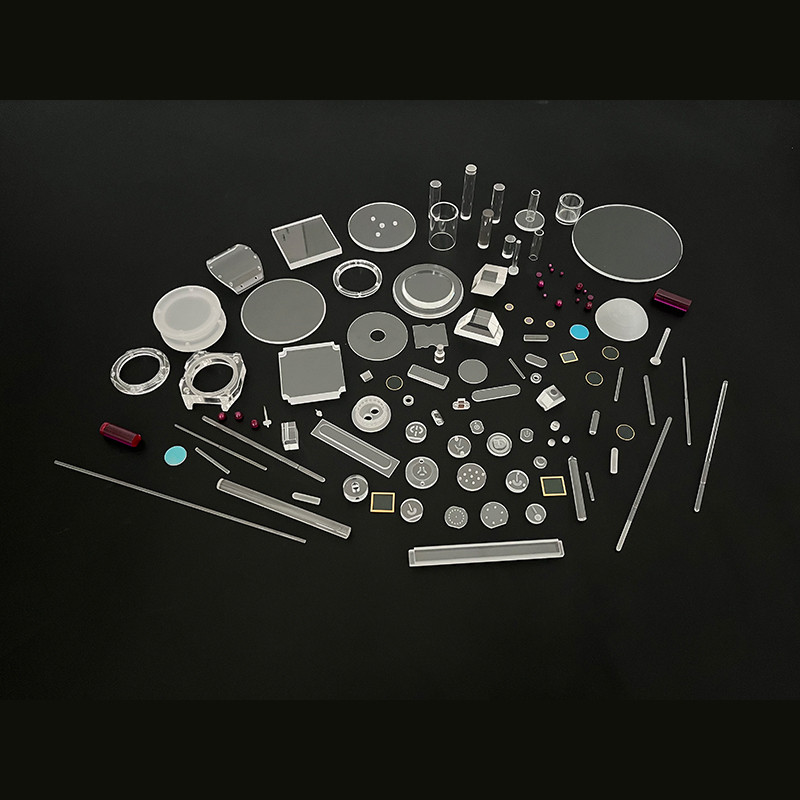
Every medical sensor optical window we ship is custom. Standard shape families are round, square and rectangular, but the diameter, thickness, wedge, chamfer and through‑features are drawn to your sensor housing.
Round windows
Outer diameter 3 mm to 200 mm. Thickness 0.3 mm to 25 mm. λ/10 surface flatness and 10‑5 scratch‑dig on sapphire; λ/20 and 20‑10 on fused silica.
Square and rectangular windows
Side length 2 mm to 300 mm. Edge chips controlled under 0.2 mm. Parallelism under 1 arc minute where the optical path needs it.
Bevels, steps and through‑features
0.1 mm to 1.5 mm chamfers, stepped diameters, through‑holes, slots and counter‑bores machined before final polish to keep the optical surface clean.
Wafer and panel formats
Wafer diameters 100 mm, 150 mm, 200 mm and 300 mm for high‑throughput cartridge manufacturing. Panel formats for diagnostic strip production lines.
Geometry drawings can be exchanged as STEP, IGES, DXF or PDF. We start the engineering review within 24 hours of receipt.
Precision Polishing and Surface Quality for Clean Sensor Signals
Polishing is the part of optical window manufacturing that shows up directly in your sensor performance. A rough surface scatters the photodetector signal, a contaminated surface adds fluorescence, and a subsurface damage layer shortens service life under repeated sterilization.
Surface roughness we routinely hold
- Sapphire: Ra < 1.0 nm on the optical face, < 0.5 nm achievable
- Fused silica: Ra < 0.5 nm standard, < 0.2 nm on request
- BK7: Ra < 1.0 nm standard
- Subsurface damage layer under 1 µm on sapphire after final polish
Surface quality grades available
- 60‑40 scratch‑dig for disposable diagnostic windows
- 20‑10 scratch‑dig for clinical instrument optical surfaces
- 10‑5 scratch‑dig for high‑sensitivity photodetector interfaces
- Cosmetic grade for sensor housings where the window is not in the optical path
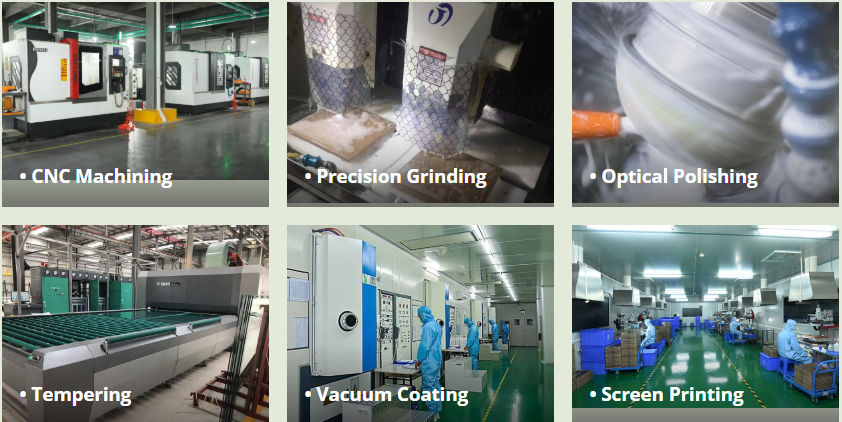
5‑Step Process from Drawing to Production Lot
Our standard OEM workflow is structured to give your engineering team a clear review point at each step. Prototypes and production lots follow the same five steps so what you approve at the prototype stage is what you receive at the production stage.
Drawing review
We acknowledge your STEP, IGES, DXF or PDF drawing within 24 hours. Material, tolerance, surface and coating specs are reviewed against manufacturability and your regulatory documentation needs.
Prototype build
Prototype quantities from 5 to 50 units. Standard prototype lead time 10 to 15 working days. Each prototype is shipped with a full measurement report and material certificate.
Design freeze
Your team tests the prototype in the sensor assembly, signs off the dimension report and the surface inspection record, then we freeze the drawing revision for production.
Production lot
Lot sizes from 100 to 50,000 pieces per month. In‑process inspection at blanking, grinding, polishing and coating stages. AOI and laser‑based surface inspection on the optical faces.
Shipment with documentation
Each shipment includes the material certificate, the dimension report, the surface inspection record, the AR coating transmission curve and the lot traceability record.
See how this workflow applies to a specific program on our medical sensor optical window system solution page.
Compliance Documentation We Ship With Every Lot
Your regulatory and QA teams can close out an incoming inspection on the first pass when the paperwork is right. Every Felix Glass medical sensor optical window shipment is backed by a defined document package.
Material certificate
Substrate manufacturer, grade, lot number, chemical composition and country of origin for every lot.
Dimension report
Outer diameter, thickness, wedge, chamfer and through‑feature dimensions measured against your drawing.
Surface inspection record
Scratch‑dig, surface roughness, parallelism and flatness measurements against the agreed specification.
AR coating transmission curve
Wavelength scan of the AR coating or filter stack measured on a spectrophotometer before shipment.
Lot traceability record
End‑to‑end lot trace from substrate receipt through polish, coating, inspection and packaging.
Change control and CAPA
Documented change‑control process on drawing revision, material source, process step and inspection method.
Our manufacturing is aligned to ISO 13485 quality management system requirements. For the inspection equipment we use, see custom CNC optical glass machining service page and the related precision semiconductor inspection system solution.
ISO 13485‑Aligned Manufacturing, Material Traceability and Cleanroom Handling
Medical sensor optical windows are inspected, cleaned and packed in a controlled environment. The class of cleanroom, the inspection tools and the packaging materials are matched to the sterilization and contamination requirements of your sensor program.
Inspection and metrology
- Zygo interferometer for flatness and surface figure
- Bruker white‑light interferometer for sub‑nanometer roughness
- PerkinElmer spectrophotometer for coating transmission
- Keyence IM series for high‑magnification scratch‑dig inspection
- Mitutoyo coordinate measurement for dimension verification
Packaging
- Class 1000 cleanroom for inspection and packaging of medical lots
- Vacuum‑sealed cleanroom bags for autoclave‑ready products
- Tray‑and‑lid packaging for automated sensor assembly lines
- Lot‑coded labels and barcoded packaging for line‑side traceability
Frequently Asked Questions From US Medical Sensor Programs
Five questions we hear most often from Medical Device Optical Engineers, Healthcare Equipment Procurement Managers and Medical Sensor System Designers.
What biocompatibility documentation do you provide for medical sensor optical windows?
For every medical sensor program, we provide the substrate material certificate with lot traceability, the manufacturing process flow, the surface roughness record, the cleaning and packaging record, and where required, a declaration of compliance against USP Class VI or ISO 10993‑5 cytotoxicity limits. We support your biological evaluation file with the documentation your regulatory affairs team needs to file a 510(k) or maintain a CE technical file.
What is the right substrate for a wearable health sensor optical window?
For a wearable sensor that sits in skin contact or sees daily handling, the default is synthetic sapphire. Sapphire holds Mohs 9 hardness, survives repeated wipe‑down with isopropyl alcohol, and tolerates EtO, gamma and autoclave sterilization. If your wearable is a single‑use disposable, a thin borosilicate window can be the more cost‑effective option. We can quote both and let your engineering team make the trade‑off based on the device lifetime model.
Can you match our custom outer diameter, thickness, wedge and chamfer tolerances?
Yes. Outer diameter tolerances down to ±0.025 mm, thickness ±0.025 mm, wedge under 1 arc minute, and chamfer angles from 20° to 60° are all in our standard range. We start from your STEP or IGES file and confirm manufacturability before quoting. If your drawing has a tighter requirement than our standard, we will quote the additional metrology and process work explicitly.
What AR coating options are available for medical sensor wavelengths?
Single‑layer MgF₂ for visible‑band general use, multi‑layer broadband AR for visible and NIR, UV‑Vis broadband AR for fused silica flow cells, and custom bandpass and long‑pass coatings for fluorescence and multi‑analyte diagnostic readers. We measure the coating on a spectrophotometer and ship the transmission curve with the lot.
What is the typical lead time and minimum order quantity for OEM medical optical window orders?
Prototypes start at 5 units with a 10 to 15 working day lead time, and most production lots begin at 100 pieces per month. We do not enforce a fixed MOQ on engineering samples. Production lot pricing is volume‑tiered and we can hold finished‑goods inventory against your forecast so the recurring shipments match your production schedule.
Request a 24‑Hour Quote for Your Medical Sensor Optical Window Program
Send us your STEP, IGES, DXF or PDF drawing plus the wavelength range, sterilization method and annual volume. Our optical engineering team replies with a manufacturability review, a price range and a prototype lead time within one working day. If you are still scoping the sensor, we can also help with material selection and AR coating design.