Industrial Furnace Observation Glass and Sapphire Viewport Solutions for Furnace Equipment Manufacturers
Felix Glass supplies precision custom sapphire observation glass and high-temperature optical viewports engineered for industrial furnaces, thermal kilns, and infrared monitoring systems deployed by furnace OEMs, thermal processing equipment builders, and manufacturing plant engineering teams. Each viewport is CNC-machined from single-crystal sapphire or high-purity fused silica, double-side optically polished to lambda/10 surface figure, coated with a broadband infrared anti-reflective film, and delivered with full material certification and lot traceability your quality and engineering teams can integrate directly into equipment qualification documentation.
- Sapphire, fused silica, and borosilicate substrates from 10 mm to 400 mm diameter
- IR AR coating covering 1 to 14 micron wavelength, operating to 1,800 degrees Celsius
- ISO 9001 certified, with full optical and mechanical test reports per shipment
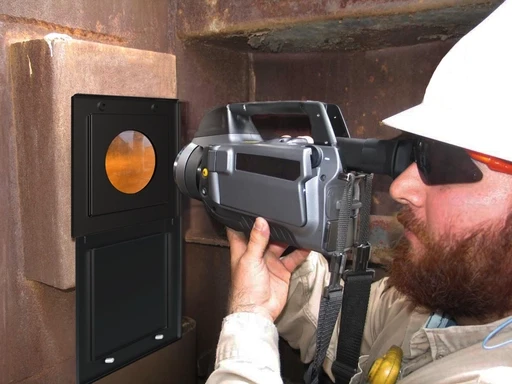 Custom sapphire observation viewports engineered for the full thermal monitoring optical path from furnace camera windows to infrared pyrometer sight glasses.
Why Standard Observation Glass Fails in High-Temperature Furnace Environments
An observation window on a 1,400-degree-Celsius industrial furnace is not a laboratory optical window. Thermal cycling, particulate deposition, chemical attack from process atmospheres, and mechanical stress from differential expansion each introduce failure modes that standard industrial glass products were never designed to survive. Felix Glass engineers every furnace viewport against the complete operating environment, not just the optical specification.
Thermal shock and differential expansion cracking
Standard soda-lime and borosilicate glasses fracture when subjected to rapid temperature swings during furnace startup, operation, and shutdown cycles. A viewport that survives steady-state conditions may fail during the first cold-start-to-full-temperature ramp. Single-crystal sapphire combines a Mohs 9 hardness with a thermal shock resistance that handles temperature differentials exceeding 200 degrees Celsius per minute without introducing stress birefringence into the optical path.
Process atmosphere chemical attack and surface degradation
Reducing atmospheres, combustion byproducts, alkaline vapors from glass melting, and acidic gases from metal heat treatment chemically attack standard optical glass surfaces. Surface pitting, devitrification, and coating delamination degrade transmission within weeks. Sapphire is chemically inert to most process atmospheres at all practical furnace operating temperatures, and our proprietary multi-layer protective overcoat maintains greater than 92 percent transmission after extended exposure to aggressive thermal process environments.
Particulate fouling and progressive transmission loss
In combustion-fired furnaces and powder-processing thermal kilns, airborne particulate deposits accumulate on the viewport interior face, progressively reducing optical transmission. A viewport that provides adequate visibility at installation may become opaque within a production shift. Our viewport designs incorporate purge ring integration, angled mounting geometries, and high-surface-quality polishing that reduces particulate adhesion and simplifies in-situ cleaning without viewport removal.
Sapphire as the Definitive Furnace Viewport Material for Demanding Thermal Applications
Single-crystal sapphire offers a combination of optical, thermal, mechanical, and chemical properties that no other transparent window material can match for high-temperature industrial observation. Understanding these properties helps equipment engineers select the right viewport substrate for their specific furnace operating conditions.
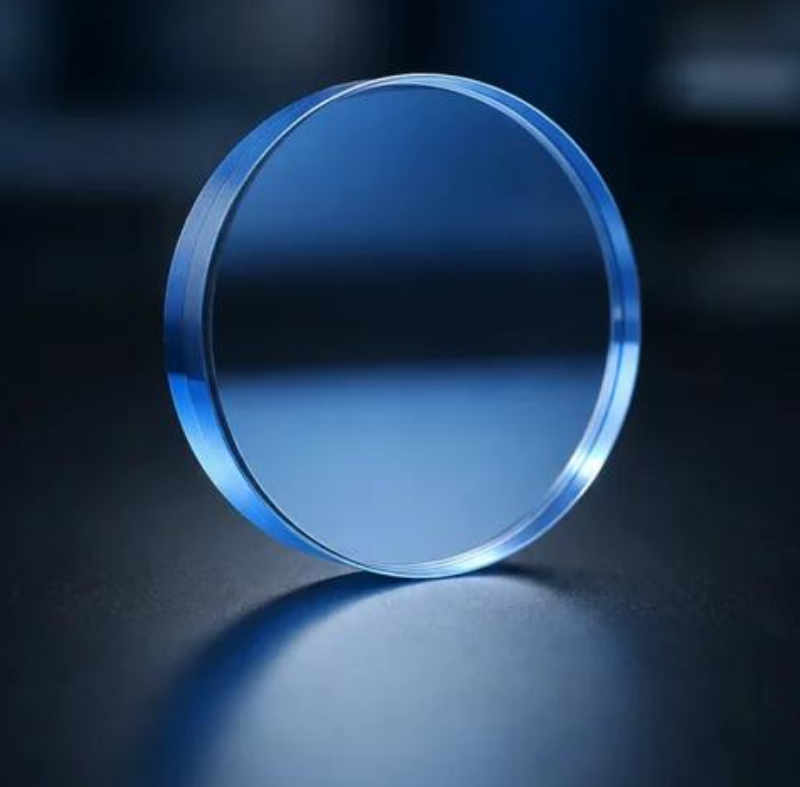
Key Material Properties
- Melting point: 2,053 degrees Celsius — operating safely at temperatures where standard glass softens
- Thermal conductivity: 35 W/m·K at room temperature — roughly 30 times higher than borosilicate glass, enabling rapid heat dissipation
- Knoop hardness: 2,000 kg/mm² parallel to c-axis — second only to diamond, resisting particulate abrasion
- Transmission range: 0.15 to 5.5 microns — covering visible observation and near-IR through mid-IR thermal monitoring
- Chemical resistance: Inert to acids, alkalis, and most process gases at elevated temperatures
- Young's modulus: 435 GPa — maintaining dimensional stability under mechanical clamping loads
Optical Performance Parameters for Furnace Observation Windows
The performance of a furnace observation viewport is defined by measurable optical parameters that directly affect the accuracy of visual inspection, thermal imaging, and pyrometric temperature measurement through the window. These are the specifications Felix Glass engineers to, and the values your quality documentation will include.
Surface figure and transmitted wavefront error
Double-side polished to lambda/10 at 633 nm, with transmitted wavefront error below lambda/4. This ensures that thermal camera images remain sharp and pyrometer readings stay accurate through the viewport.
Broadband transmission and AR coating efficiency
Greater than 96 percent transmission per coated surface across the design wavelength band, with residual reflection below 0.5 percent per surface at the coating design wavelength.
Parallelism and wedge tolerance
Better than 10 arcseconds parallelism for pyrometer sight glasses, and better than 1 arcminute for general observation windows, minimizing beam deviation in optical measurement paths.
Surface quality and scratch-dig specification
40-20 scratch-dig per MIL-PRF-13830B as standard for furnace observation windows, with 20-10 available for high-resolution thermal imaging and precision pyrometry applications.
Infrared Anti-Reflective Coating Technology for Thermal Monitoring Windows
An uncoated sapphire window reflects approximately 14 percent of incident light at each surface due to its high refractive index, reducing total transmission to roughly 74 percent. For furnace thermal monitoring applications where every photon counts, broadband anti-reflective coatings are not optional — they are fundamental to system performance. Felix Glass designs and deposits proprietary multi-layer AR coatings specifically for the wavelength bands used by industrial thermal cameras and infrared pyrometers.
Broadband IR AR coating for 3 to 5 micron MWIR monitoring
Multi-layer dielectric coating engineered for mid-wave infrared thermal cameras. Achieves greater than 95 percent average transmission across the 3 to 5 micron band with less than 1 percent reflection per surface. Deposition process selected for coating durability at sustained elevated temperature operation up to 600 degrees Celsius.
Broadband IR AR coating for 8 to 14 micron LWIR monitoring
Optimized for long-wave infrared thermal cameras and scanning systems used in furnace refractory inspection and thermal profile mapping. Greater than 93 percent average transmission across the 8 to 14 micron band. Compatible with both sapphire and germanium substrate viewports.
Dual-band visible plus IR AR coating for combined observation and thermal monitoring
Single coating stack covering 0.4 to 0.7 micron visible range plus a selected IR band in one viewport. Enables operators to perform visual furnace inspection and thermal camera monitoring through the same window without swapping or repositioning viewports. Available for MWIR or LWIR secondary bands.
Sapphire versus Quartz versus Borosilicate — Furnace Viewport Material Selection Guide
Selecting the correct viewport material is a decision driven by operating temperature, required optical transmission band, chemical exposure, and mechanical loading. The comparison below helps furnace equipment engineers and procurement teams identify the right substrate for their specific application requirements.
Sapphire
- Max operating temperature: 1,800 degrees Celsius
- Transmission: 0.15 to 5.5 microns
- Hardness: Mohs 9
- Thermal shock: Excellent
- Chemical resistance: Excellent
- Relative cost: Higher
Fused Silica
- Max operating temperature: 1,100 degrees Celsius
- Transmission: 0.18 to 2.5 microns
- Hardness: Mohs 5.5 to 6.5
- Thermal shock: Very good
- Chemical resistance: Good
- Relative cost: Moderate
Borosilicate
- Max operating temperature: 500 degrees Celsius
- Transmission: 0.35 to 2.0 microns
- Hardness: Mohs 5.5
- Thermal shock: Good
- Chemical resistance: Moderate
- Relative cost: Lower
CNC Machining and Optical Polishing for Custom Sapphire Furnace Windows
A sapphire furnace viewport begins as a single-crystal sapphire blank and passes through multiple precision manufacturing stages before it becomes a finished optical component ready for installation. Felix Glass controls every step in-house, from CNC shaping to final optical inspection.
Blank selection and orientation
Sapphire blanks are selected for crystal orientation, internal quality, and dimensional suitability. Random, C-axis, and A-axis orientations are available depending on birefringence and mechanical requirements.
CNC shaping and edge profiling
5-axis CNC machining centers shape the blank to final geometry including diameter, thickness, edge chamfer, step profile, and any mounting features such as flanges or grooves.
Double-side optical polishing
Pitch-polishing or CMP processes achieve surface figure to lambda/10 and surface roughness below 1 nm RMS, ensuring minimal scatter and high transmission in the thermal imaging path.
IR AR coating deposition
Ion-assisted electron-beam deposition or ion-beam sputtering applies the specified broadband anti-reflective coating in a class-10,000 cleanroom environment with in-situ optical monitoring.
Metrology and certification
Each viewport undergoes transmission spectrophotometry, interferometric surface inspection, and dimensional verification. A full test report ships with every viewport lot.
Furnace Camera Window Mounting and Integration Solutions
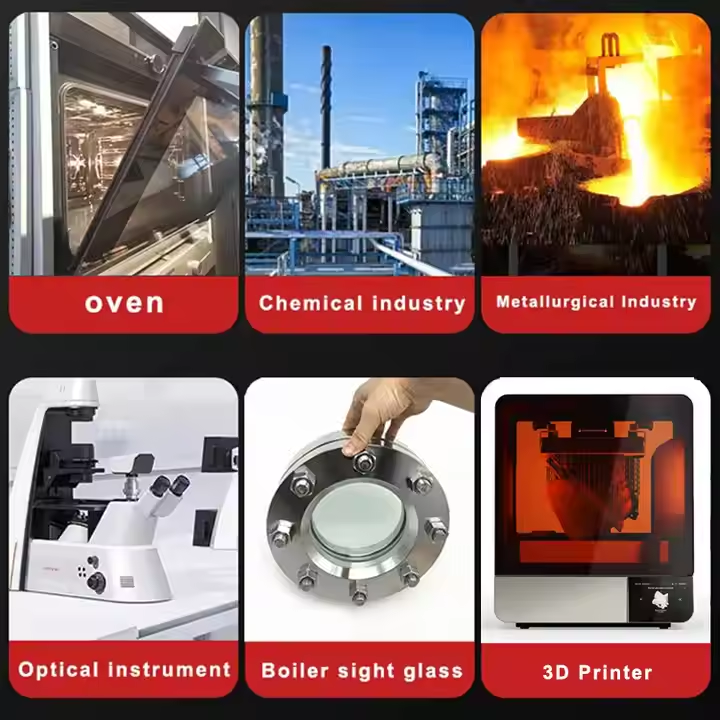
A sapphire viewport is one component in a furnace camera monitoring system. The mechanical integration of the viewport into the furnace wall, the camera mounting interface, and the purge and cooling provisions determine whether the monitoring system delivers reliable images shift after shift. Felix Glass supports equipment engineers with viewport mounting design guidance based on decades of high-temperature optical integration experience.
Integration Considerations
- Thermal isolation: Viewport flange design that decouples the hot furnace wall from the camera mounting interface, preventing heat conduction to the thermal camera housing
- Purge gas integration: Built-in purge ring channels that maintain a positive-pressure clean gas flow across the viewport interior face to reduce particulate deposition
- Differential expansion accommodation: Mounting designs that allow the viewport and housing materials to expand at different rates without inducing mechanical stress on the optical element
- Field-replaceable cartridge design: Viewport assemblies that can be swapped without breaking the furnace atmosphere seal, minimizing production downtime during maintenance
- Cooling jacket compatibility: Viewport housing geometries compatible with water-cooled or air-cooled camera enclosures for the highest-temperature furnace environments
Industry-Specific Furnace Observation Application Solutions
Different industries place different demands on furnace observation viewports. The operating temperature, process atmosphere, required optical wavelength band, and maintenance access all vary. Felix Glass configures viewport solutions for the specific requirements of each application environment.
Steel and metal heat treatment furnaces
Observation windows for continuous annealing lines, batch heat treatment furnaces, and forging preheat stations operating at 800 to 1,300 degrees Celsius. Sapphire viewports withstand the thermal cycling and scale-laden atmosphere of steel processing environments while maintaining clear visibility for furnace operators and thermal camera monitoring of workpiece temperature uniformity.
Glass melting and processing furnaces
Sight glasses for glass melting tank observation ports, forehearth monitoring, and lehr temperature profiling at 1,100 to 1,600 degrees Celsius. Sapphire viewports resist chemical attack from alkaline glass vapors and molten glass splash that would rapidly degrade standard borosilicate observation windows.
Ceramic sintering and powder processing kilns
Viewports for ceramic sintering kilns, powder calcination furnaces, and technical ceramic firing operations at 1,200 to 1,700 degrees Celsius. Viewport designs that maintain optical clarity despite airborne ceramic particulate, with purge ring provisions suited to powder processing environments.
Semiconductor wafer processing furnaces
High-purity sapphire viewports for diffusion furnaces, LPCVD tubes, and RTP chambers operating at 400 to 1,200 degrees Celsius. Viewports manufactured and cleaned to semiconductor-grade cleanliness standards, with material certifications supporting process qualification documentation.
Combustion and incineration monitoring
Observation windows for waste incineration furnaces, biomass combustion chambers, and industrial boiler flame monitoring at 800 to 1,400 degrees Celsius. Viewports engineered for extended operation in combustion environments with particulate-laden, chemically aggressive flue gas exposure.
Laboratory and research thermal systems
Custom optical viewports for materials research furnaces, thermal analysis instruments, and high-temperature spectroscopy systems at 600 to 1,800 degrees Celsius. Viewports with specified transmission bands and surface quality for quantitative optical measurement applications.
Thermal Kiln Observation Window Solutions for Ceramics and Glass Processing
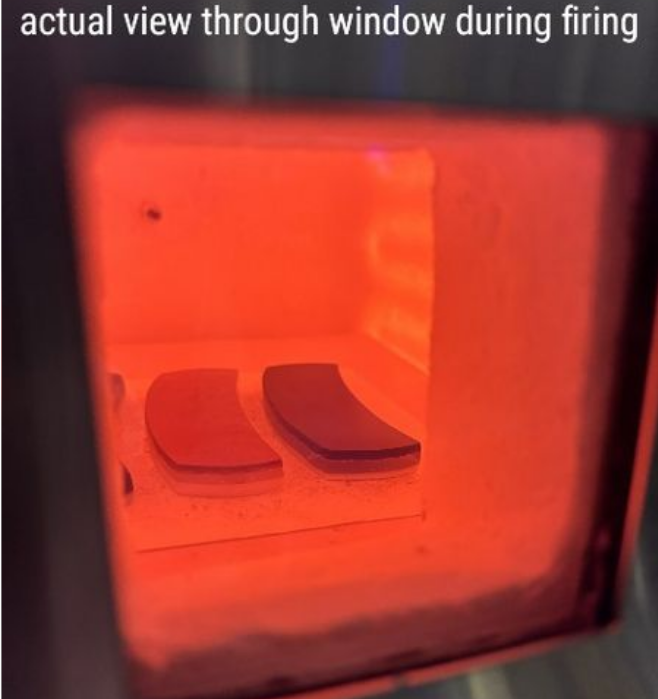
Thermal kilns used in ceramics, pottery, glass annealing, and brick manufacturing present a specific set of challenges for observation viewports. The combination of sustained high temperature, airborne particulate from kiln furniture and ware, and often limited access for maintenance requires viewport designs optimized for these conditions.
Kiln-Specific Viewport Features
- Extended-length thermal isolation: Longer viewport barrel designs that place the sapphire window farther from the kiln hot zone, reducing thermal load on the window and camera
- High-airflow purge integration: Purge ring geometries optimized for the higher particulate load in kiln atmospheres from glaze volatilization, clay dust, and kiln wash particles
- Angled viewing port geometry: Downgoing or side-angled viewport orientation that uses gravity to reduce particulate settling on the window surface
- Multi-zone monitoring configurations: Coordinated viewport layouts for simultaneous monitoring of kiln preheat, firing, and cooling zones through a single thermal camera multiplexing system
Infrared Monitoring System Optical Path Design for Furnace Applications
The furnace viewport is the first optical element in a thermal monitoring chain that includes the viewport window, possibly relay optics, and the thermal camera or pyrometer sensor. The optical design of this chain determines the quality and accuracy of the temperature data the system produces.
Field of view and target area calculation
The viewport diameter, distance from the target, and camera sensor format together define the monitored area inside the furnace. Felix Glass provides field-of-view calculation support to ensure the selected viewport size covers the region of interest — whether a specific workpiece zone, a burner flame, or the full furnace charge area.
Pyrometer sighting path requirements
Infrared pyrometers require a clear, unobstructed optical path with known transmission characteristics. The viewport transmission spectrum must be characterized across the pyrometer's operating wavelength to apply the correct transmission correction factor. Felix Glass provides spectral transmission data for each viewport shipped, supporting accurate pyrometer calibration through the window.
Thermal camera lens interface compatibility
The mechanical interface between the viewport housing and the thermal camera or camera lens must maintain optical alignment while providing thermal isolation. Felix Glass supports standard C-mount, CS-mount, and custom lens interface geometries, with viewport housing designs that preserve the camera's back-focal-distance requirements.
Quality Assurance and Testing Protocols for Industrial Furnace Viewport Glass
Every furnace observation viewport shipped by Felix Glass passes a defined set of optical, mechanical, and documentation checks. These protocols are designed to provide the receiving quality department and equipment engineering team with the data they need to accept the component into their Device Master Record or incoming inspection process.
Spectrophotometric transmission measurement
Each coated viewport is measured on a UV-VIS-NIR or FTIR spectrophotometer across its design wavelength band. Transmission data is recorded and included in the shipment documentation package. Viewports that do not meet the specified minimum transmission are rejected before shipment.
Interferometric surface and wavefront inspection
Surface figure and transmitted wavefront error are measured on a Fizeau or Twyman-Green interferometer at 633 nm. Surface quality is inspected per MIL-PRF-13830B or ISO 10110-7 as specified on the part drawing.
Material certification and lot traceability
Each viewport lot ships with a Certificate of Conformance identifying the sapphire material grade, crystal orientation, coating specification, measured optical performance, and dimensional inspection results. Lot traceability extends back to the sapphire crystal growth batch.
Complementary Sapphire Optical Products for Thermal Processing Equipment
Industrial furnace observation viewports are part of a broader optical component ecosystem in thermal processing equipment. The following related products and solutions from Felix Glass support the complete optical path in high-temperature industrial monitoring systems.
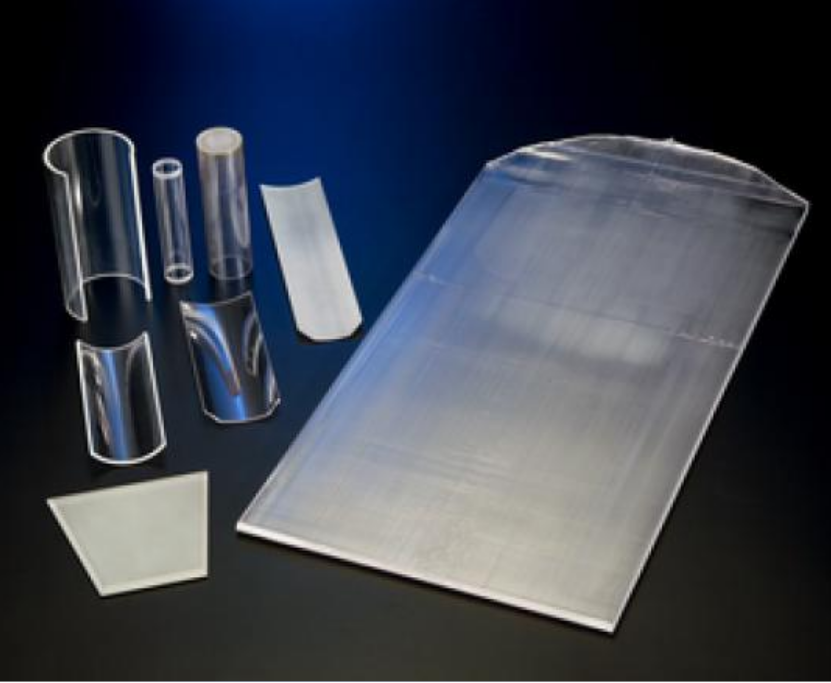
Sapphire Optical Glass Material Specifications
Technical reference for sapphire material grades, crystal orientations, and optical properties relevant to furnace viewport specification and selection.
View sapphire material specifications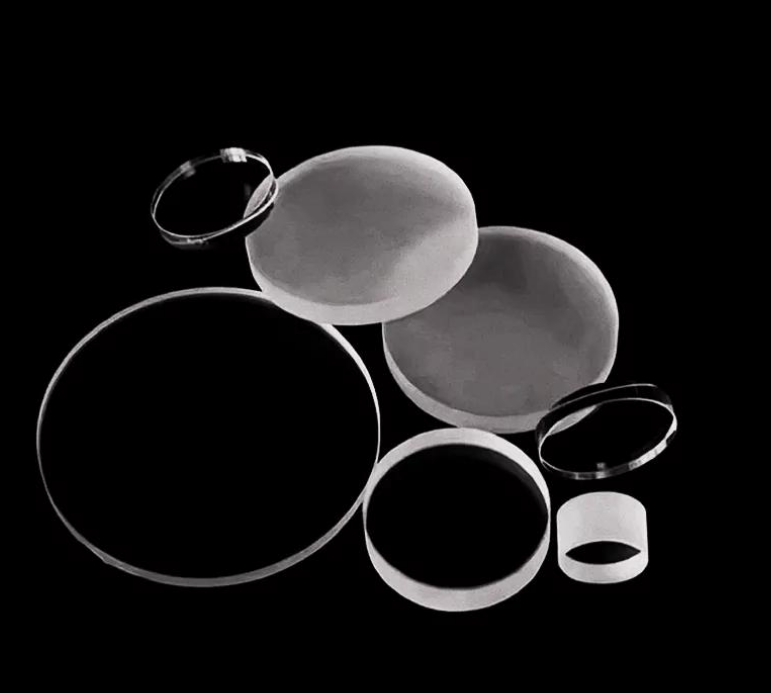
Sapphire Observation Window for Furnace Chambers
Standard and custom sapphire observation windows specifically configured for furnace chamber installation with thermal isolation and purge ring provisions.
View furnace chamber windows
High-Temperature Sensing Optical System Solutions
Complete optical system design for furnace thermal monitoring, including viewport selection, relay optics, and sensor integration guidance.
View thermal sensing solutionsIndustrial Furnace Observation Glass Frequently Asked Questions
What is the maximum operating temperature for a sapphire furnace observation viewport?
Sapphire viewports from Felix Glass are rated for continuous operation at temperatures up to 1,800 degrees Celsius, with short-term exposure tolerance to 2,000 degrees Celsius. The practical operating limit in a given installation is often determined by the viewport housing material, seal material, and cooling provisions rather than the sapphire window itself. For applications above 1,400 degrees Celsius, water-cooled housing designs are recommended. Our engineering team can evaluate your specific temperature profile and recommend the appropriate viewport and housing configuration.
Can I use the same viewport for both visual observation and thermal camera monitoring?
Yes. Felix Glass offers dual-band anti-reflective coatings that cover the visible spectrum for operator observation plus either the 3 to 5 micron MWIR band or the 8 to 14 micron LWIR band for thermal camera monitoring through a single viewport. This eliminates the need for separate observation and thermal monitoring windows. The specific coating design is matched to your thermal camera's spectral response and the viewport substrate material.
How do you prevent the viewport from fogging or accumulating deposits during furnace operation?
Felix Glass viewport assemblies incorporate multiple design features to maintain optical clarity during operation: a purge ring that delivers a continuous flow of clean dry gas across the viewport interior face to displace process atmosphere and reduce particulate deposition; angled or downward-oriented viewport geometry that uses gravity to minimize particulate settling; and high-surface-quality polishing that reduces the adhesion of condensed vapors and deposited particles. For the most demanding environments, we offer viewport designs with integrated mechanical wipers or field-replaceable sacrificial inner windows.
What documentation do you provide with each viewport shipment?
Every viewport lot from Felix Glass ships with a documentation package that includes: a Certificate of Conformance identifying the sapphire material grade, crystal orientation, coating specification, and dimensional inspection results; spectrophotometric transmission data across the viewport's design wavelength band; interferometric surface figure measurement data; surface quality inspection results; and material lot traceability information. This documentation package is structured for direct integration into equipment Device Master Records and incoming quality inspection processes at US manufacturing facilities.
What is the typical lead time for a custom sapphire furnace viewport?
Standard round sapphire viewports in diameters from 25 mm to 100 mm with standard AR coating typically ship within 3 to 4 weeks from drawing approval. Larger diameters, non-circular geometries, custom coating specifications, and high-volume orders may require 5 to 8 weeks. Rush service with 2-week delivery is available for urgent equipment repair and production-critical applications. Contact our engineering team with your drawing and required quantity for a specific lead time quotation.
Submit Your Furnace Viewport Specification for Engineering Review
Send your viewport drawing, target furnace operating temperature, required optical transmission band, annual quantity, and any special certification requirements. The Felix Glass optical engineering team will review your specification, recommend the appropriate sapphire substrate and AR coating configuration, and return a technical proposal with pricing within one business day.