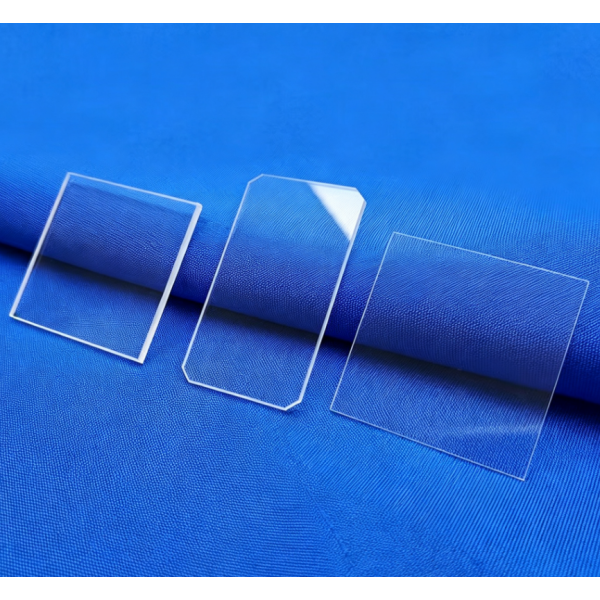
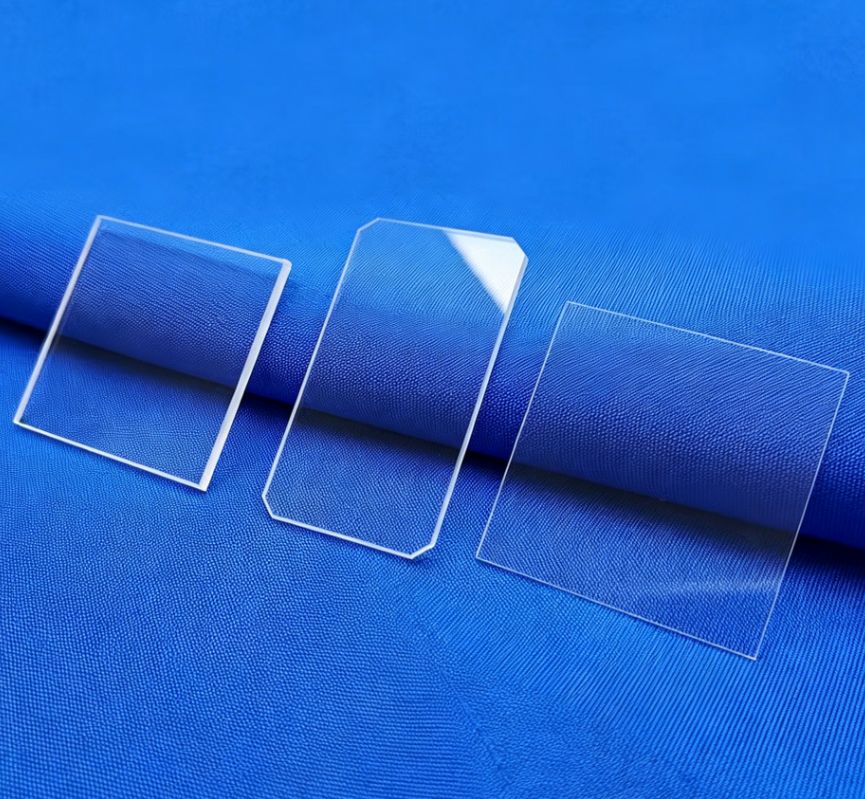
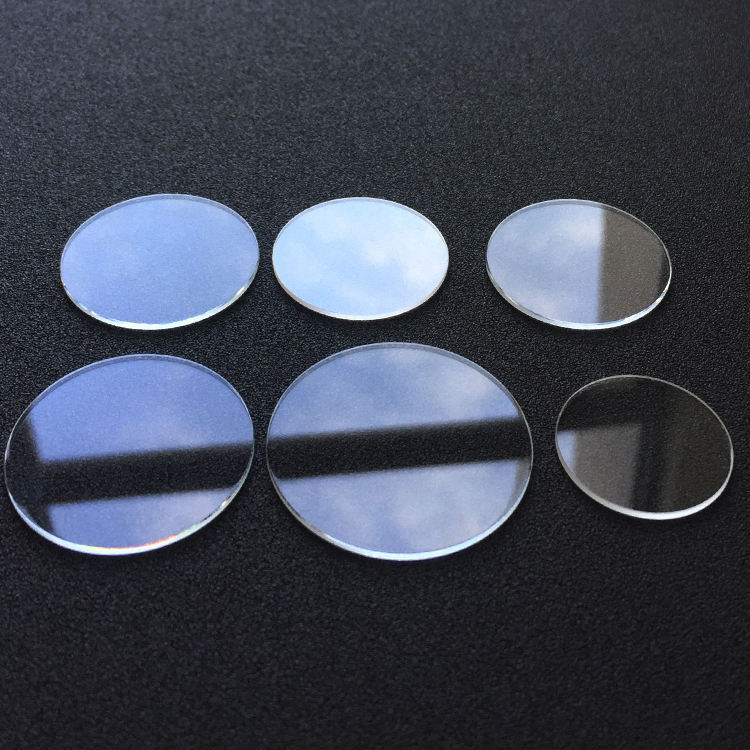
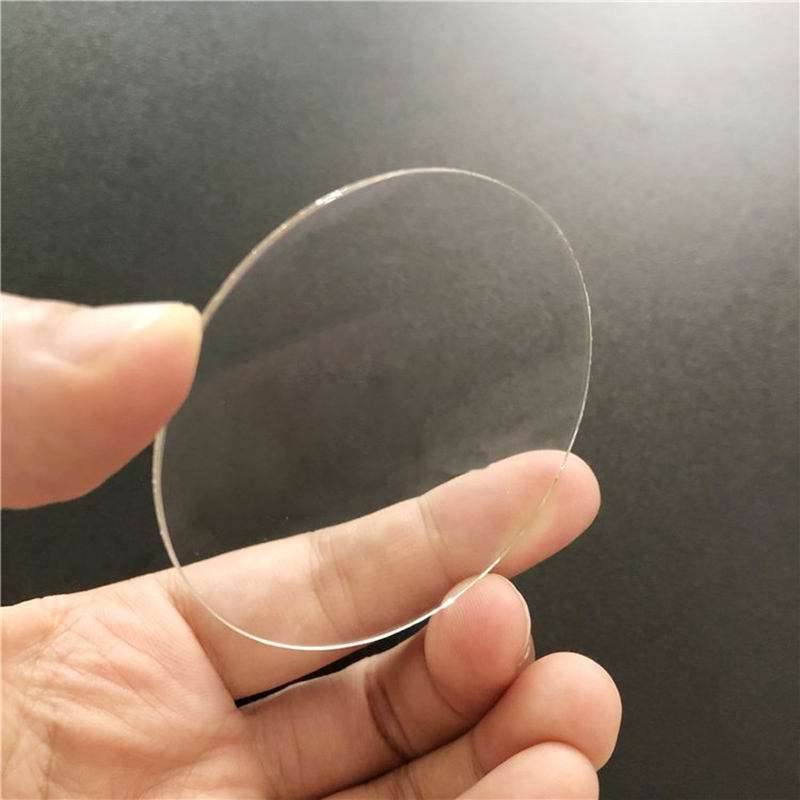
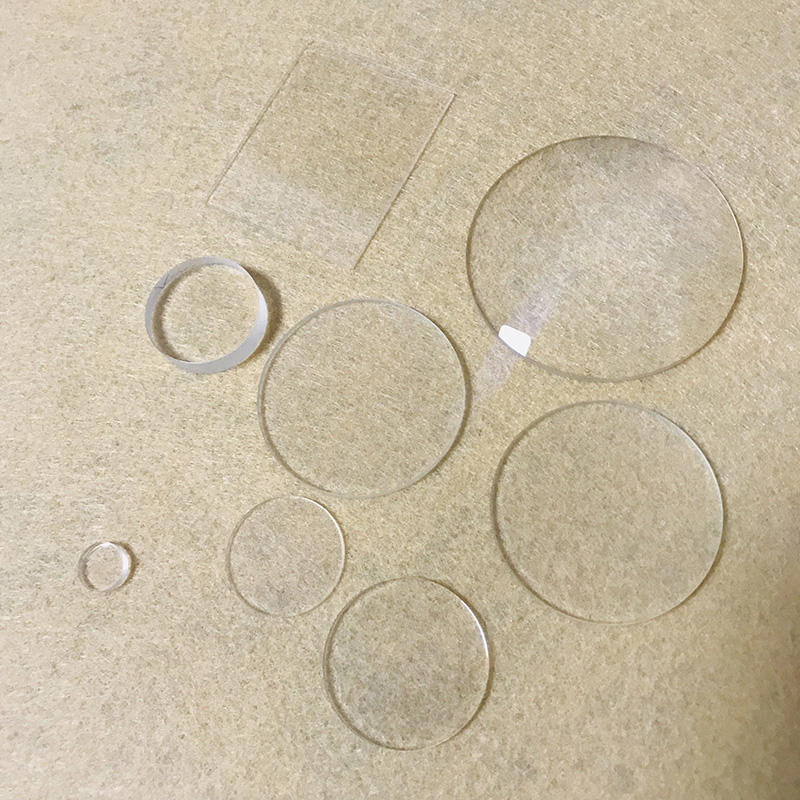
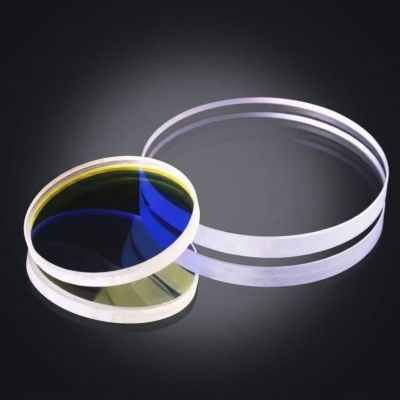
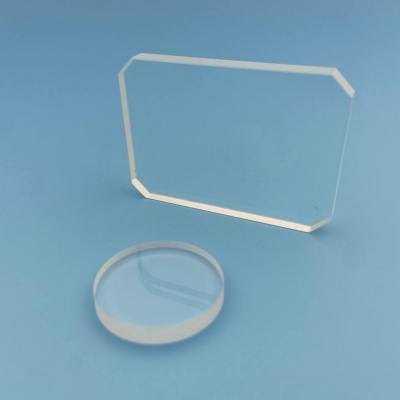
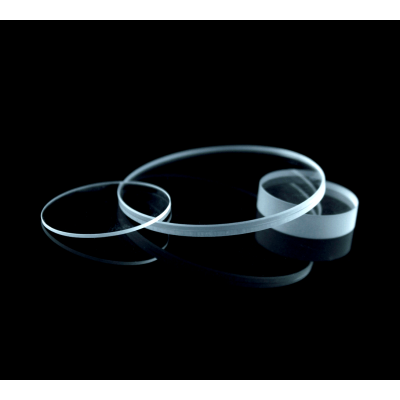
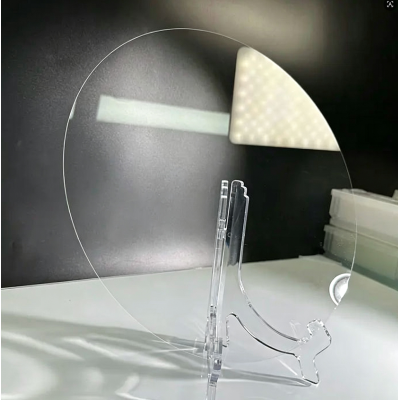
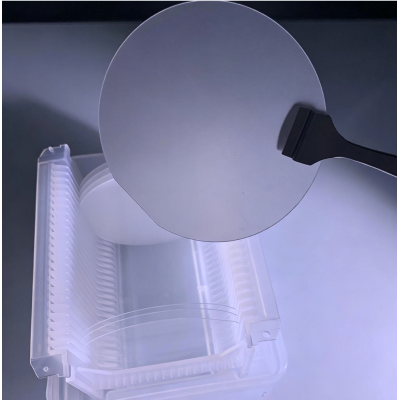
Ultra-thin polished sapphire cover glass is used when a compact optical system needs a thin protective surface without giving up the hardness and environmental stability of single-crystal sapphire. Felix Glass Co., Limited manufactures this product from optical-grade sapphire for precision sensors, machine vision, LiDAR, aerospace-related assemblies, and laboratory instruments.
Direct answer: Standard thickness covers 0.1 mm to 2 mm, with custom thickness reviewed from the drawing. Double-sided optical polishing, flatness options down to λ/10, parallelism targets to ≤0.002 mm, custom outlines, holes, slots, and optional AR coating can be evaluated for the final assembly.
For adjacent formats and thicker protective parts, review the Sapphire Optical Windows category.
Ultra-thin sapphire cover geometry can be reviewed around the clear aperture, housing, edge condition, and assembly method.
Interest
Core Technical Specification Table
These values describe available customization directions. Final tolerances, inspection methods, and acceptance criteria should be confirmed on the approved drawing.
Parameter
Typical Customizable Value
Drawing Review Note
Base material
Optical-grade single-crystal sapphire, C-plane standard
Other crystal orientations can be reviewed.
Standard thickness
0.1 mm to 2 mm
Custom ultra-thin or thicker versions depend on size and handling needs.
Surface finish
Double-sided mirror optical polishing
State surface roughness and scratch-dig requirements on the drawing.
Surface flatness
λ/4, λ/8, or λ/10 options
Specify test wavelength, clear aperture, and inspection condition.
Parallelism
Target to ≤0.002 mm
Feasibility varies with thickness, size, and geometry.
Maximum single size
Up to 400 mm × 400 mm; round diameter up to 300 mm
Confirm usable area, thickness, and transport requirements.
Optional coating
Broadband anti-reflection coating
Provide wavelength, angle, side, and transmission target.
Edge processing
Chamfer, countersink, slot, notch, or laser marking
Include datum and position tolerances for machined features.
Double-sided polishing supports low-scatter optical access while the sapphire surface provides Mohs 9 scratch resistance.
Interest
Core Technical Features
Flexible Thin-Thickness Customization
Standard production covers 0.1 mm to 2 mm thin sheets. Extra-thin prototypes or thicker high-rigidity variants can be reviewed for special optical modules, with thickness uniformity considered to reduce light-path deviation.
Double-Sided Optical Polishing
Both surfaces receive mirror optical polishing for stable transmission through ultraviolet, visible, and near-infrared ranges, subject to material thickness and the final optical specification.
Mohs 9 Surface Hardness
Sapphire resists abrasion from handling, dust, and assembly contact better than common optical glass, helping protect exposed sensor and instrument surfaces.
Controlled Optical Flatness
Precision lapping and polishing can be planned around imaging, ranging, and microscopic sensing requirements where surface deviation could affect the optical path.
Chemical and Moisture Resistance
Single-crystal sapphire provides chemical stability for equipment exposed to moisture, cleaning processes, laboratory conditions, and industrial environments.
The same base material can be adapted to different sensor housings through thickness, outline, flatness, and coating choices.
Desire
Production and Quality Inspection Standards
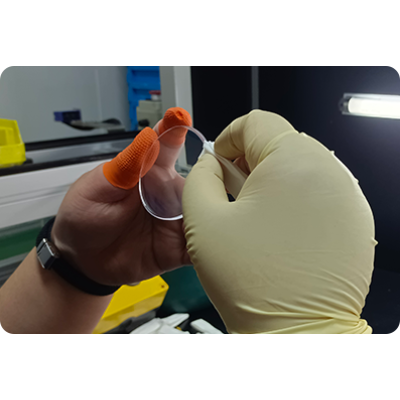
Ultra-thin sapphire cover glass is reviewed through four inspection stages before shipment. The final inspection plan can be matched to the order specification and reporting requirement.
Thickness uniformity testingChecks the thin substrate against the approved dimensional requirement.
Interferometer flatness inspectionMeasures surface deviation under the specified clear aperture and test condition.
Transmission measurementUses spectrometry when transmission or coating performance is part of the purchase requirement.
Surface defect screeningReviews scratches, chips, edge condition, and visible defects against agreed criteria.
Prototype quantities and production batches are supported. Lead time should be confirmed after the drawing, quantity, coating, and inspection scope are reviewed.
Desire
Frequently Asked Questions
What is the minimum sapphire cover glass thickness?
The standard minimum is 0.1 mm. Extra-thin prototypes can be evaluated for R&D projects after the engineering team reviews the drawing, part size, and handling method.
Can Felix Glass manufacture irregular dimensions and shapes?
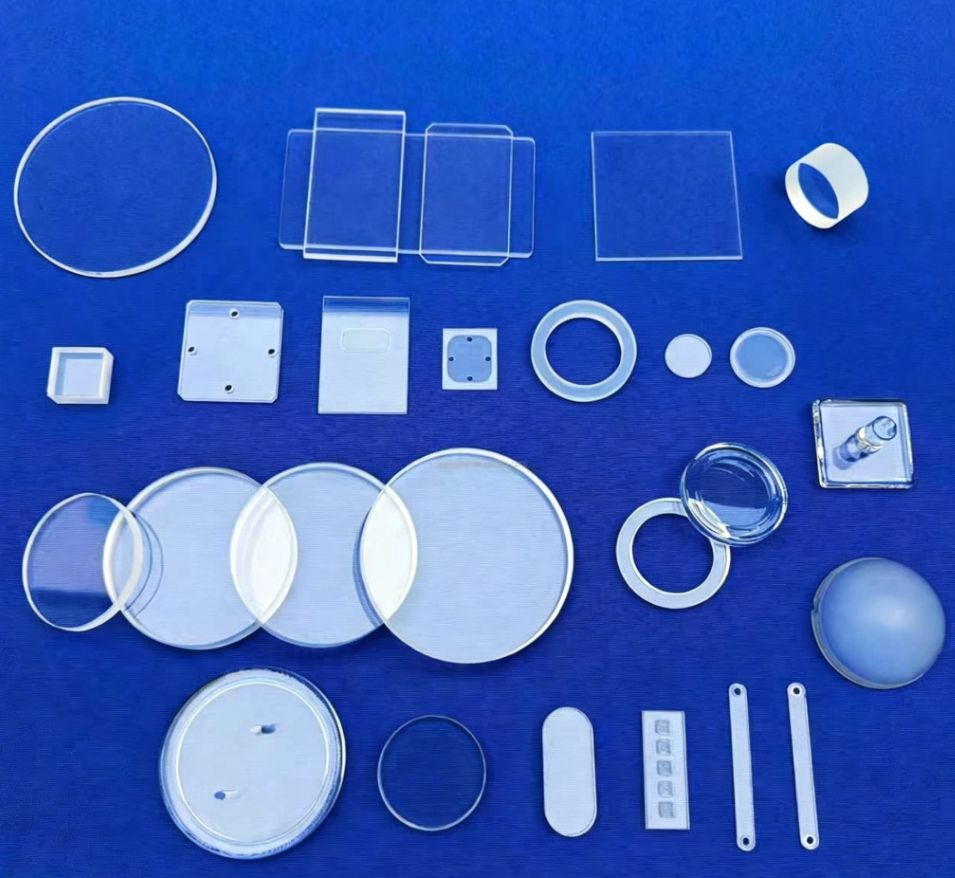
Yes. Round, square, rectangular, and free-form outlines can be reviewed with custom cutouts, slots, notches, and mounting holes.
Is anti-reflection coating available?
Broadband AR coating is optional. Please provide wavelength range, incidence angle, coated side, and transmission or reflection target.
What dimensional tolerances are available?
Typical directions include thickness tolerance to ±0.005 mm for standard thin sheets, parallelism to ≤0.002 mm, and flatness options down to λ/10. Final values depend on geometry and the agreed inspection method.
Can the project start with a small prototype batch?
Yes. Prototype and production quantities can be discussed after material, thickness, machining, coating, and inspection requirements are defined.
Desire
Drawing Information for Engineering Review
Overall dimensions, thickness, quantity, and crystal orientation
Flatness, parallelism, surface quality, and clear aperture
Hole, slot, notch, chamfer, countersink, and datum details
Operating wavelength and optional coating target
Mounting method, temperature range, and service environment
Inspection report, packaging, and traceability requirements
Company background and manufacturing information are available on the About Felix Glass page.
Action
Engineering Support and Inquiry Guide
Felix Glass Co., Limited provides drawing-based sapphire cutting, CNC machining, optical polishing, coating, and inspection support for LiDAR, machine vision, aerospace-related, medical, laboratory, and precision-instrument projects.
Submit the drawing, quantity, thickness, tolerance, wavelength, coating, and application conditions for a feasibility review and project-specific quotation.
We supply Industrial Glass, Sapphire Optics, Optical Lenses/Prisms/Filters, Infrared IR Optics, Functional & Display Glass, N-BK7/H-K9L Optical Glass, supporting OEM mass production and laboratory custom prototypes. Flexible MOQ & free sample service available. Fill in the form to download full datasheets and get factory wholesale price within 24 hours.
CONTACT US NOW FOR A QUOTE
We will respond promptly within 1 to 5 hours and provide an optimal, formal quotation within 1 to 2 days. Partnering with us is the smartest choice—start a mutually beneficial partnership today!
*Email
Name
*Title
*Content
Upload
Only supports .rar/.zip/.jpg/.png/.gif/.doc/.xls/.pdf, maximum 20MB.
What is the minimum order quantity for custom precision optical glass components?
FELIX OPTICAL GLASS offers highly flexible MOQs to support customer projects, including prototype testing, small-batch trial orders, and high-volume production. All products can be fully customized to your drawings, tolerances, and application standards. Please send us your specifications, and we will reply within 1-5 hours and provide an accurate quotation after careful evaluation within 1-2 days.
Can I get free glass samples for testing before bulk order?
Yes, our FELIX GLASS factory supports sample testing for a wide range of precision optical glass components and assemblies. The lead time for sample production is 3 to 7 working days. Please contact us today to arrange samples and obtain a customized solution that meets your needs.
What is the production lead time for custom optical glass components?
A: The production cycle for standard samples is 3-10 working days, while mass production requires 15-35 working days, depending on the complexity of the product and the order quantity. We provide reliable precision optical glass components and fast delivery services for orders from industries such as defense, industrial equipment, medical devices, shipbuilding, robotics, automotive, and aerospace. Please submit your project details so we can provide you with an accurate delivery schedule.
Are your optical glass products ISO, CE and RoHS certified?
All precision optical glass components from FELIX OPTICAL GLASS comply with ISO quality system standards as well as CE and RoHS requirements. We provide comprehensive test reports, spectral graphs, material certificates, and inspection documents for customer review. Please feel free to request complete certification details and a formal quotation at any time.
Do you offer one-stop custom optical glass processing services?
Yes. We offer a full range of precision optical glass component processing services, including CNC machining, precision grinding, optical polishing, chemical/physical tempering, vacuum coating (AR anti-reflective coating, AF anti-fingerprint coating, AG anti-glare coating, IR infrared coating), and screen printing. From raw materials to finished products, every step is completed in our own factory. Please tell us your needs, and we will provide you with the most cost-effective solution.
CONTACT US NOW FOR A QUOTE
We will respond promptly within 1 to 5 hours and provide an optimal, formal quotation within 1 to 2 days. Partnering with us is the smartest choice—start a mutually beneficial partnership today!
*Email
Name
*Title
*Content
Upload
Only supports .rar/.zip/.jpg/.png/.gif/.doc/.xls/.pdf, maximum 20MB.
Felix Glass officially launches IR optics line with custom ZnSe lenses for LWIR thermal imaging. High transmittance, custom dimensions & coatings, full‑scale OEM support.