Q15: How Is The Processing Capability ?
- What is the minimum order quantity for custom precision optical glass components?
FELIX OPTICAL GLASS offers highly flexible MOQs to support customer projects, including prototype testing, small-batch trial orders, and high-volume production. All products can be fully customized to your drawings, tolerances, and application standards. Please send us your specifications, and we will reply within 1-5 hours and provide an accurate quotation after careful evaluation within 1-2 days.
- Can I get free glass samples for testing before bulk order?
Yes, our FELIX GLASS factory supports sample testing for a wide range of precision optical glass components and assemblies. The lead time for sample production is 3 to 7 working days. Please contact us today to arrange samples and obtain a customized solution that meets your needs.
- What is the production lead time for custom optical glass components?
A: The production cycle for standard samples is 3-10 working days, while mass production requires 15-35 working days, depending on the complexity of the product and the order quantity. We provide reliable precision optical glass components and fast delivery services for orders from industries such as defense, industrial equipment, medical devices, shipbuilding, robotics, automotive, and aerospace. Please submit your project details so we can provide you with an accurate delivery schedule.
- Are your optical glass products ISO, CE and RoHS certified?
All precision optical glass components from FELIX OPTICAL GLASS comply with ISO quality system standards as well as CE and RoHS requirements. We provide comprehensive test reports, spectral graphs, material certificates, and inspection documents for customer review. Please feel free to request complete certification details and a formal quotation at any time.
- Do you offer one-stop custom optical glass processing services?
Yes. We offer a full range of precision optical glass component processing services, including CNC machining, precision grinding, optical polishing, chemical/physical tempering, vacuum coating (AR anti-reflective coating, AF anti-fingerprint coating, AG anti-glare coating, IR infrared coating), and screen printing. From raw materials to finished products, every step is completed in our own factory. Please tell us your needs, and we will provide you with the most cost-effective solution.
- Name
- *Title
- *Content
With 19 years of experience as a precision optical glass expert, we provide comprehensive and satisfactory customized solutions.
 Felix Glass Officially Launches IR Optics Product Line: Custom ZnSe Lenses for LWIR Thermal ImagingFelix Glass officially launches IR optics line with custom ZnSe lenses for LWIR thermal imaging. High transmittance, custom dimensions & coatings, full‑scale OEM support.
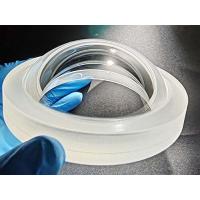 Case Study: Custom Sapphire Viewport for High‑Temperature Kiln Continuous MonitoringFelix Glass custom sapphire viewport for high‑temperature kiln continuous monitoring. Excellent thermal shock resistance, custom dimension, prototype to mass‑production OEM support.