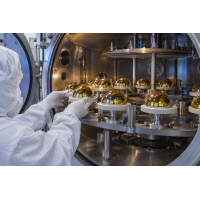
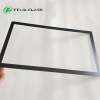
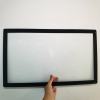
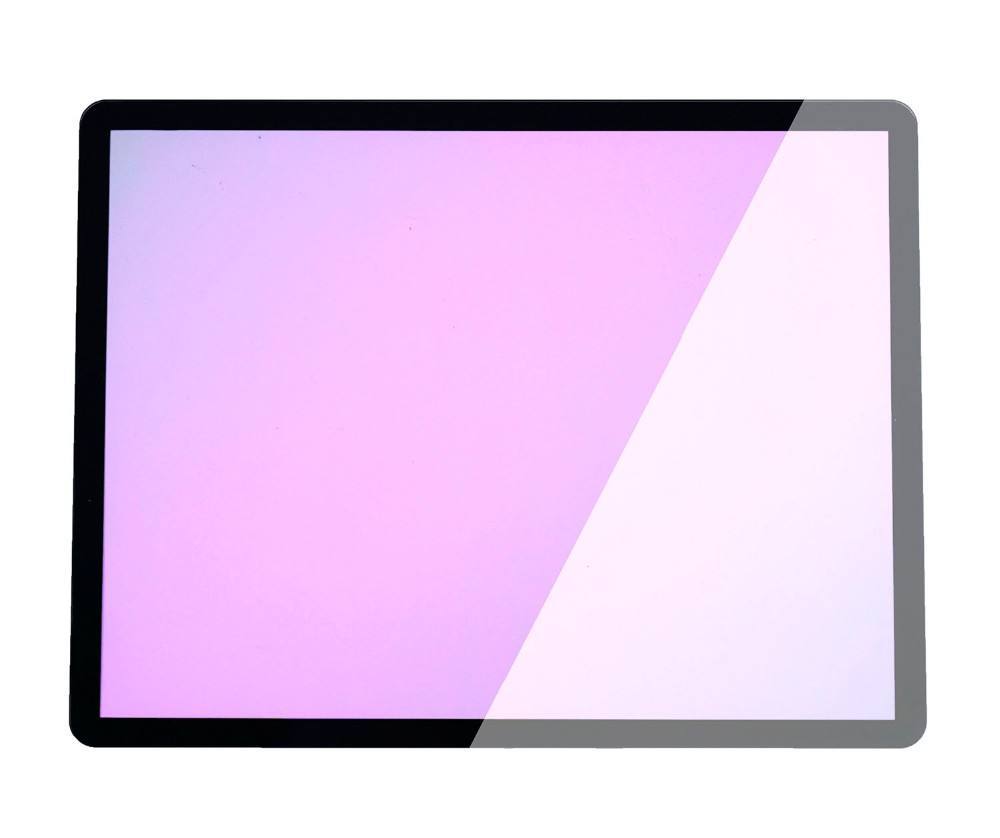
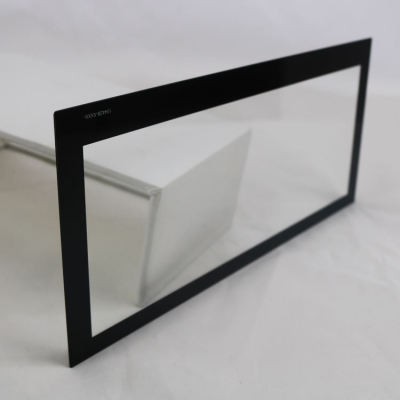
Glass display viewport window
Flat transparent tempered window for equipment cabinets, observation ports and simple display protection. Strength and edge condition are the main variables.



| Share | |
|---|---|
| Categories | Display Cover Glass |
| Brand | FELIX GLASS optical glass Manufacturing base |
| Product Specifications | FE-AGP-03004011 |
| Material: | Low-iron aluminosilicate / soda-lime, tempered |
| Coating: | AR / AR+AF / AG+AF / AR+AF+AG |
| Size | max 1500 mm / min 20 mm |
| Surface: | Gloss 20 to 80 GU by AG grade |
| Color: | Clear / Tinted / Black border print / Logo print |
| Production Process | Cut / CNC / Polish / Print / Coat / AOI |
| Edge | Flat / C-edge / J-edge / 2.5D polish |
| Surface Hardness | 9H pencil test at coating level, not Mohs |
| Application | Electronic Device, Display Screen, Smart Device, Instrument, Industrial Control, Home Appliance |
| Thickness | 0.3 mm to 8.0 mm |
| Visible Transmittance | min 92% uncoated / min 97% with AR |
| Surface Reflectance | max 0.5% |
| AG Haze | 5% to 15% adjustable |
| AF Contact Angle | min 110 degrees |
| Working Temperature | minus 40 to 180 degrees C |
| Unit Price | US $ 2.88-5.99 / piece |
| FOB port | SHENGZHEN |
| Terms of Payment | L/C, Western Union, T/T |
| Download |  |
Send your drawing or sample requirement for a fast quotation. MOQ, lead time and coating options are confirmed within one business day.
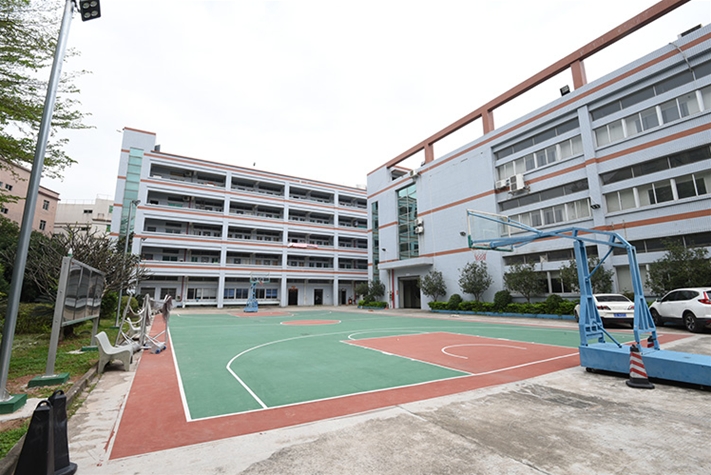
Dongguan Felix Glass Co., Ltd. produces drawing-based tempered display cover glass for industrial HMI controllers, smart wall panels, commercial terminals, medical equipment fronts and machine observation windows.
Cutting, CNC shaping, edge polishing, silk-screen printing, chemical strengthening and functional coating all run in-house, so the process route stays inside one quality system. 19+ years in display and optical glass.
This product is listed in the Display Cover Glass category.
Figures below describe the range we routinely build. Final substrate, thickness, optical targets, printing artwork, edge profile and compliance documents are fixed against the ordered drawing and purchase specification.
Engineering contact: james@felixglass.com · +86-18565032888
Equipment, process depth and capacity figures sit on the our Dongguan optical glass factory capability page.
Each type answers a different mechanical or optical requirement. In a specification they should be written as measurable criteria — thickness, tolerance, gloss unit, contact angle — not as a product name.
Flat transparent tempered window for equipment cabinets, observation ports and simple display protection. Strength and edge condition are the main variables.
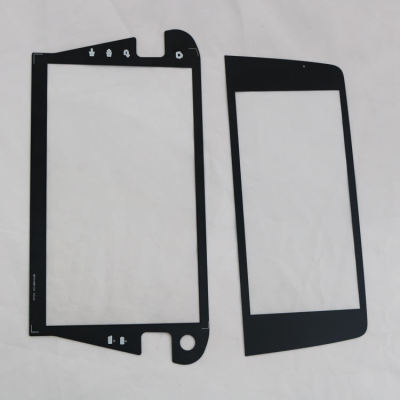
Protective cover for capacitive touch screens, industrial controllers and commercial terminals. Thickness and stiffness are set by the bonding method and touch stack.
Silk-screen black shading border, logo and sensor cutouts at ±0.03 mm registration, with heat-resistant and UV-resistant ink options. See custom glass screen printing.
Thin high-strength substrate for smart wall panels and portable terminals where drop and scratch resistance matter more than cost per panel.
Matte diffusion surface that breaks up reflection from sunlight and high-bay lighting in factory HMI and outdoor terminals. Selection detail in the AG coating guide.
Reflection control plus a wipeable hydrophobic surface for touch interfaces that are cleaned several times per shift. Compare in the AG vs AF reference.
| Parameter | Range we build |
|---|---|
| Base material | Alkali-aluminosilicate glass, soda-lime tempered glass |
| Size range | Up to 1500 mm; minimum size confirmed against the drawing and handling limits |
| Thickness | 0.3 mm to 8.0 mm, with 0.3–5.0 mm the standard range for HMI and viewport panels |
| Chemical strengthening | Depth of layer 30–90 μm, compressive stress 600–900 MPa, verified per lot on a surface stress meter |
| Thermal tempering | Applied above 2.0 mm where the design calls for fragment-pattern safety verification |
| Visible transmittance | At least 92% uncoated base; up to 97% with double-side AR at the design wavelength |
| Surface reflectance | Target at or below 0.5% at the design point, subject to wavelength and test method |
| AG gloss range | Above 80 for indoor clarity · 50–70 for mixed lighting · 20–30 for paper-like touch surfaces |
| AF water contact angle | At least 110 degrees as supplied, measured at the agreed abrasion state |
| Surface hardness | 9H pencil hardness available at coating level, with the load and pass criteria named. 9H is a pencil test and Mohs is a mineral scale — see how 9H is actually specified. |
| Printing precision | ±0.03 mm registration on black border and logo; heat-resistant and UV-resistant ink available |
| Edge treatment | Flat edge, C or J chamfer, 2.5D rounded polish. Comparison in the C-edge vs J-edge reference. |
| Dimensional tolerance | Typically ±0.05 mm on CNC profiles; tighter values reviewed per drawing and panel size |
| Working temperature | -40 °C to 180 °C sustained in service; excursions outside this range reviewed per application |
| Testing instruments | Surface stress meter, pencil hardness tester, haze meter, spectrophotometer, AOI full-surface defect inspection |
| Compliance references | ISO 9001 quality management; RoHS and REACH documentation available for the project |
Two parameters decide whether a quotation is comparable: the test method behind the transmittance figure, and the abrasion state behind the contact angle. State both on the inquiry and the quotation matches the drawing instead of the datasheet.
For industrial touch HMI, automotive displays and high-reliability terminals. Higher ion-exchange capacity means a deeper compressive layer at the same thickness, better drop performance and more stable ink and coating adhesion.
Cost premium is real, so it belongs where a failure is expensive — not on an indoor viewport that never sees impact.
For cost-sensitive equipment viewports and simple protective windows. Good transmittance and adequate impact protection indoors, with a lower price per panel and a shorter process route.
Not the right choice where the panel is bonded to a touch sensor, cleaned with solvents, or installed outdoors.
The strengthening route and its inspection points are covered in the chemical strengthening and AF coating guide. Substrate choice should be settled before thickness, because the two trade against each other.
Cuts surface reflection so contrast and colour read correctly under bright ambient light. Single-side and double-side stacks are both available. Background in coatings and surface treatments.
Hydrophobic and oleophobic top layer keeps oils and dust from bonding so heavily touched screens stay wipeable. Measured as contact angle plus abrasion retention, not as a coating name.
Diffusion surface that breaks up mirror-like reflection. Always specified by gloss unit, because a vague “matte” description hides the sparkle problem that ruins image sharpness.
Combinations are AR only, AR + AF, AG + AF, or AR + AF + AG on one panel. Adding AG changes perceived sharpness even when transmittance stays high, so the stack is validated on the assembled display. The trade-offs are set out in the AG / AR / AF selection guide.

A closed in-house route keeps tempering stress, printing registration and coating uniformity under one owner, which is what prevents the three field failures that actually cost money — ink peeling, edge cracking and inconsistent haze.
Accepted drawing formats: DXF, DWG, PDF, STEP and IGES, plus AI, EPS or CDR with text converted to outlines. All drilling, notching and edge grinding happen before strengthening — cutting a strengthened panel afterwards releases the compressive layer. NDA is available before drawings are shared.
Supplier background sits on the Dongguan Felix Glass Co., Ltd. profile, and capability is summarised on our Dongguan optical glass factory capability.
The problem: screen scratches in service, glare from high-bay lighting, and the printed border fading under UV.
The fix: printed tempered cover with AG coating and UV-stable black ink, with registration held at ±0.03 mm so the window edge stays clean.
The problem: fingerprints and surface reflection reduce visibility in a living space where the panel is looked at constantly.
The fix: aluminosilicate substrate with AR + AF composite coating for a clean, high-clarity touch surface.
The problem: ordinary glass cracks under impact or repeated temperature cycling on a production line.
The fix: deep chemically strengthened panel with a defined depth of layer and compressive stress, verified per lot.
The problem: direct sunlight makes the screen unreadable regardless of display brightness.
The fix: AG tempered cover with a controlled gloss unit and consistent haze. See the outdoor kiosk sunlight-readable guide.
Documented builds: AR/AF coated cover glass for an industrial HMI touch display, and AF coated glass for portable medical touch devices. Automotive programmes add a further constraint set — automotive display processing guide.
100% final inspection before packing, with in-process checks at machining and again after coating. For supplier qualification the sampling plan, traceability, appearance limits, optical method, stress limits, adhesion test and packaging terms are agreed before the order is placed.
Aluminosilicate where the panel is bonded to a touch sensor, cleaned with solvents, installed outdoors or exposed to impact. Soda-lime where it is an indoor viewport and the only requirement is basic protection at a lower cost per panel.
Yes, with heat-resistant and UV-resistant ink, at ±0.03 mm registration. Border width, colour delta and the artwork file are agreed before tooling, because a border printed too narrow cannot be widened afterwards.
No. Drilling, notching and edge grinding all happen before ion exchange or tempering. Machining a strengthened panel releases the compressive layer at the cut and the edge loses the strength that was paid for.
At least 92% uncoated, up to 97% with double-side AR at the design wavelength, with reflectance targeted at or below 0.5%. Both figures require the wavelength, incidence angle and instrument to be stated — a number without a method is not a specification.
It can be qualified for it, but resistance depends on the chemistry. Send the actual disinfectant, concentration, dwell time, wipe material and cycle count, and the coating is tested against that protocol rather than against a generic claim.
AG trades a small amount of sharpness for much lower glare. Gloss above 80 keeps indoor clarity, 50–70 suits mixed lighting, and 20–30 gives the paper-like feel used on touch panels. Sparkle, not hazing, is what usually needs a sample check.
9H pencil hardness at coating level, stated with the load and pass criteria. “9H Mohs” is not a valid combined term — 9H is a pencil scale and Mohs is a mineral scale. The substrate itself is characterised by depth of layer and compressive stress, not by a pencil number.
DXF, DWG or PDF drawing, thickness, ink requirement, coating type and side, quantity and the working environment. The custom optics RFQ complete checklist covers the rest.
Prototype quantity starts from 1 pc so the drawing can be validated before tooling. Prototype and first-article runs take 18 to 25 working days once the drawing and coating specification are frozen; a formal quotation normally returns within 24 working hours of a complete drawing package, and mass-production schedule is confirmed against drawing complexity, coating stack and quantity.
Compare these pages when the project needs a printed industrial lens built to a different housing drawing, a single-crystal sapphire front, an AG-only medical finish, or an aluminosilicate access-control cover.
Technical background sits in the Felix Glass technical knowledge base, and the wider range is listed in the product catalog.
Send the application, drawing, dimensions and tolerance, substrate and thickness, coating combination and side, transmittance and reflectance targets with wavelength, gloss unit, contact angle, edge profile, printed border artwork, bonding method, cleaning chemistry, temperature and impact requirement, prototype quantity and annual volume.
Not sure what to include first? Use the custom optics RFQ complete checklist. Email: james@felixglass.com · Phone/WhatsApp: +86-18565032888
Send us your drawing, dimension & coating requirements for fast quotation within 24 hours.
Get Free RFQ

We supply Industrial Glass, Sapphire Optics, Optical Lenses/Prisms/Filters, Infrared IR Optics, Functional & Display Glass, N-BK7/H-K9L Optical Glass, supporting OEM mass production and laboratory custom prototypes. Flexible MOQ & free sample service available. Fill in the form to download full datasheets and get factory wholesale price within 24 hours.

Felix Glass supports paid prototypes, small trial batches and volume production. Minimum order quantities depend on the material, dimensions, tolerances and coating requirements. Send us your drawings and required quantity so we can confirm the MOQ, price and lead time.
Yes. Felix Glass offers paid custom samples for evaluation before bulk production. Sample costs and lead times are assessed based on material, dimensions, tolerances, coating requirements and quantity. Please send us your drawings or specifications so we can provide a sample quotation and estimated production lead time.
A: The production cycle for standard samples is 3-10 working days, while mass production requires 15-35 working days, depending on the complexity of the product and the order quantity. We provide reliable precision optical glass components and fast delivery services for orders from industries such as defense, industrial equipment, medical devices, shipbuilding, robotics, automotive, and aerospace. Please submit your project details so we can provide you with an accurate delivery schedule.
All precision optical glass components from FELIX OPTICAL GLASS comply with ISO quality system standards as well as CE and RoHS requirements. We provide comprehensive test reports, spectral graphs, material certificates, and inspection documents for customer review. Please feel free to request complete certification details and a formal quotation at any time.
Yes. We offer a full range of precision optical glass component processing services, including CNC machining, precision grinding, optical polishing, chemical/physical tempering, vacuum coating (AR anti-reflective coating, AF anti-fingerprint coating, AG anti-glare coating, IR infrared coating), and screen printing. From raw materials to finished products, every step is completed in our own factory. Please tell us your needs, and we will provide you with the most cost-effective solution.