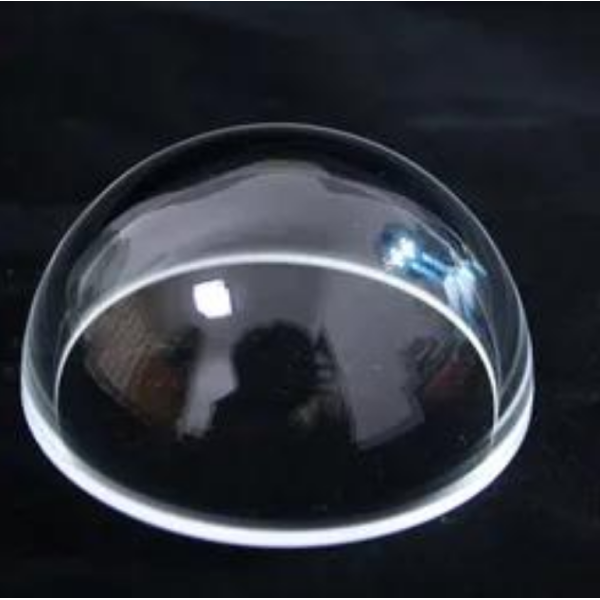
Hydrodynamic Fairing | Streamlined Underwater Optical Dome
| Share | |
|---|---|
| Categories | Underwater Optical Dome |
| Brand | FELIX GLASS optical glass Manufacturing base |
| Product Specifications | FG-Underwater Optical Dome |
| Product Name | Hydrodynamic Fairing / Streamlined Underwater Optical Dome |
| Brand | Felix Glass |
| Material Options | Sapphire, Fused Silica (JGS1), BK7 / K9 Optical Glass |
| Available Shape | Streamlined ogival, hyper-hemispherical, modified spherical cap, low-drag contour |
| Working Wavelength | Visible, UV, compatible with underwater visible imaging |
| Coating Options | AR Anti-Reflection coating, anti-fouling optional coating |
| Surface Quality | Custom per drawing (60-40 / 40-20 / 20-10) |
| Wall Thickness | Customized, pressure-rated design |
| Outer Diameter | Custom large & small diameter |
| Feature | Streamlined hydrodynamic profile, reduce drag & turbulence; high hydrostatic pressure resistance, se |
| Application | ROV, AUV, underwater photogrammetry, subsea inspection, marine scientific observation, underwater op |
| Design Note | Must co-design optics + flow simulation; refraction correction for water-air interface; pressure val |
| Inquiry Info Required | Max working depth, flow velocity, wavelength, drawing, optical specs, anti-fouling requirement, pres |
| Download |  |
Send your drawing or sample requirement for a fast quotation. MOQ, lead time and coating options are confirmed within one business day.
Underwater Optical Domes | Dome Ports for ROV & AUV Imaging
Custom sapphire, fused silica and optical glass domes for subsea cameras and optical sensors from Felix Glass.
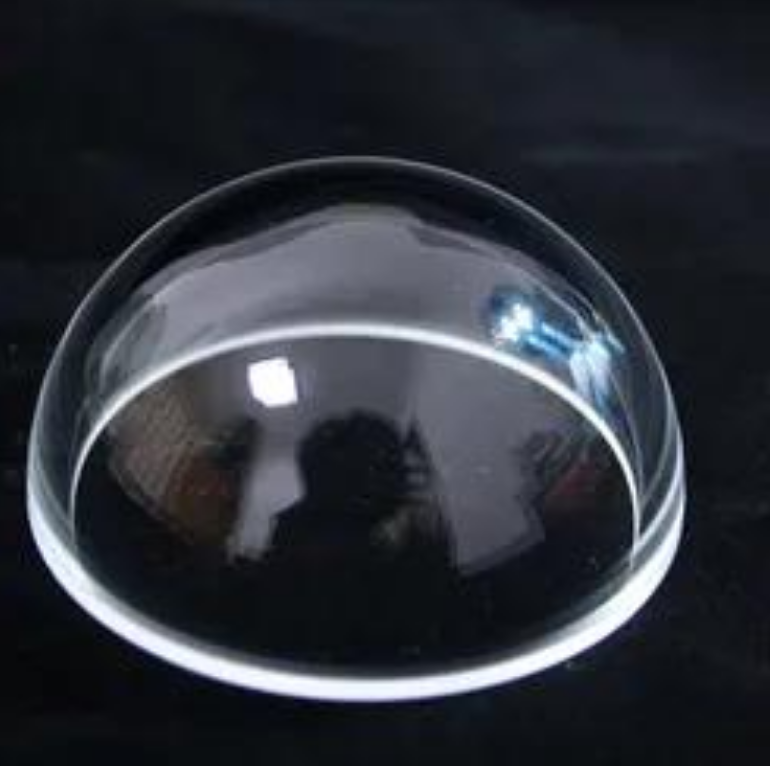
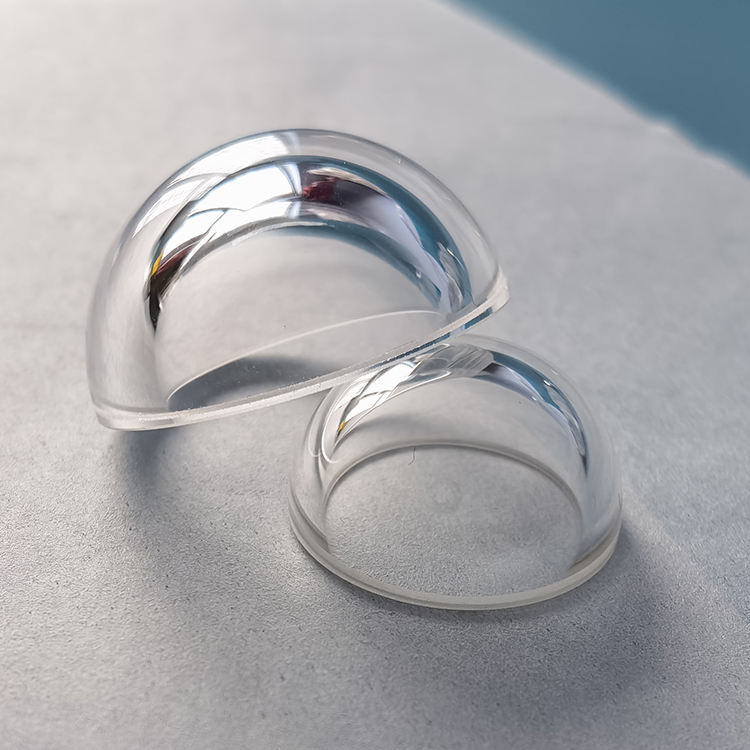
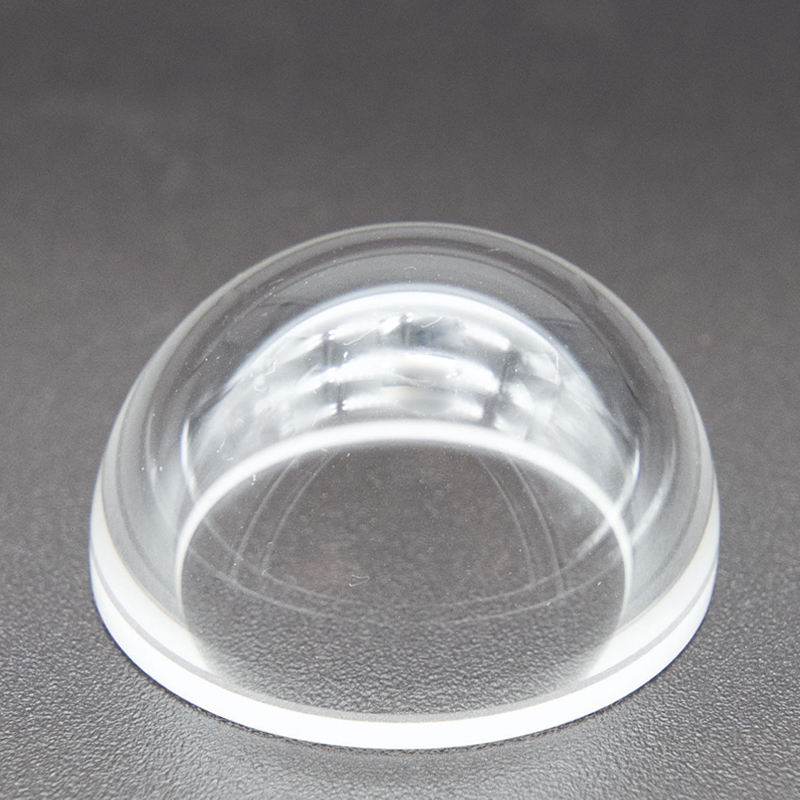
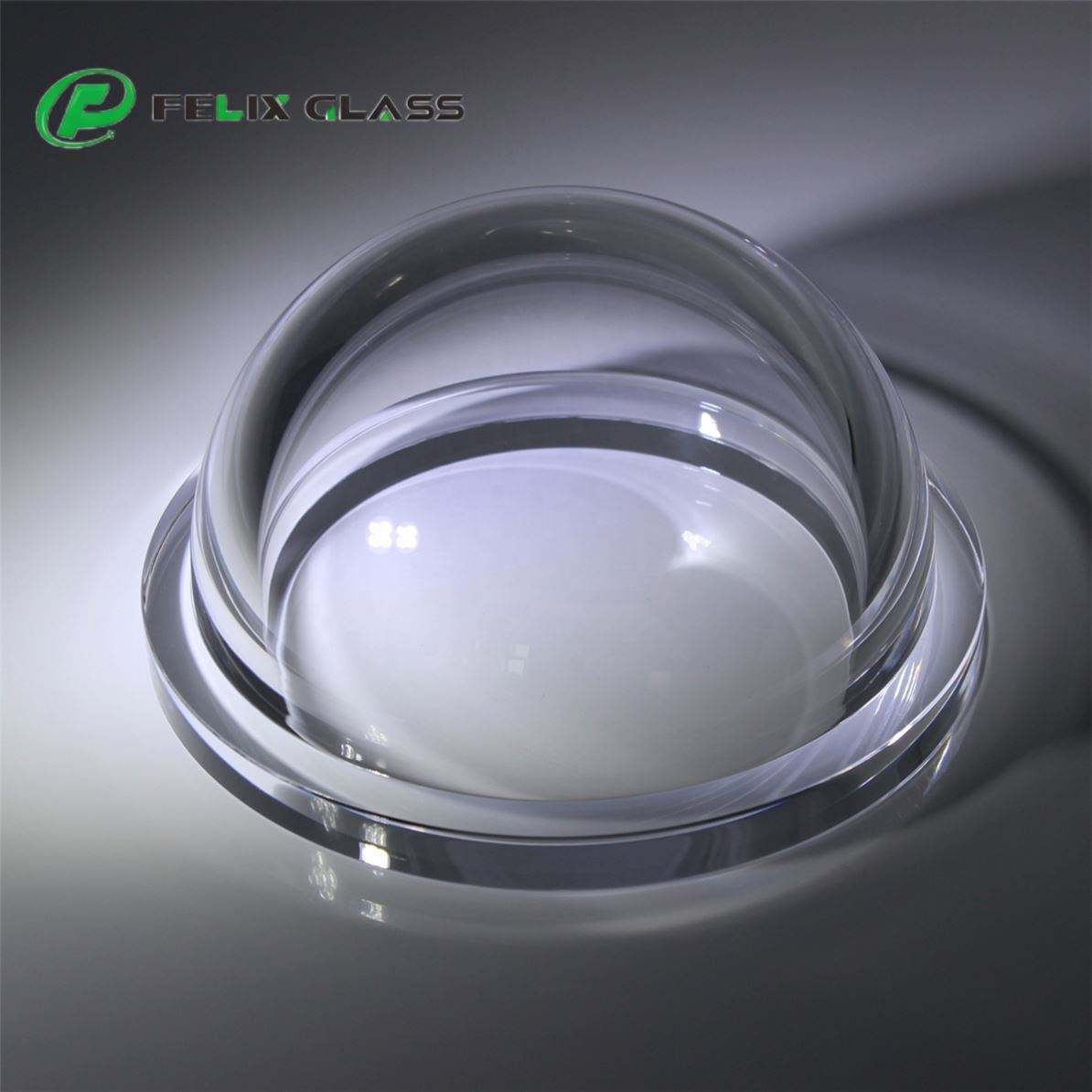
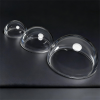
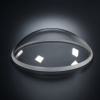
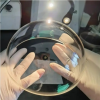
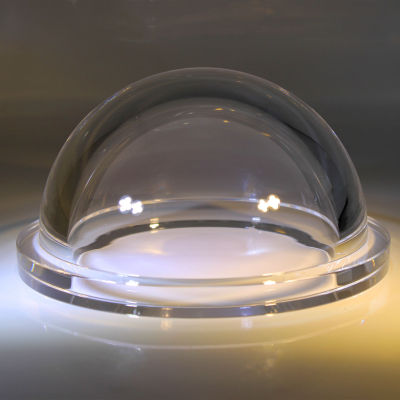
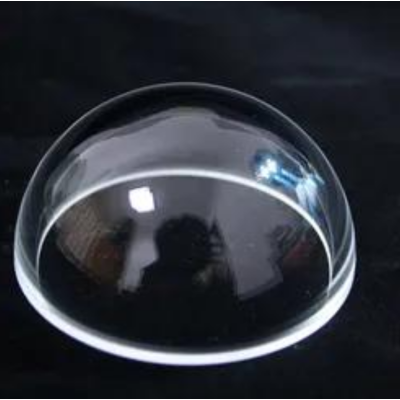
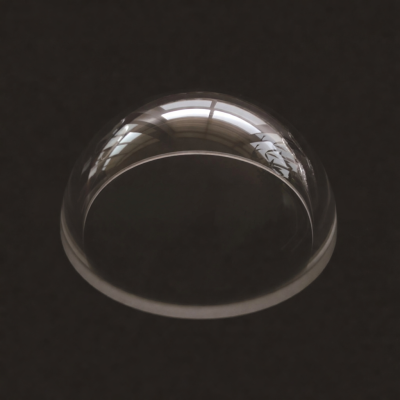
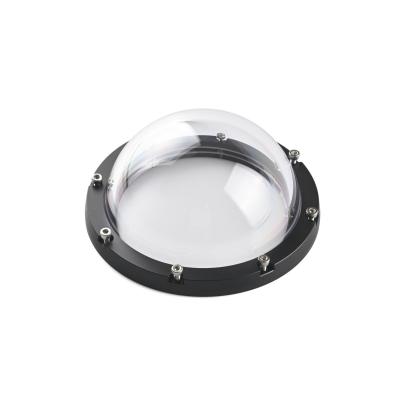
Illustrative product images. Final material grade, contour, wall thickness and coating are defined by the approved drawing. A product image does not establish a depth rating.
Optical Domes for Underwater Imaging
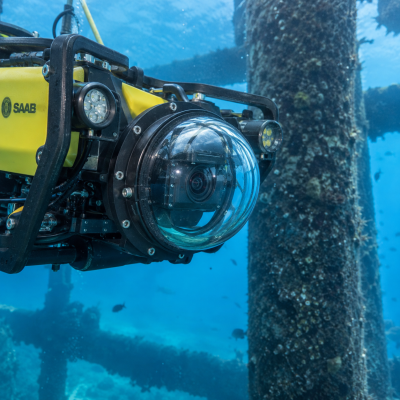
An underwater optical dome is a hollow curved window positioned in front of a camera or optical sensor. It transmits the required light while forming part of the housing's environmental boundary. Deep-sea imaging is an application of optical domes; suitability depends on the complete optical and pressure-housing design.
A hydrodynamic fairing is a broader term for an external shell shaped to manage water flow. It need not be transparent or pressure-bearing. An optical dome can form part of a fairing, but a curved optical surface alone does not guarantee reduced drag or cavitation suppression.
Felix Glass focuses on the optical dome component. Housing design, seals, structural qualification and any hydrodynamic analysis must be assigned and agreed as part of the project scope.
Three Design Priorities
Optical Performance
Match spectral transmission, clear aperture and surface quality to the camera. Review refraction, focus, field of view and calibration in the assembled system.
Pressure and Sealing
Evaluate differential pressure together with dome geometry, material condition, edge support and seals. Working-depth claims require assembly-specific validation.
Vehicle Integration
Coordinate the external contour and mounting interface with the ROV, AUV or sensor housing. Assess flow loads and drag where relevant to operating speed.
Material and Surface Options
Select the material using the required spectrum, geometry, mechanical loads, exposure conditions and budget. Material name alone does not determine the permitted operating depth.
Substrates for Evaluation
- Sapphire: A hard, scratch-resistant optical material. Review crystal orientation, optical requirements, surface condition and mounting stresses for the proposed dome.
- Fused silica: A low-thermal-expansion option for specified UV and visible transmission requirements. Confirm the grade, spectral data and structural suitability; JGS1 should be specified only when its properties meet the application.
- BK7-type / H-K9L optical glass: Options for visible-light imaging. Specify the exact manufacturer and grade rather than treating commercial designations as automatically interchangeable. Depth suitability must be assessed for the actual component and assembly.
Coatings and Maintenance
- Anti-reflection coatings: Specify wavelength and incidence-angle ranges, and identify which surface faces water and which faces air. The two interfaces may require different coating designs.
- Immersion durability: Agree adhesion, cleaning, abrasion and immersion requirements for the proposed coating. A salt-spray result alone does not establish long-term submerged performance.
- Biofouling management: Identify deployment duration and cleaning provisions. Any requested anti-fouling treatment requires separate review of availability, optical effects and compatibility; it is not a standard assumed option.
Geometry, Alignment and Image Quality
Hemispherical, spherical-cap and extended-hemisphere profiles can be considered according to the drawing. Other contours require separate optical and manufacturing review. Streamlining, wide field of view and pressure resistance are design objectives, not automatic properties of a particular shape.
Light crosses water–glass and glass–air interfaces in an air-filled camera housing. For a concentric spherical dome, positioning the lens entrance pupil near the common center of curvature can reduce chief-ray refraction and help preserve field of view. This does not eliminate all aberrations, focus effects or calibration requirements.
Review the lens, dome and housing together. Underwater ray tracing and calibration may be needed for imaging accuracy; structural analysis and pressure testing address load capacity. CFD is appropriate where flow performance is a project requirement. Analysis and test responsibilities should be agreed before manufacture.
Request a Custom Underwater Optical Dome
Send your drawing and application requirements for component feasibility and quotation. Include the following information where available:
- Pressure conditions: Working depth and differential pressure, internal housing pressure, pressure cycles, proof-test requirements and applicable acceptance criteria.
- Optical system: Working wavelengths, transmission target, clear aperture, field of view, lens entrance-pupil position, surface quality and imaging or wavefront requirements.
- Drawing: Outer diameter, height, inner and outer profiles, wall thickness and tolerances, edge finish, mounting seat and sealing interface.
- Environment: Fresh or salt water, temperature range, flow speed, deployment duration, sediment exposure and cleaning method.
- Material and coatings: Exact substrate grade if specified, water-facing and air-facing surfaces, coating bands and durability requirements.
- Delivery scope: Component only or other agreed scope, quantity, requested delivery date, inspection records and responsibility for assembly qualification.
Dongguan Felix Glass Co., Ltd.
Email: james@felixglass.com · Phone: +86-18565032888
Need Custom Optical Glass Solution?
Send us your drawing, dimension & coating requirements for fast quotation within 24 hours.
Get Free RFQ
Custom Precision Optical & Glass Components Manufacturer – Felix Glass Co., Limited.
We supply Industrial Glass, Sapphire Optics, Optical Lenses/Prisms/Filters, Infrared IR Optics, Functional & Display Glass, N-BK7/H-K9L Optical Glass, supporting OEM mass production and laboratory custom prototypes. Flexible MOQ & free sample service available. Fill in the form to download full datasheets and get factory wholesale price within 24 hours.
- Name
- *Title
- *Content

- What is the minimum order quantity for custom precision optical glass components?
Felix Glass supports paid prototypes, small trial batches and volume production. Minimum order quantities depend on the material, dimensions, tolerances and coating requirements. Send us your drawings and required quantity so we can confirm the MOQ, price and lead time.
- Can I order samples for testing before bulk production?
Yes. Felix Glass offers paid custom samples for evaluation before bulk production. Sample costs and lead times are assessed based on material, dimensions, tolerances, coating requirements and quantity. Please send us your drawings or specifications so we can provide a sample quotation and estimated production lead time.
- What is the production lead time for custom optical glass components?
A: The production cycle for standard samples is 3-10 working days, while mass production requires 15-35 working days, depending on the complexity of the product and the order quantity. We provide reliable precision optical glass components and fast delivery services for orders from industries such as defense, industrial equipment, medical devices, shipbuilding, robotics, automotive, and aerospace. Please submit your project details so we can provide you with an accurate delivery schedule.
- Are your optical glass products ISO, CE and RoHS certified?
All precision optical glass components from FELIX OPTICAL GLASS comply with ISO quality system standards as well as CE and RoHS requirements. We provide comprehensive test reports, spectral graphs, material certificates, and inspection documents for customer review. Please feel free to request complete certification details and a formal quotation at any time.
- Do you offer one-stop custom optical glass processing services?
Yes. We offer a full range of precision optical glass component processing services, including CNC machining, precision grinding, optical polishing, chemical/physical tempering, vacuum coating (AR anti-reflective coating, AF anti-fingerprint coating, AG anti-glare coating, IR infrared coating), and screen printing. From raw materials to finished products, every step is completed in our own factory. Please tell us your needs, and we will provide you with the most cost-effective solution.
- Name
- *Title
- *Content
With 19 years of experience as a precision optical glass expert, we provide comprehensive and satisfactory customized solutions.
 Felix Glass Expands IR Optics Production | Faster Lead Time for Custom ZnS, ZnSe, Sapphire & Fused Silica WindowsFelix Glass manufactures custom ZnS, ZnSe, sapphire domes & fused silica IR windows. Fast prototype and AR coating available. Get your technical quote within 24h for thermal imaging & laser systems.
 DMS Cover Glass Material Selection: Aluminosilicate vs Borosilicate Glass for In-Cabin CameraSelecting the right substrate impacts DMS camera lifespan & image quality. This guide compares aluminosilicate and borosilicate glass. Felix Glass provides both substrates with printing and coating.