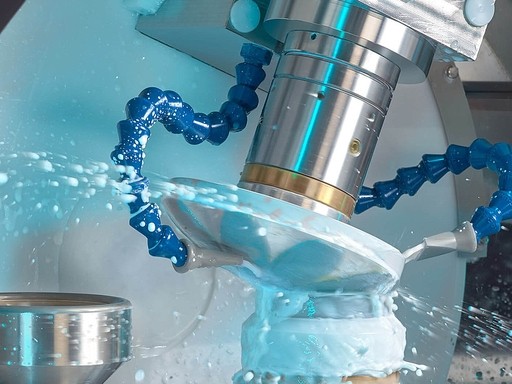
CNC Geometry Processing
5-axis CNC for custom radii, height, edge and flange features against the approved manufacturing plan.
Send your drawing, material and quantity. Our optical engineers reply within one business day with price, MOQ and lead time.
With 19+ years of optical manufacturing experience, Felix Glass supplies drawing-based sapphire domes with Mohs 9 substrate hardness and custom flange options — for underwater cameras, EO/IR systems, surveillance sensors and harsh-environment optical protection.
Dongguan Felix Glass Co., Ltd. · Send your requirements for engineering review
Send the information you have; a final drawing is helpful but not required for initial review.
Share application, wavelength, dimensions, quantity and target delivery.
Request Engineering ReviewOr email drawings to james@felixglass.com.
Published values are review references, not simultaneous guaranteed limits. Final requirements and the inspection plan must be accepted in the quotation.
| Parameter | Reference and Required Confirmation |
|---|---|
| Material | Optical-grade single-crystal sapphire (Al₂O₃). Specify crystal orientation and its reference to the dome geometry; availability and alignment tolerance confirmed during review. |
| Diameter / Wall Thickness | Reference ranges: Ø10–200 mm; wall 1.5–8.0 mm. Feasibility depends on geometry, orientation, polished area and acceptance requirements. |
| Geometry | Hemispherical, spherical segment and flanged geometry, subject to drawing review. |
| Surface Quality | Reference targets: 60-40 to 20-10 scratch-dig. Agree applicable method, inspected surfaces, zones and acceptance limits. |
| Surface Figure | Reference target: λ/2 to λ/4 at 633 nm. Confirm PV or RMS, tested surface, clear aperture, setup and achievable figure. Surface figure is not transmitted wavefront error. |
| Dimensions / Radius | Reference targets: diameter ±0.02–0.05 mm; thickness ±0.02 mm; radius ±0.1–0.5%. Confirm each feature, datum, sampling and method for the part. |
| Hardness | Mohs 9 for sapphire substrate; not a 9H pencil-hardness rating or proof of coated-surface abrasion durability. |
| Optical Transmission | Specify wavelength band, path length, orientation, incidence angle, polarization and required minimum transmission through the complete dome. A material transmission window is not a uniform performance guarantee. |
| Coating | Visible AR, NIR AR or broadband AR, evaluated against the defined band and incidence range. DLC feasibility and durability require separate confirmation. |
| Temperature / Pressure | Specify operating and storage temperatures, ramps, dwell, medium, pressure, seals and mount. Material melting point is not an assembled dome service-temperature rating. Pressure requires assembly-level validation. |
| Prototype / Production Quantity | One-piece prototype evaluation may be reviewed; production references of 10 and 100+ pieces depend on material, tooling, coating batch and quotation. |
| Lead Time | Planning references: prototype 7–15 and production 20–35 working days after specification approval, subject to stock, tooling, coating and inspection. The accepted quotation controls delivery. |
Need tighter tolerances? Send your drawing for a DFM review — we will confirm achievable tolerances and recommend cost-optimized alternatives.
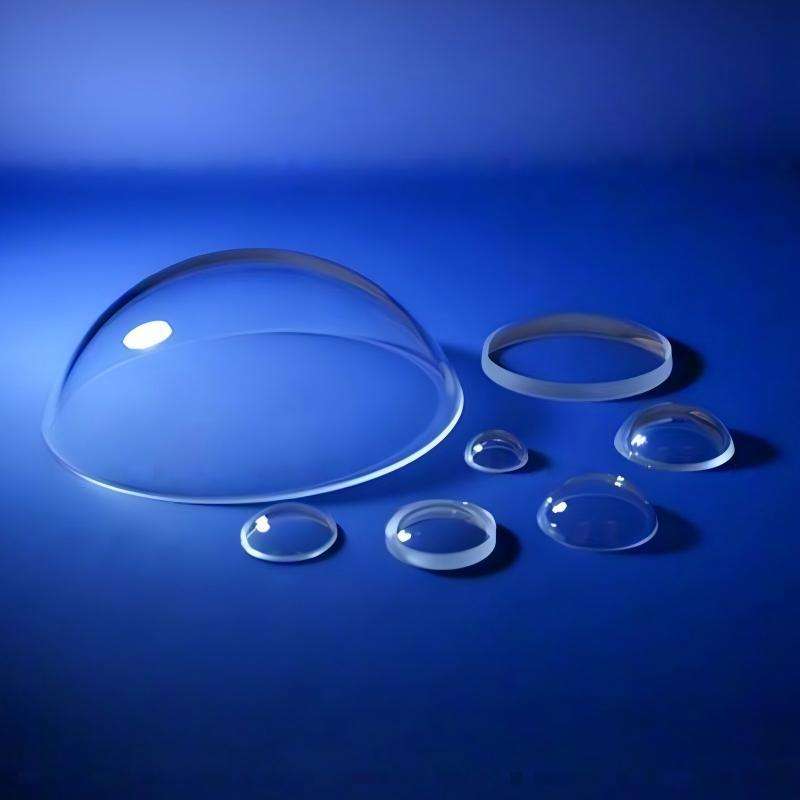
Representative dome shapes and finished-product views. Final geometry, polished area and edge or flange details follow the approved customer drawing.
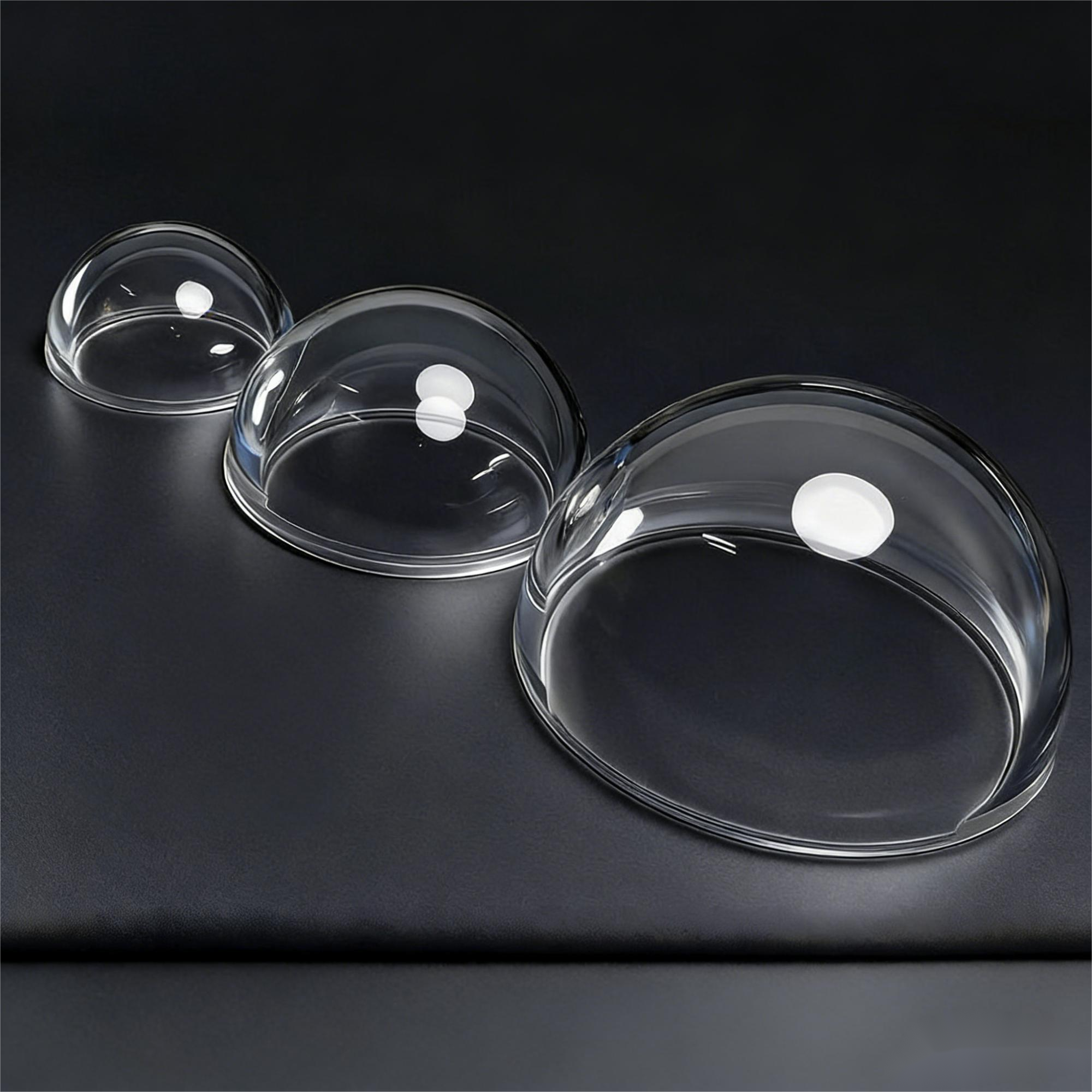
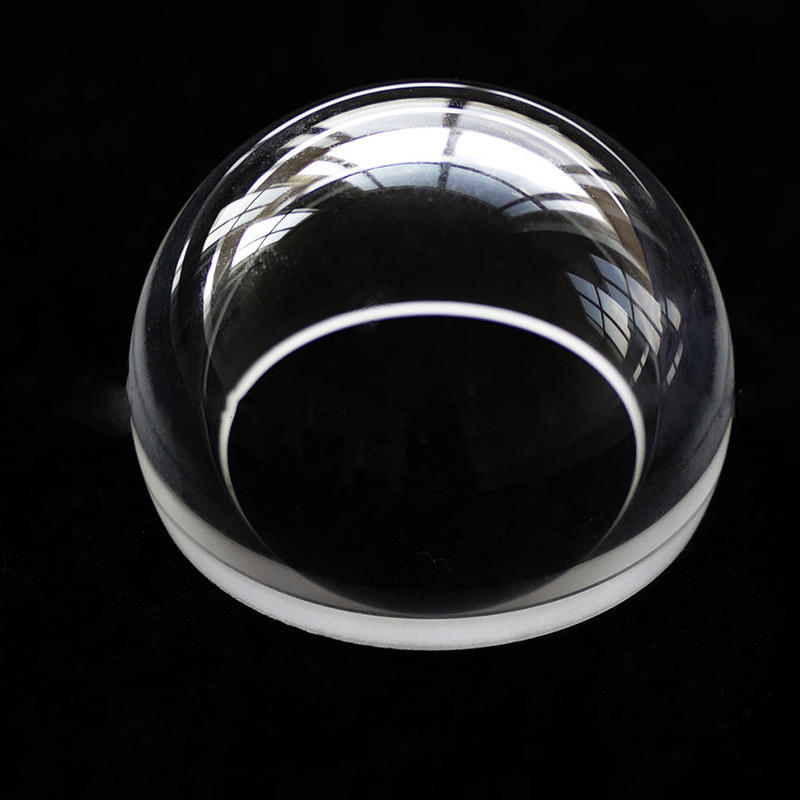

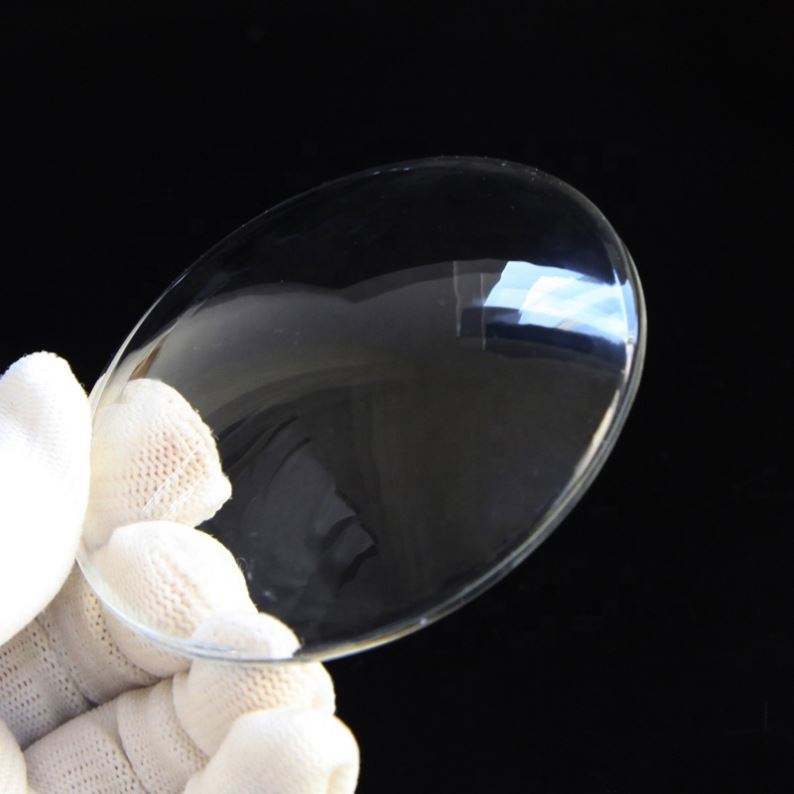
Sapphire is not always the best choice. Compare four common dome materials by hardness, transmission, durability and cost.
| Material | Selection Consideration | Confirm Before Selection |
|---|---|---|
| Sapphire | Mohs 9 substrate; candidate for abrasion-exposed optical protection. | Grade, orientation, useful spectral band, coating, mounting and environment. |
| BK7 / Fused Silica | Different optical materials with different spectral and thermal properties. | Select an exact grade; do not use one combined transmission or temperature range. |
| Acrylic | Lightweight polymer option; cleaning, scratching and creep require evaluation. | Optical quality, temperature, chemical exposure and housing design. |
| ZnS | IR material option; standard and multispectral grades differ. | Required wavelength, grade, scatter, coating and durability. |
Not sure? Send your wavelength, environment, impact conditions and budget — our engineering team can review suitable material options and the information needed for quotation.
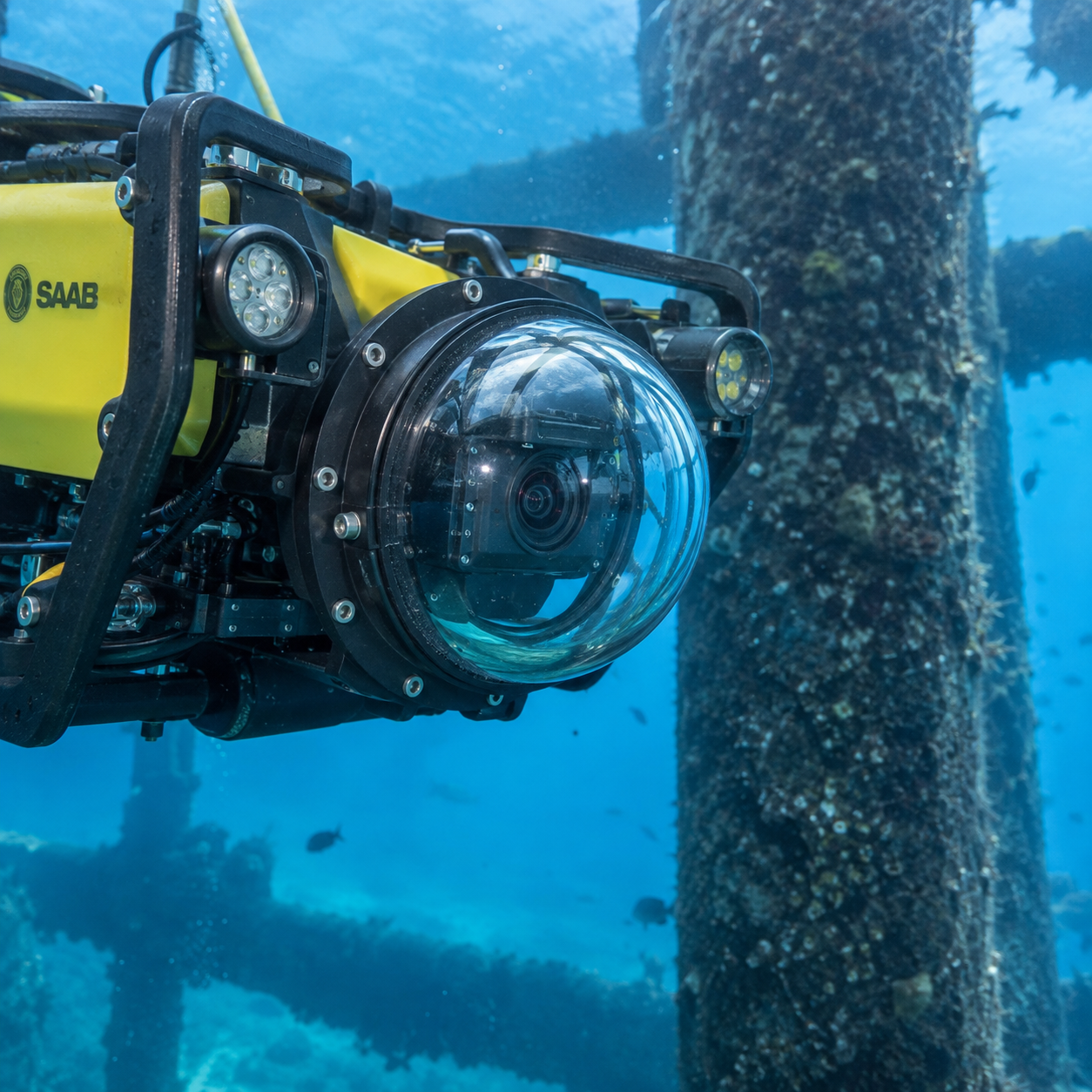
Read our ROV and AUV sapphire viewport application case for a related underwater use. It concerns a viewport; it is not proof of a pressure rating for a new dome or housing.
For your dome, provide design pressure, pressure medium, temperature, duration, cycling, mounting support, seal design and required safety factor. Agree structural review and assembly pressure testing before assigning a depth rating.
Explore the drawing-based sapphire dome product for component-specific options.
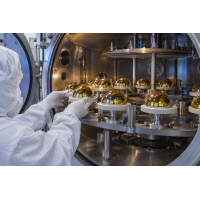
The images illustrate processing and inspection activities. Request documentation relevant to your dome and its agreed acceptance criteria.
5-axis CNC for custom radii, height, edge and flange features against the approved manufacturing plan.
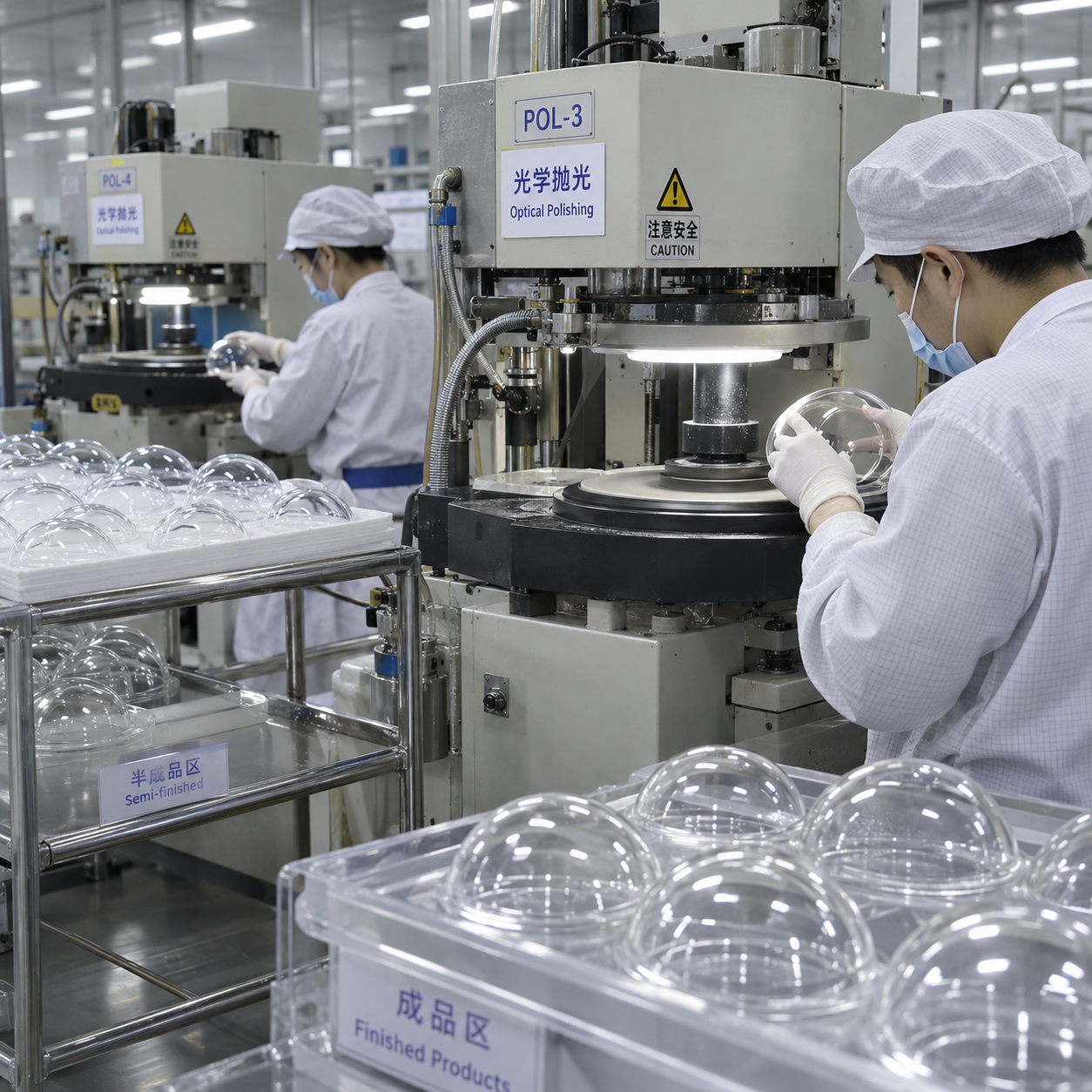
Polishing route and achievable surface figure and quality are confirmed for the drawing, aperture and agreed measurement method.
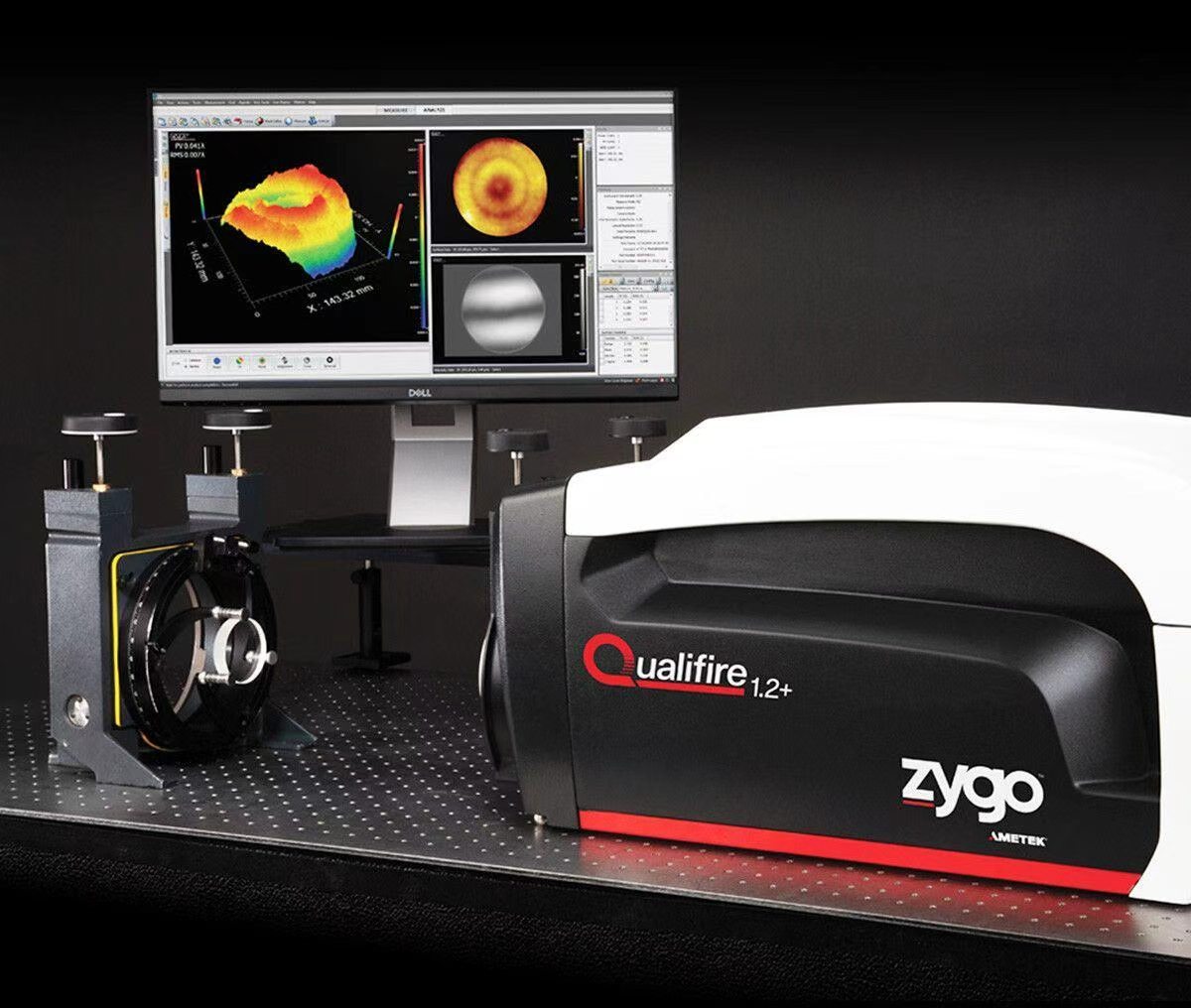
Interferometer for surface figure, microscope for scratch-dig, CMM for dimensional verification.
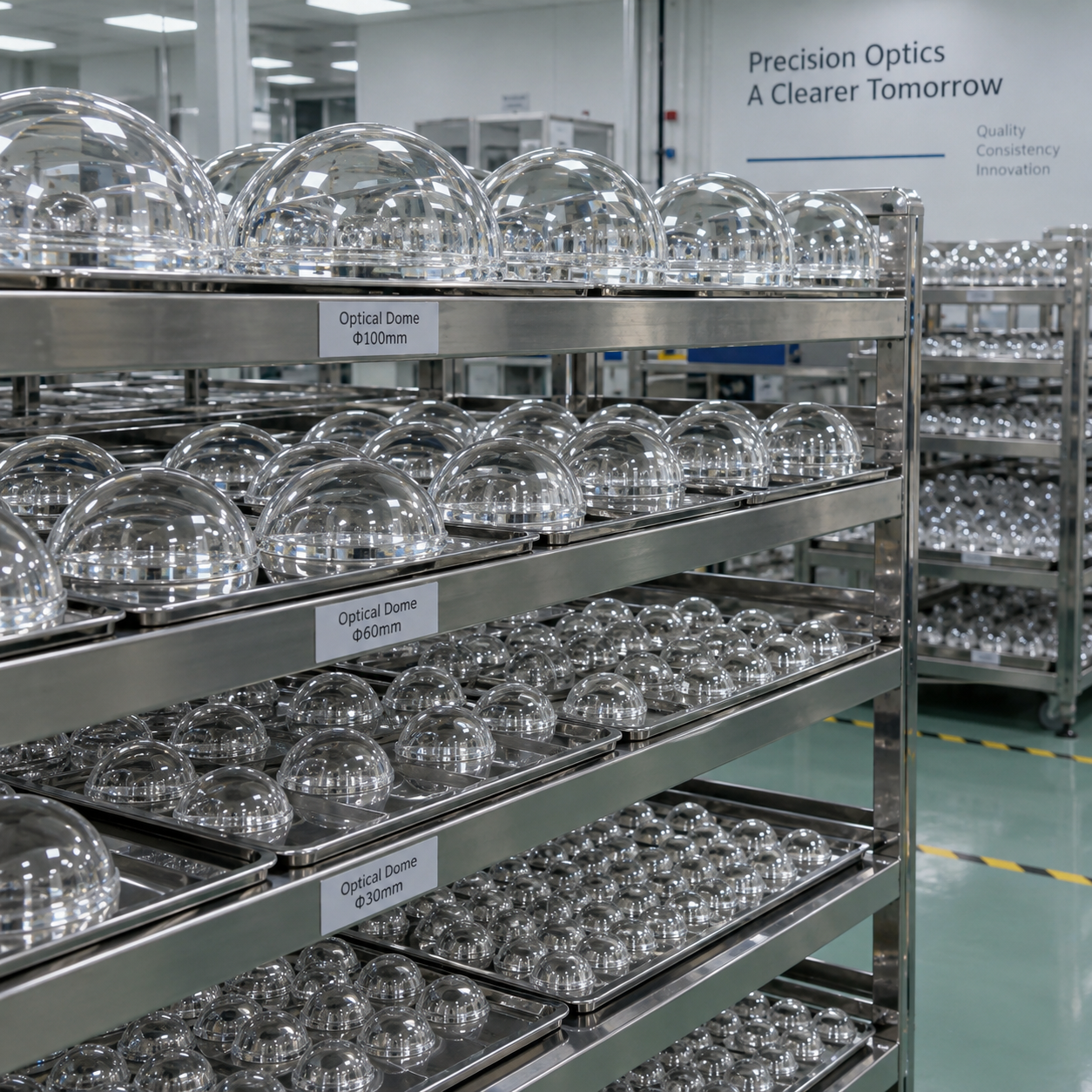
Spectrophotometer verification of AR coating transmission and reflection in the specified wavelength band.
Share CAD, drawing, application, wavelength, environment and quantity. Engineering response timing is confirmed after receipt of the available specifications.
Receive DFM questions covering material, geometry, coating, tolerances and inspection criteria.
Manufacture the first article against the agreed drawing and inspection plan; reference prototype lead time is 7–15 working days, subject to project confirmation.
Use approved drawing and criteria for pilot and mass production with lot traceability.
Review the sapphire substrate and orientation guide and the AR and BBAR coating selection guide for sapphire. Choose a useful spectral band for the actual thickness and optical path; the substrate transmission window is not a coating specification.
Use the drawing tolerances and inspection guide to define surface figure, clear aperture and acceptance methods. Compare alternative substrates in the optical materials knowledge hub.
Explore the custom sapphire dome component options and our optical manufacturing and inspection capabilities. Complete the custom optics RFQ preparation checklist before sending your drawing.
Please send available dimensions or drawings, material preference, radii, wall thickness, clear aperture, wavelength, coating, quantity, mounting interface, environment and required inspection documentation. A complete drawing is helpful but not required to start — preliminary dimensions and application details are enough for an initial review.
A one-piece paid prototype can be reviewed for engineering evaluation. Production references of 10 pieces and 100+ pieces depend on blank availability, tooling, coating batch and specification. Confirm the order quantity and price in the quotation.
Planning references are 7–15 working days for standard prototype geometry and 20–35 for production, after drawing and acceptance-plan approval. Material stock, tooling, coating, quantity and additional tests can extend these periods. The accepted quotation states the delivery date.
Yes. A reference sample can support an initial reverse-engineering review. We will measure geometry, optical parameters and create a manufacturing drawing for your approval before production. Tell us which characteristics must be exactly replicated.
Yes. Agree the prototype drawing and inspection plan first. After sample approval, confirm the production process, revisions, sampling and traceability requirements; prototype approval alone does not prove production repeatability.
Visible and NIR AR or BBAR options are reviewed for the required wavelength, incidence range and polarization. Specify coated faces, minimum transmission or maximum reflectance, durability and test method. DLC is subject to separate compatibility and spectral review.
A depth or pressure rating cannot be inferred from sapphire hardness or compressive strength. Define geometry, material orientation, support, sealing, pressure medium, temperature, dwell, cycling and safety factor. The assembled housing requires an agreed structural and pressure-validation plan.
Sapphire has Mohs 9 substrate hardness and is a candidate for abrasion-exposed optical protection. Glass and acrylic offer different optical, weight, cost and handling tradeoffs. Compare exact grades and the complete assembly; material name alone does not establish impact, pressure or service-temperature performance.
Request the report content before quotation: dimensions and datums, surface quality, surface figure or transmitted wavefront, and coating spectral performance as applicable. Confirm methods, sampling, equipment suitability and traceability. Request an available report example; its values do not qualify a new part.
Acceptance follows the approved drawing, purchase specification and agreed test methods. Send the part identification and inspection evidence so the issue can be reviewed. Corrective action, rework, replacement or other remedy follows the agreed order and warranty terms.
Sapphire can be evaluated for visible, NIR, SWIR and some mid-infrared optical channels. Useful transmission depends on grade, thickness, orientation, temperature and coating. It is not a general-purpose LWIR 8–12 μm material. An aerospace application description does not establish qualification or certification; specify the required tests and documentation.
Specify the test standard and revision, method, severity, duration, sample size and pass criteria for temperature, humidity, salt exposure, vibration or pressure. Availability, laboratory responsibility, cost and report scope must be confirmed before order acceptance.
Share the information currently available — a final drawing is helpful but preliminary dimensions and application details are welcome.
Include material grade and orientation, radii, wall thickness, clear aperture, wavelength, coating, mounting, environment and quantity.
Send Your Sapphire Dome Inquiry
Prepare your files with the custom optics RFQ preparation checklist, or email james@felixglass.com. Tel: +86 18565032888.
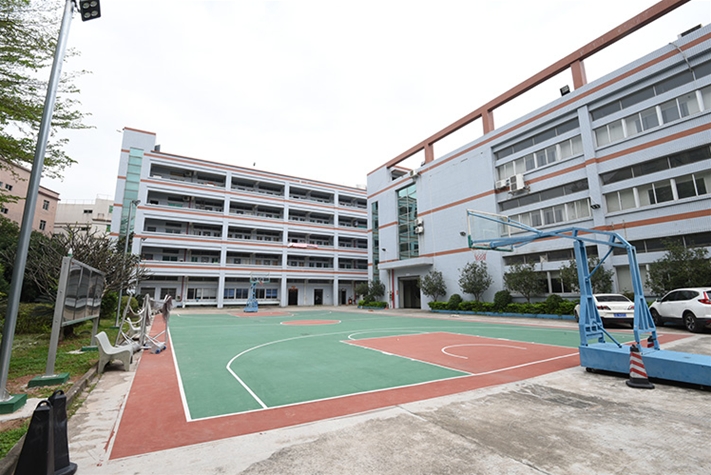

Felix Glass supports paid prototypes, small trial batches and volume production. Minimum order quantities depend on the material, dimensions, tolerances and coating requirements. Send us your drawings and required quantity so we can confirm the MOQ, price and lead time.
Yes. Felix Glass offers paid custom samples for evaluation before bulk production. Sample costs and lead times are assessed based on material, dimensions, tolerances, coating requirements and quantity. Please send us your drawings or specifications so we can provide a sample quotation and estimated production lead time.
A: The production cycle for standard samples is 3-10 working days, while mass production requires 15-35 working days, depending on the complexity of the product and the order quantity. We provide reliable precision optical glass components and fast delivery services for orders from industries such as defense, industrial equipment, medical devices, shipbuilding, robotics, automotive, and aerospace. Please submit your project details so we can provide you with an accurate delivery schedule.
All precision optical glass components from FELIX OPTICAL GLASS comply with ISO quality system standards as well as CE and RoHS requirements. We provide comprehensive test reports, spectral graphs, material certificates, and inspection documents for customer review. Please feel free to request complete certification details and a formal quotation at any time.
Yes. We offer a full range of precision optical glass component processing services, including CNC machining, precision grinding, optical polishing, chemical/physical tempering, vacuum coating (AR anti-reflective coating, AF anti-fingerprint coating, AG anti-glare coating, IR infrared coating), and screen printing. From raw materials to finished products, every step is completed in our own factory. Please tell us your needs, and we will provide you with the most cost-effective solution.