Dongguan Felix Glass Co., Ltd. E-mail: james@felixglass.com - Tel: +86 185 6503 2888
Home / All / Custom Display &Functional Glass / Display Cover Glass / AR AF AG Coated Tempered Glass | Display & Touch Panel Cover Glass Manufacturer | Felix Glass

AR AF AG Coated Tempered Glass | Display & Touch Panel Cover Glass Manufacturer | Felix Glass

AR AF AG Coated Tempered Glass | Display & Touch Panel Cover Glass Manufacturer | Felix Glass
AR AF AG Coated Tempered Glass | Display & Touch Panel Cover Glass Manufacturer | Felix GlassAR AF AG Coated Tempered Glass | Display & Touch Panel Cover Glass Manufacturer | Felix GlassAR AF AG Coated Tempered Glass | Display & Touch Panel Cover Glass Manufacturer | Felix GlassAR AF AG Coated Tempered Glass | Display & Touch Panel Cover Glass Manufacturer | Felix GlassAR AF AG Coated Tempered Glass | Display & Touch Panel Cover Glass Manufacturer | Felix GlassAR AF AG Coated Tempered Glass | Display & Touch Panel Cover Glass Manufacturer | Felix Glass
Share
CategoriesDisplay Cover Glass
BrandFELIX GLASS optical glass Manufacturing base
Product SpecificationsM5
ThicknessCustomizable
Application ScenariosSupermarket, Courtyard, Factory, School, Bedroom,
BrandFELIX GLASS
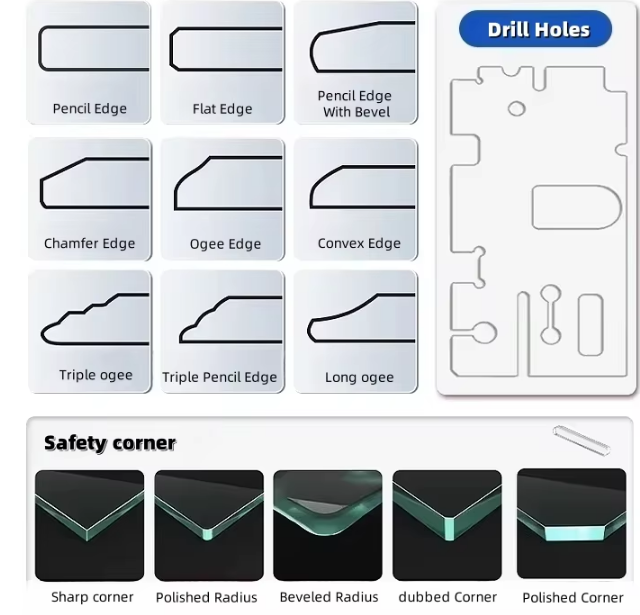
Edge Treatment2.5D Flat / Round / Beveled / 2.5D
Surface TreatmentClear / Frosted / AG / AR / AF Coating
Printing MethodScreen Printing / UV Printing
PackagingExport Carton / Pallet
ApplicationTouch Panel / Display
Terms of PaymentL/C, D/A, D/P, Western Union
DownloadDownload pdfDownload pdfDownload pdfDownload pdfDownload pdf
Detail Information
AR AF AG Coated Tempered Glass

Send your drawing or sample requirement for a fast quotation. MOQ, lead time and coating options are confirmed within one business day.

Request a Quote

AR · AF · AG Coated · Display & Touch Panel Cover Glass

AR, AF and AG Coated Tempered Glass (3A Glass) for Display and Touch Panels

Dongguan Felix Glass Co., Ltd. produces three-coating tempered cover glass — AR anti-reflective, AF anti-fingerprint and AG anti-glare on one panel — for industrial HMI, medical displays, automotive and EV screens, self-service kiosks, outdoor terminals and optical-equipment windows.

Substrate, thickness, printing, strengthening route, coating side, edge profile and printed border are all fixed against your drawing. 19+ years in optical glass, with cutting, edge grinding, tempering, printing, coating and inspection carried out in-house.

This product is listed in the Display Cover Glass category.

Figures below describe the range we routinely build. Each order is confirmed against the drawing and purchase specification, including wavelength, incidence angle, test instrument and acceptance limits.

Engineering contact: james@felixglass.com · +86-18565032888

See Our Factory Capability
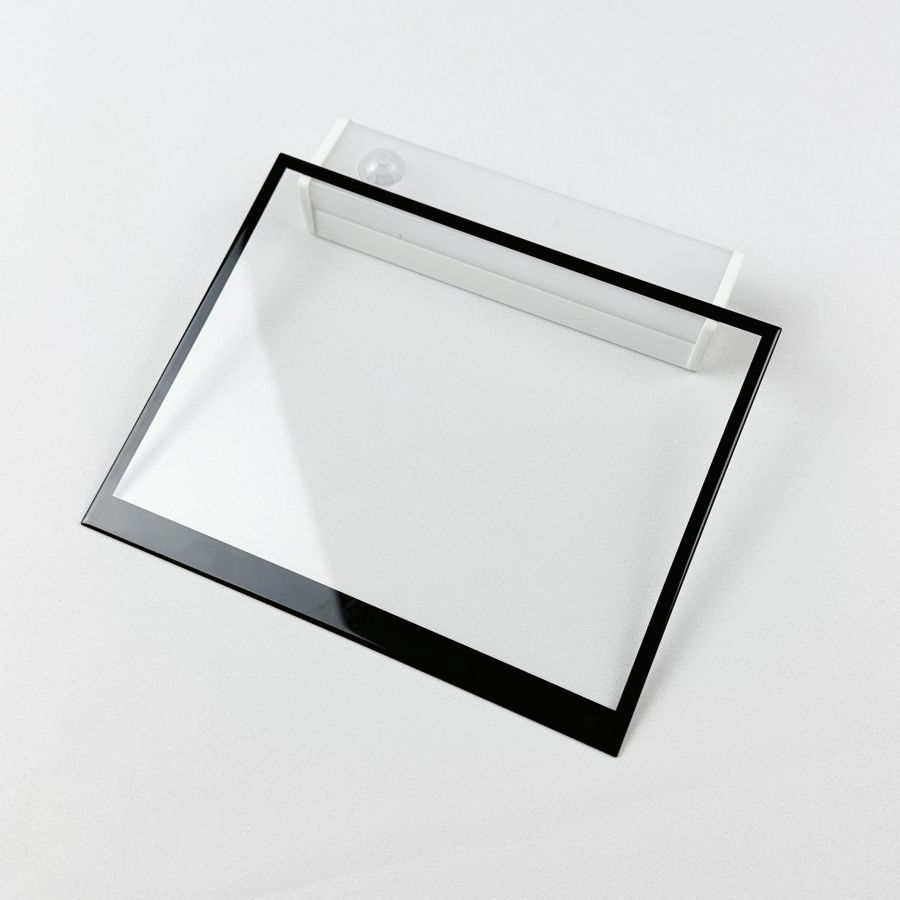
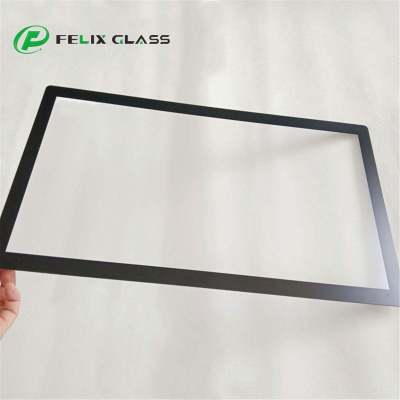
Felix Glass AR AF AG coated tempered cover glass with printed black border
Three-coating tempered cover glass with a silk-printed border, built to the customer drawing.
Surface functions

What AR, AF and AG Each Solve

The three coatings treat three separate problems. In a purchase specification each should be written as a measurable target — transmittance at a wavelength, contact angle after abrasion cycles, gloss unit range — not as a coating name.

AR anti-reflective

Multi-layer interference stack that cuts surface reflection so contrast and colour read correctly under bright ambient light. Single-side and double-side stacks are both available; the stack design point is set by wavelength. Overview in coatings and surface treatments.

AF anti-fingerprint

Hydrophobic and oleophobic top layer keeps oils, fingerprints and dust from bonding, so heavily touched screens stay clean through a service shift. Measured as water contact angle plus abrasion retention. Compared against AG in the AG vs AF reference.

AG anti-glare

Matte diffusion surface breaks up mirror-like reflections from sunlight, skylights and overhead fixtures. Set by gloss unit rather than by a vague "matte" description. Service detail in the AG coating guide.

For the full material and coating picture, see the Felix Glass technical knowledge base.

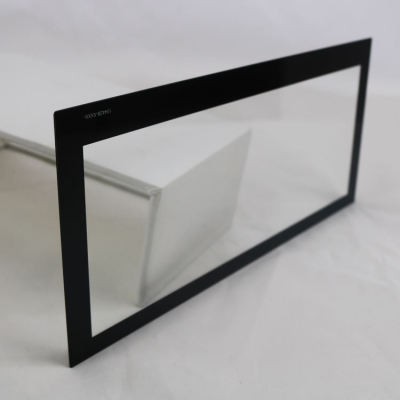
Coated tempered cover glass sample comparing AR and AF surface finishes
Coating combination follows the display stack, lighting, touch frequency and cleaning protocol.
Configuration guide

Coating Combinations We Build

AR onlyDiagnostic imaging, surgical displays, optical instruments and indoor screens where reflection control is the only requirement.
AR + AFMedical touch monitors, industrial HMI panels and POS terminals that also need repeated cleaning.
AG + AFOutdoor kiosks, EV charging stations and public self-service equipment under direct sun with high touch load.
AR + AF + AG (3A)Factory control screens, automotive centre displays and outdoor industrial terminals where reflection, glare and fingerprints occur together.

These are starting points, not prescriptions. Adding AG changes haze and sparkle, which changes perceived sharpness even when transmittance stays high — so the combination is validated on the assembled display. Trade-offs are set out in the AG / AR / AF selection guide.

Engineering baseline

Technical Specifications

Parameter Range we build
Substrate options Ultra-low-iron glass, soda-lime, alkali-aluminosilicate, borosilicate — selected against strength, colour and temperature requirement
Thickness 0.25 mm to 8.0 mm, with intermediate values reviewed per drawing
Thickness by screen size Under 7 in: 0.55–1.1 mm · 7–15 in: 1.1–2.0 mm · 15–32 in: 2.0–4.0 mm · above 32 in: 4.0–6.0 mm
Coating options AR, AF, AG, AR + AF, AG + AF, or AR + AF + AG (3A); single-side or double-side AR
Visible transmittance At least 92% uncoated base; up to 97% with double-side AR at the design wavelength
Surface reflectance Target at or below 0.5% at the design point, subject to wavelength and test method
AG gloss range Gloss above 80 for indoor clarity · 50–70 for semi-outdoor and mixed lighting · 20–30 for paper-like touch panels
AF water contact angle At least 110 degrees as supplied, measured at the agreed abrasion state
Surface hardness Tempered substrate with 9H pencil hardness available at coating level. 9H is a pencil test and Mohs is a mineral scale — the drawing should name the method, load and pass criteria. See how 9H is actually specified.
Strengthening route Chemical strengthening by ion exchange below 2.0 mm; thermal tempering above 2.0 mm
Edge profile Flat, round, beveled and 2.5D polished edges. C-edge versus J-edge comparison in the edge processing reference.
Dimensional tolerance Typically ±0.05 mm on CNC profiles; tighter values reviewed per drawing and panel size
Printing Screen printing and digital printing; Pantone, RAL or physical-sample colour matching. Ink options include high-temperature, UV-resistant and semi-transparent. See custom glass screen printing.
Compliance references ISO 9001 quality management; RoHS and REACH documentation available for the project

Two parameters decide whether a quotation is comparable: the test method behind the transmittance figure, and the abrasion state behind the contact angle. State both on the inquiry and the quotation matches the drawing instead of the datasheet.

Strength and surface

Tempering Route and Surface Behaviour

  • All machining before strengthening: drilling, countersinking, notching and edge grinding are completed before ion exchange or thermal tempering. Cutting a strengthened panel afterwards releases the stress layer and breaks the edge.
  • Chemical route below 2.0 mm: potassium nitrate bath ion exchange for thin panels and high edge-count designs. Read the strengthening and AF coating guide.
  • Thermal route above 2.0 mm: heating and rapid quench, giving the characteristic break pattern used for safety verification.
  • Low-iron substrate: reduces green tint so display colour can be judged honestly, at a small cost premium over soda-lime.
  • Coating durability: wiping, UV exposure, temperature cycling and disinfectant resistance are qualified with the actual chemical, concentration, cycle count and acceptance limit — never assumed from a coating name.
  • Printed finish: multi-pass coverage for border opacity, with registration tolerance and colour delta agreed from your artwork.

Automotive programmes add a further constraint set — see the automotive display processing guide.

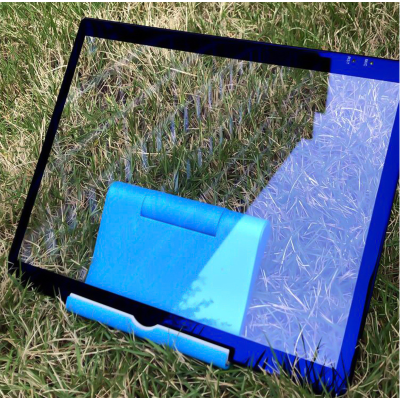
Tempered cover glass 2.5D edge and coating surface reference
Edge condition and coating adhesion are validated on the finished panel, not on a coupon.
Where it goes

Six Application Groups

Each assembly is reviewed for lighting, touch stack, bonding method, cleaning chemistry, temperature range, vibration and ingress protection. The coating decision follows from those, not from a default.

Medical displaysDiagnostic monitors, surgical touch panels, ultrasound consoles and aesthetic equipment, with alcohol-compatible AF and defined cleaning validation.
Industrial HMICNC control screens, automation panels and handheld terminals where AG keeps the screen readable under high-bay lighting.
Automotive and EVCentre control screens, instrument clusters, rear-seat displays and LiDAR windows, qualified across the cabin temperature range.
Self-service kiosksTicket machines, checkout terminals and hotel check-in units under frequent public touch and deliberate abuse.
Optical equipmentViewing windows, marine bridge panels, surveying instruments and precision housings with drawing-specific optical targets.

Two documented builds: AR/AF coated cover glass for an industrial HMI touch display, and AF coated glass for portable medical touch devices.

Felix Glass custom cover glass CNC cutting and screen printing
Machining, printing and coating run in-house, so the process route stays inside one quality system.
Drawing-based manufacturing

From Drawing to Repeatable Production

Shapes, holes, countersinks, blind holes, chamfers and 2.5D edges are produced by CNC cutting, laser cutting for fine features, or waterjet cutting for thick stress-free panels — combined when a single panel needs more than one method.

  1. 1Review drawing and application
  2. 2Select substrate and thickness
  3. 3Fix machining and edge geometry
  4. 4Machining before strengthening
  5. 5Temper, print and coat
  6. 6Inspect and release production

Accepted drawing formats include PDF, DXF, DWG, STEP and IGES, plus AI, EPS and CDR with text converted to outlines. NDA is available before drawings are shared. Supplier background sits on the Dongguan Felix Glass Co., Ltd. profile, and factory capability is summarised on our Dongguan optical glass factory capability.

Inspection and supplier review

What Gets Measured Before Shipment

In-process checks run at machining and again after coating, followed by 100% final inspection before packing. For supplier qualification we agree the sampling plan, traceability, appearance limits, optical method, hardness method, coating-abrasion test, cleaning test, packaging and delivery terms before the order is placed.

OpticalTransmittance, reflectance, haze, gloss unit, colour and uniformity.
SurfacePencil hardness, coating adhesion, abrasion cycle, contact angle and cleaning residue.
DimensionalProfile, thickness, hole position, edge quality, print registration and coating zone.
Technical FAQ

Coated Cover Glass FAQ

What is 3A glass?

3A means AR, AF and AG combined on one panel. It is the only configuration that answers reflection, glare and fingerprint contamination at the same time, and it is the usual choice for factory control screens and automotive centre displays.

Which combination suits an outdoor terminal?

AG + AF is the normal starting point — AG controls sun and sky reflection, AF keeps rain marks and fingerprints wipeable. Add AR only when the display luminance budget can absorb the extra stack and the viewing geometry demands it.

Can the coating survive daily alcohol disinfection?

It can be qualified for it, but resistance is chemistry-specific. Send the actual disinfectant, concentration, dwell time, wipe material and cycle count, and the coating is tested against that protocol rather than against a generic claim.

What hardness do you guarantee?

Tempered substrate plus 9H pencil hardness at coating level, stated with the load and pass criteria. "9H Mohs" is not a valid combined term — 9H is a pencil scale, Mohs is a mineral scale. Naming the method is what makes the number usable in an incoming inspection.

Which thickness should I choose?

Under 7 in: 0.55–1.1 mm. 7–15 in: 1.1–2.0 mm. 15–32 in: 2.0–4.0 mm. Above 32 in: 4.0–6.0 mm. Thin panels use chemical strengthening; thicker panels use thermal tempering. The final value is set by stiffness, bonding method and drop or impact requirement.

Can holes be added after strengthening?

No. All drilling, notching and edge grinding happen before ion exchange or tempering. Cutting or drilling a strengthened panel releases the compressive layer and the edge loses the strength that was paid for.

How much does AG reduce clarity?

AG trades a small amount of sharpness for much lower glare. Gloss above 80 keeps indoor clarity, 50–70 suits mixed lighting, and 20–30 gives the paper-like feel used on touch panels. Sparkle, not hazing, is the effect that usually needs a sample check.

What are the order terms?

Quotation normally returns within 2–24 hours of receiving a drawing. MOQ runs from 100 to 1,000 pcs depending on complexity and coating stack. Custom samples typically take 3–7 working days; repeat production 10–15 working days depending on process steps. Standard samples can be supplied free; custom samples are charged.

Do you sign an NDA before drawings are shared?

Yes. Drawings, sketches and physical samples are treated as confidential, and an NDA can be signed before any file is sent. Physical samples are accepted for reverse engineering, matching or replacement work.

For project-specific test data and current documentation, email james@felixglass.com or call +86-18565032888.

Cover glass inspection station checking coating and print registration
Every value in the table is translated into an agreed inspection criterion.
Related resources

Related Cover Glass Products

Compare these pages when the project needs a different coating stack, an AG-only medical finish, a single-crystal sapphire option, or an outdoor access-control lens.

Technical background sits in the Felix Glass knowledge base, and the wider range is listed in the product catalog.

RFQ input checklist

Request a 3A Coated Cover Glass Quote

Send the application, drawing, dimensions and tolerance, substrate and thickness, coating combination and side, transmittance and reflectance targets with wavelength, gloss unit, contact angle, edge profile, printed border artwork, bonding method, cleaning chemicals, temperature and impact requirement, sample quantity, annual volume and documentation needs.

Not sure what to include first? Use the custom optics RFQ complete checklist. Email: james@felixglass.com · Phone/WhatsApp: +86-18565032888

Send project requirements

Need Custom Optical Glass Solution?

Send us your drawing, dimension & coating requirements for fast quotation within 24 hours.

Get Free RFQ

Custom Precision Optical & Glass Components Manufacturer – Felix Glass Co., Limited.

We supply Industrial Glass, Sapphire Optics, Optical Lenses/Prisms/Filters, Infrared IR Optics, Functional & Display Glass, N-BK7/H-K9L Optical Glass, supporting OEM mass production and laboratory custom prototypes. Flexible MOQ & free sample service available. Fill in the form to download full datasheets and get factory wholesale price within 24 hours.

CONTACT US NOW FOR A QUOTE
We aim to respond to your inquiry within one business day. A formal quotation is typically provided within 1–2 business days after all required drawings and specifications are received. Complex designs or special material and coating requirements may require additional engineering review; we will advise you of the expected quotation timeline.
*Email
Name
*Title
*Content
Upload
  • Only supports .rar/.zip/.jpg/.png/.gif/.doc/.xls/.pdf, maximum 20MB.
Address
James Fu, Sales Director at Felix Glass, with contact information for custom optical components and precision glass manufacturing.James Fu, Sales Director at Felix Glass, with contact information for custom optical components and precision glass manufacturing.
Learn more from our FAQ
What is the minimum order quantity for custom precision optical glass components?

Felix Glass supports paid prototypes, small trial batches and volume production. Minimum order quantities depend on the material, dimensions, tolerances and coating requirements. Send us your drawings and required quantity so we can confirm the MOQ, price and lead time.

Can I order samples for testing before bulk production?

Yes. Felix Glass offers paid custom samples for evaluation before bulk production. Sample costs and lead times are assessed based on material, dimensions, tolerances, coating requirements and quantity. Please send us your drawings or specifications so we can provide a sample quotation and estimated production lead time.

What is the production lead time for custom optical glass components?

A: The production cycle for standard samples is 3-10 working days, while mass production requires 15-35 working days, depending on the complexity of the product and the order quantity. We provide reliable precision optical glass components and fast delivery services for orders from industries such as defense, industrial equipment, medical devices, shipbuilding, robotics, automotive, and aerospace. Please submit your project details so we can provide you with an accurate delivery schedule.

Are your optical glass products ISO, CE and RoHS certified?

All precision optical glass components from FELIX OPTICAL GLASS comply with ISO quality system standards as well as CE and RoHS requirements. We provide comprehensive test reports, spectral graphs, material certificates, and inspection documents for customer review. Please feel free to request complete certification details and a formal quotation at any time.

Do you offer one-stop custom optical glass processing services?

Yes. We offer a full range of precision optical glass component processing services, including CNC machining, precision grinding, optical polishing, chemical/physical tempering, vacuum coating (AR anti-reflective coating, AF anti-fingerprint coating, AG anti-glare coating, IR infrared coating), and screen printing. From raw materials to finished products, every step is completed in our own factory. Please tell us your needs, and we will provide you with the most cost-effective solution.

CONTACT US NOW FOR A QUOTE
We aim to respond to your inquiry within one business day. A formal quotation is typically provided within 1–2 business days after all required drawings and specifications are received. Complex designs or special material and coating requirements may require additional engineering review; we will advise you of the expected quotation timeline.
*Email
Name
*Title
*Content
Upload
  • Only supports .rar/.zip/.jpg/.png/.gif/.doc/.xls/.pdf, maximum 20MB.
Address

With 19 years of experience as a precision optical glass expert, we provide comprehensive and satisfactory customized solutions.

Navigation
News