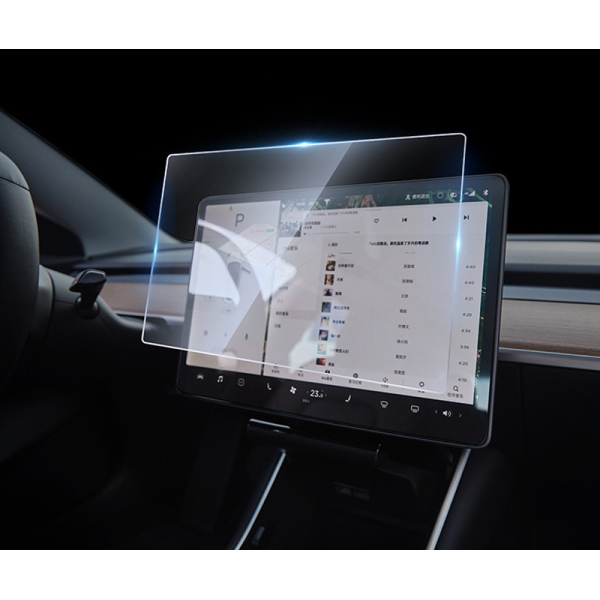
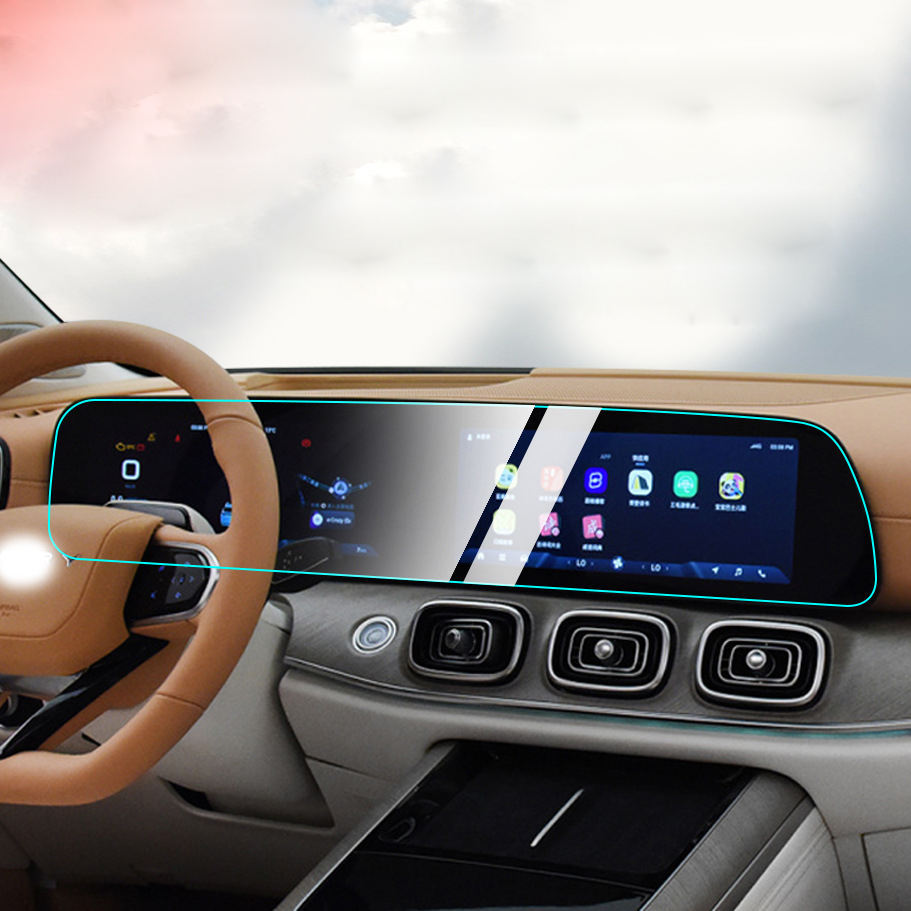
Tempered or chemically strengthened cover glass picks up permanent scratches from rings, keys and dust grit during daily vehicle use
Home / All / Custom Display &Functional Glass / Automotive Dashboard Display Glass / Automotive Sapphire Touch Cover | AR+AF Sapphire Glass For Car Central Control Screen
Automotive Sapphire Touch Cover | AR+AF Sapphire Glass For Car Central Control Screen
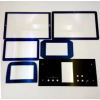
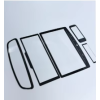

| Share | |
|---|---|
| Categories | Automotive Dashboard Display Glass |
| Brand | FELIX GLASS optical glass Manufacturing base |
| Product Specifications | FG-ADS-23 |
| Material | Single Crystal Sapphire (Al₂O₃) |
| Crystal Orientation | R-plane / C-plane Customizable |
| Hardness | Mohs 9 |
| Thickness Tolerance | ±0.02mm |
| Surface Quality | Grade 00 / 000 Optical Polish |
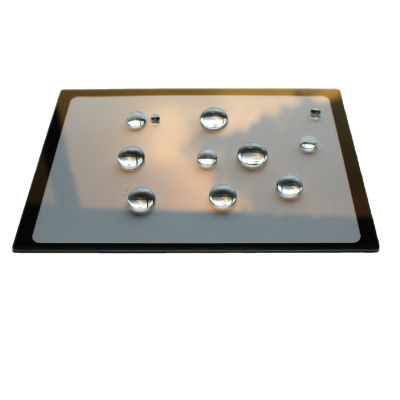
| Available Coatings | AR, AF, AG, Anti-Scratch Coating |
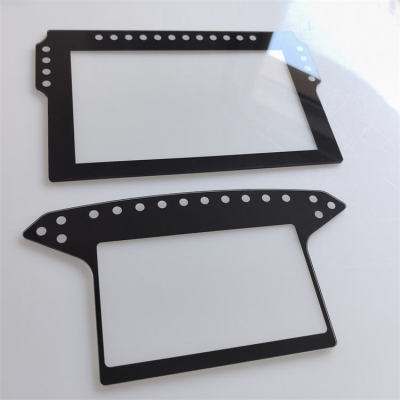
| Machining | CNC Contour, Hole Drilling, Edge Chamfering |
| Shape | Rectangular, Irregular Custom Profiles |
| Operating Temperature | -40℃ ~ +125℃ |
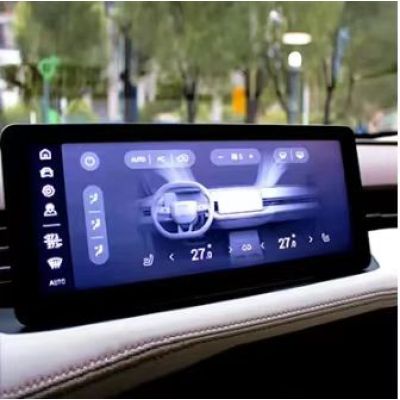
| Application | Automotive Cockpit HMI, Central Control Display |
| Supply Mode | Prototype Samples & Volume OEM Manufacturing |
| Brand | Felix Glass |
| FOB port | SHENGZHEN SHANGHAI GUANGZHOU |
| Terms of Payment | L/C, D/A, D/P, Western Union, T/T |
| Download |   |
Detail Information
AR+AF Coated Single Crystal Sapphire Panel — Mohs 9 Surface, 2D / 2.5D CNC Shaping, Black Light-Shielding Printing for Cockpit HMI, Infotainment and Instrument Cluster Displays Dongguan Felix Glass Co., Ltd. supplies custom ultra-thin single crystal sapphire touch cover glass for premium automotive cockpit interfaces. A sapphire cover keeps its surface where a tempered or chemically strengthened glass gradually picks up permanent scratches from keys, rings, cleaning cloths and dust in daily vehicle use. Outlines, curved edges, black borders and coating stacks are produced from your DXF drawing, with prototype panels for new-vehicle programme validation before volume production. 19+ years in optical and display glass, all processing in-house. Engineering contact: james@felixglass.com · +86-18565032888 A cockpit display cover is exposed to conditions a phone cover never sees: dust and grit, keys and rings, cleaning chemicals, sun load behind glass, and thermal cycling between a parked car and an air-conditioned cabin. These are the failure modes that drive substrate selection. Sun load through the windscreen produces strong reflection and fingerprint smears that reduce legibility while driving Curved and irregular cockpit outlines need forming and edge capability that many cover glass suppliers cannot hold consistently Very few suppliers can stabilise repeat production of ultra-thin sapphire parts at automotive quality and documentation levels Single crystal sapphire reaches Mohs 9 as a bulk material property, not as a surface coating that can be consumed by cleaning cycles. That is the difference that matters over a vehicle service life: the scratch resistance does not degrade with every wipe. Combined AR and oleophobic AF coating controls reflection under sun load and reduces fingerprint visibility, while maintaining optical stability across the cockpit temperature range. Where the programme does not justify sapphire, we will say so and quote a strengthened glass route instead. Bulk hardness rather than a coating. Read the sapphire performance guide. Anti-reflection, anti-fingerprint and anti-glare stacks, single or combined. Compare in the coating technology comparison. Curved outlines, chamfered edges and black light-shielding borders. See automotive glass processing. Values describe our capability range. Final acceptance criteria are fixed against the approved drawing and purchase specification, because coating design and inspection method change the number that is actually guaranteed. Sapphire is the right answer when the cover must hold its surface for the life of the vehicle or sit in an optical path. It is not automatically the right answer when the dominant risk is impact on a large thin panel. Guidance on the glass route is in the chemical strengthening guide and the coated glass selection guide. We manufacture strictly to the customer DXF: irregular CNC contour cutting, precision edge chamfering, black light-shielding silk-screen printing and vacuum optical coating. Each part passes dimensional, appearance and optical inspection before packing. Small-batch prototype sampling supports new-vehicle programme validation, and the same process is carried into repeat OEM production so the qualified part does not change between sample and series. Edge and forming guidance: edge processing reference. Coating choice for reflection versus glare: AG vs AF comparison. Cut flat or curved sapphire panel to the engineering drawing, including outline, holes and notches. Optical polishing to the agreed flatness and roughness target, with edge chamfer treatment. Silk-screen light-shielding border to eliminate stray light and define the active aperture. AR, AF or AG deposition in a controlled clean environment, with coating appearance checked in-process. Dimensional, surface and optical inspection, then protective packing for a brittle single-crystal part. Cockpit central control displays, instrument clusters and console interfaces where surface wear over service life is a visible quality issue. Touch module and display assembly makers developing high-end infotainment and HMI stacks that need a qualified optical cover. Engineers needing prototype panels for interior display validation, optical bonding trials and reliability testing. Focused on automotive-grade precision sapphire and optical glass custom processing. Cutting, polishing, printing, coating and inspection completed internally, with lead time under our own control. Fast sample support for pre-programme validation before tooling and volume commitment. Dimensional, surface quality and optical performance checked against the agreed plan and reported per lot. Working experience with global automotive interior and display component customers. Yes. Outline, curved edge, holes, black light-shielding border and coating are all produced from your engineering files. Send the DXF plus thickness, coating target and expected volume for review. No, and the two scales are not comparable. "9H" comes from the pencil hardness test used for coatings on glass. Sapphire is rated on the mineral Mohs scale, where 9 is corundum. We state Mohs 9 and tie acceptance to a named test procedure. See 9H specification explained. Typically 10–14 working days after drawing confirmation, depending on curvature, polish grade and coating design. Timing is confirmed in the quotation rather than assumed. BBAR and hard AR for reflection control, oleophobic AF for fingerprint and cleaning, and AG treatment where glare diffusion is required. Stacks can be combined, but coating durability is always qualified against the cleaning agents the programme actually uses. Sapphire itself is stable across the cockpit range, from -40 °C to +85 °C, and its CTE is approximately 5.3 × 10⁻⁶/K. Real risk sits in the bonding layer and the coating, so the assembly stack is qualified rather than the substrate alone. Neither. It is a single crystal, so there is no ion-exchange strengthening or tempering step. Its behaviour comes from the crystal, which also makes it hard and brittle — edge quality and mounting design matter more than they would for glass. If the cover is wiped heavily for years, sits in an optical path, or defines perceived interior quality, sapphire is justified. If impact on a large thin panel is the dominant risk, chemically strengthened glass can be the better engineering choice. We review both against your requirements rather than quoting the more expensive option by default. Share your DXF drawing, thickness, coating requirement and expected volume. Our automotive optical engineering team will review manufacturability and return a specification-based quotation for your cockpit HMI project. Not sure what to put in the first message? Use the custom optics RFQ checklist. Email: james@felixglass.com · Phone/WhatsApp: +86-18565032888
Automotive HMI Optical Components
Ultra-Thin Sapphire Touch Cover for Automotive Central Control Screen
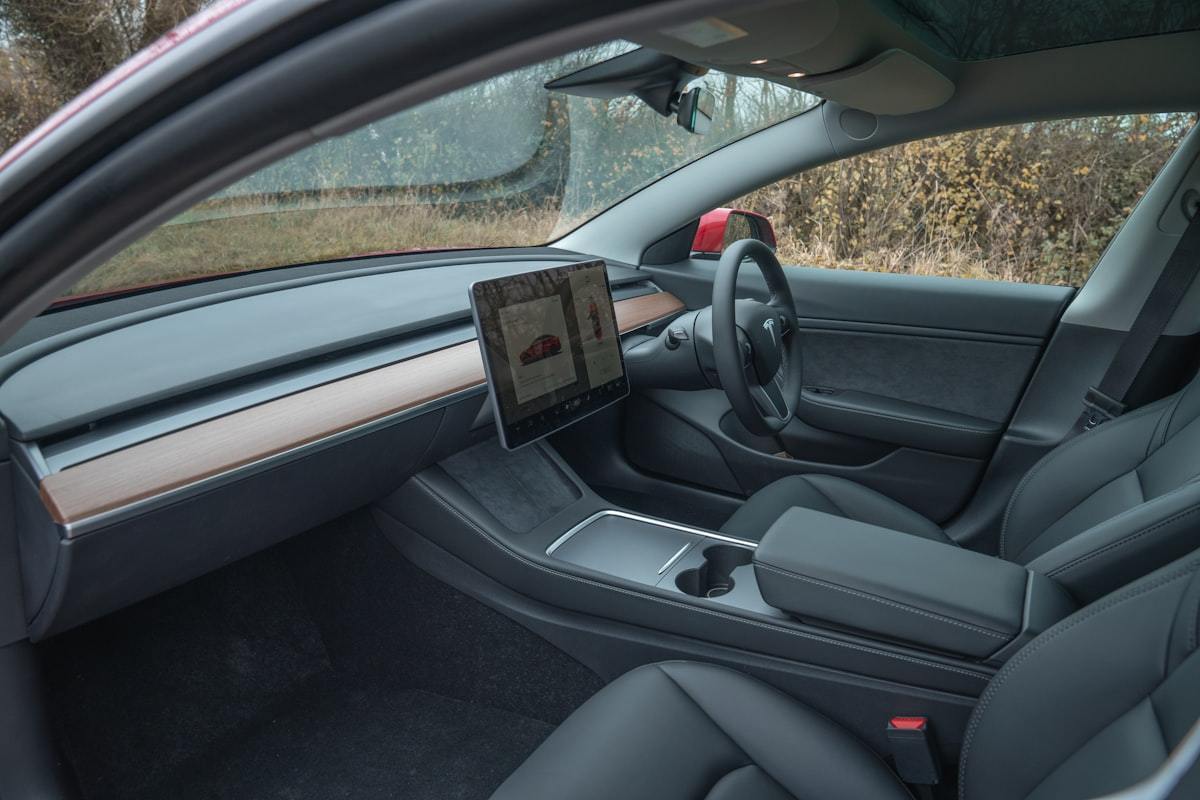 Engineering pain points we resolve
Key Challenges Facing Automotive Cockpit Optical Engineers
Direct engineering overview
Advantages of Felix Glass Automotive Sapphire Touch Cover
Mohs 9 Single Crystal Sapphire
AR + AF + AG Coating Options
2D / 2.5D CNC Custom Machining
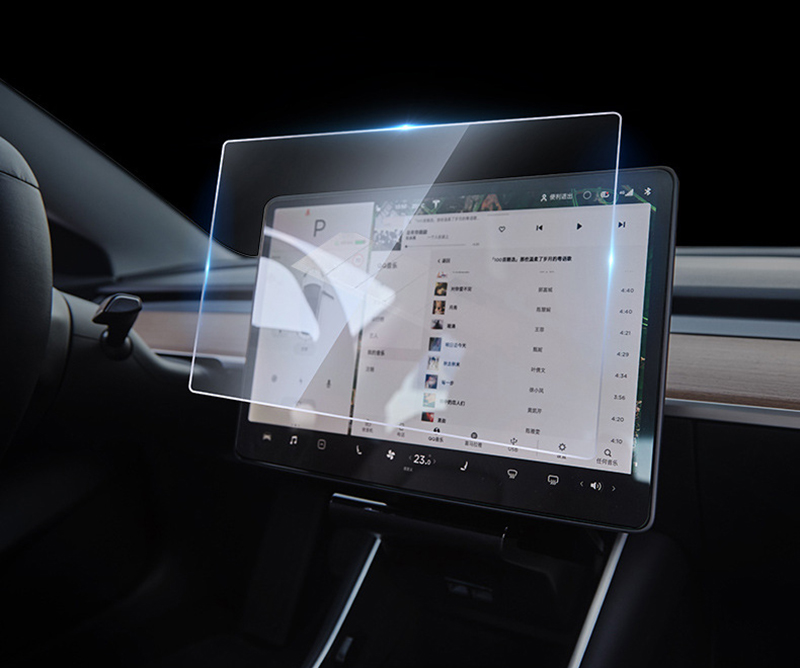 Technical specification table
Engineering Specifications
Item
Parameter
Base material
Single crystal sapphire (Al2O3), C-axis or A-axis orientation per drawing
Surface hardness
Mohs 9 as a bulk material property. Sapphire is not rated on the pencil 9H scale and is not tempered or chemically strengthened
Thickness
0.4–1.0 mm typical for cockpit cover panels; other gauges reviewed against flatness, size and impact requirement
Dimensional tolerance
Down to ±0.02 mm on precision configurations; ±0.05 mm for standard production, fixed per drawing
Transmission
Approximately 85–86% visible, uncoated. With AR design, in-band transmission rises above 92% typical; the guaranteed value is fixed at the design wavelength
Reflectance (AR coated)
Target at or below 0.5% at the design wavelength, single side, subject to the agreed test method
Refractive index
Approximately 1.77 in the visible range; coating designs are computed for sapphire rather than for glass
Coating options
BBAR, hard AR, oleophobic AF, AG treatment; single layer or combined stacks
Processing type
Flat, 2D and 2.5D curved shaping; CNC contouring, drilling, notching, chamfer and rounding
Printing
Black light-shielding border, aperture masking, logos and alignment marks by ceramic or screen printing. See screen printing services.
Surface finish
Single-side or double-side polished; flatness and roughness targets agreed against the optical function
Thermal behaviour
CTE approximately 5.3 × 10⁻⁶/K, thermal conductivity approximately 23 W/(m·K). Cockpit cycling from -40 °C to +85 °C is supported at substrate level; bonding and coating are qualified per assembly
Impact behaviour
Hard and brittle by nature. Edge quality, mounting design and any air-bonded or optically bonded stack determine impact performance — this is reviewed with the drawing, not assumed
Referenced systems
ISO 9001 quality management; RoHS and REACH documentation available
Substrate selection
Sapphire or Strengthened Glass for a Cockpit HMI?
Substrate
Scratch behaviour over service life
Best fit in a cockpit
Sapphire (single crystal)
Mohs 9 bulk property; does not wear away with wiping
Premium central control and instrument cluster covers, sensor and camera windows, sealed high-end interiors
Alkali-aluminosilicate, chemically strengthened
Surface compressive layer plus coating; better than ordinary glass but still a glass surface
Volume programmes where impact and cost dominate over long-term surface wear
Low-iron ultra-clear glass, tempered
Moderate; hazing can appear under heavy wiping over years
Large-format and rear-seat displays where transmission and cost matter most
 Custom processing support
One-Stop Customization Service
In-house manufacturing workflow
Complete Production Process In-House
CNC Precision Shaping
Double-Sided Polishing
Black Shield Printing
Vacuum Functional Coating
Optical Inspection & Packing
Target customers & application scenarios
Where This Cover Is Specified
Premium and NEV Vehicle OEMs
Automotive HMI Tier 1 Suppliers
Automotive Optical R&D Teams
Why choose Felix Glass
Core Advantages
19+ Years Optical Glass Experience
Fully In-House Production
Small Batch Prototype Sampling
Full Pre-Shipment Inspection
Overseas Automotive Project Experience
Related automotive optical components
Automotive Display & Optical Cluster
Buyer FAQ
Frequently Asked Questions
Can you produce the sapphire touch cover to our DXF drawing?
Is sapphire actually a "9H" material?
What lead time applies to prototype samples?
Which coatings can be applied to sapphire panels?
Will the cover survive long-term cockpit temperature cycling?
Is sapphire tempered or chemically strengthened?
Do we need sapphire, or would strengthened glass work?
Action stage
Send Your Drawing For a Technical Quotation
Need Custom Optical Glass Solution?
Send us your drawing, dimension & coating requirements for fast quotation within 24 hours.
Get Free RFQRelated Products
Custom Precision Optical & Glass Components Manufacturer – Felix Glass Co., Limited.
We supply Industrial Glass, Sapphire Optics, Optical Lenses/Prisms/Filters, Infrared IR Optics, Functional & Display Glass, N-BK7/H-K9L Optical Glass, supporting OEM mass production and laboratory custom prototypes. Flexible MOQ & free sample service available. Fill in the form to download full datasheets and get factory wholesale price within 24 hours.
CONTACT US NOW FOR A QUOTE
We aim to respond to your inquiry within one business day. A formal quotation is typically provided within 1–2 business days after all required drawings and specifications are received. Complex designs or special material and coating requirements may require additional engineering review; we will advise you of the expected quotation timeline.
- Name
- *Title
- *Content

Learn more from our FAQ
- What is the minimum order quantity for custom precision optical glass components?
Felix Glass supports paid prototypes, small trial batches and volume production. Minimum order quantities depend on the material, dimensions, tolerances and coating requirements. Send us your drawings and required quantity so we can confirm the MOQ, price and lead time.
- Can I order samples for testing before bulk production?
Yes. Felix Glass offers paid custom samples for evaluation before bulk production. Sample costs and lead times are assessed based on material, dimensions, tolerances, coating requirements and quantity. Please send us your drawings or specifications so we can provide a sample quotation and estimated production lead time.
- What is the production lead time for custom optical glass components?
A: The production cycle for standard samples is 3-10 working days, while mass production requires 15-35 working days, depending on the complexity of the product and the order quantity. We provide reliable precision optical glass components and fast delivery services for orders from industries such as defense, industrial equipment, medical devices, shipbuilding, robotics, automotive, and aerospace. Please submit your project details so we can provide you with an accurate delivery schedule.
- Are your optical glass products ISO, CE and RoHS certified?
All precision optical glass components from FELIX OPTICAL GLASS comply with ISO quality system standards as well as CE and RoHS requirements. We provide comprehensive test reports, spectral graphs, material certificates, and inspection documents for customer review. Please feel free to request complete certification details and a formal quotation at any time.
- Do you offer one-stop custom optical glass processing services?
Yes. We offer a full range of precision optical glass component processing services, including CNC machining, precision grinding, optical polishing, chemical/physical tempering, vacuum coating (AR anti-reflective coating, AF anti-fingerprint coating, AG anti-glare coating, IR infrared coating), and screen printing. From raw materials to finished products, every step is completed in our own factory. Please tell us your needs, and we will provide you with the most cost-effective solution.
CONTACT US NOW FOR A QUOTE
We aim to respond to your inquiry within one business day. A formal quotation is typically provided within 1–2 business days after all required drawings and specifications are received. Complex designs or special material and coating requirements may require additional engineering review; we will advise you of the expected quotation timeline.
- Name
- *Title
- *Content
With 19 years of experience as a precision optical glass expert, we provide comprehensive and satisfactory customized solutions.
Navigation
News
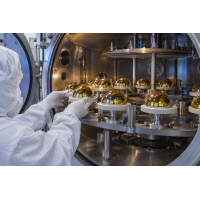 Felix Glass Expands IR Optics Production | Faster Lead Time for Custom ZnS, ZnSe, Sapphire & Fused Silica WindowsFelix Glass manufactures custom ZnS, ZnSe, sapphire domes & fused silica IR windows. Fast prototype and AR coating available. Get your technical quote within 24h for thermal imaging & laser systems.
 DMS Cover Glass Material Selection: Aluminosilicate vs Borosilicate Glass for In-Cabin CameraSelecting the right substrate impacts DMS camera lifespan & image quality. This guide compares aluminosilicate and borosilicate glass. Felix Glass provides both substrates with printing and coating.