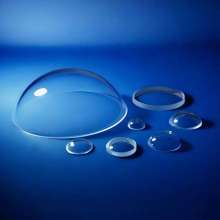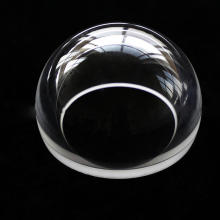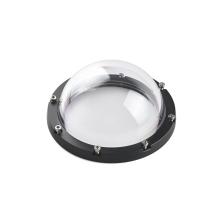
Optical Glass
Premium Optical Glass for Precision Applications
Felix Glass delivers high-performance optical glass including N-BK7 and H-K9L materials, manufactured to exacting industry standards for scientific, industrial, and imaging applications worldwide.
What Is Optical Glass?
Understanding the foundation of precision optics
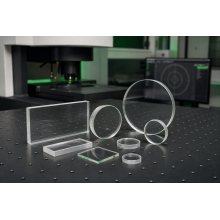
Optical glass is a specialized category of glass engineered to possess precise refractive indices, exceptional light transmission, and controlled dispersion characteristics. Unlike ordinary soda-lime glass, optical glass is formulated with ultra-high-purity raw materials and manufactured under tightly controlled thermal conditions to minimize internal defects, bubbles, and inclusions that could compromise optical performance.
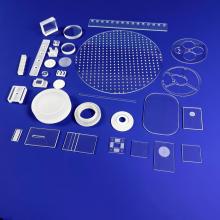
At Felix Glass, our optical glass portfolio encompasses both N-BK7 and H-K9L grades, each formulated to deliver consistent optical properties batch after batch. These materials form the backbone of lenses, prisms, windows, and optical assemblies used across industries ranging from defense and aerospace to medical imaging and laser systems.
The defining characteristic of optical glass is its homogeneity — the uniformity of its refractive index throughout the material. This property is what enables engineers to design optical systems with predictable performance, making optical glass an irreplaceable material in modern photonics.
Types of Optical Glass We Manufacture
Two premium grades to match your exact specifications
N-BK7 Optical Glass
N-BK7 is the industry-standard borosilicate crown glass, prized for its excellent optical homogeneity and high transmission across the visible spectrum. With a refractive index of 1.5168 at 587.6 nm and an Abbe number of 64.17, N-BK7 optical glass provides an ideal balance of optical clarity, chemical durability, and thermal stability. It is widely used in laser optics, precision lenses, beam splitters, and optical windows where consistent performance is essential.
- Refractive Index (nd): 1.51680
- Abbe Number: 64.17
- Transmission Range: 350 nm – 2.0 µm
- Density: 2.51 g/cm³
H-K9L Optical Glass
H-K9L is the Chinese standard equivalent of BK7, offering nearly identical optical performance with excellent cost efficiency for high-volume manufacturing. This optical glass grade delivers the same refractive index and Abbe number as N-BK7 while maintaining superior transmittance in the visible and near-infrared ranges. H-K9L is the material of choice for camera lenses, telescope optics, optical prisms, and industrial imaging systems.
- Refractive Index (nd): 1.51680
- Abbe Number: 64.07
- Transmission Range: 350 nm – 2.2 µm
- Density: 2.52 g/cm³
Key Properties of High-Quality Optical Glass
The technical characteristics that define premium optical glass performance
High Transmittance
Our optical glass achieves greater than 92% internal transmittance across the visible spectrum at 10 mm thickness, resulting from ultra-pure raw materials and continuous melt processes that minimize iron and other absorbing impurities.
Optical Homogeneity
Every batch of optical glass is tested for refractive index variation, achieving ±1×10⁻⁶ for premium grades. This uniformity is critical for high-resolution imaging, interferometry, and laser applications.
Thermal Stability
With a coefficient of thermal expansion of approximately 7.1×10⁻⁶/K, our borosilicate crown optical glass maintains dimensional and optical stability across a wide temperature range, suitable for outdoor and industrial environments.
Chemical Durability
Our optical glass is formulated for excellent resistance to staining, weathering, and chemical attack. Rated as Class 1 for stain resistance according to ISO 8424, it maintains optical surface quality even in demanding operational conditions.
Low Bubble and Inclusion
Manufactured to stringent inclusion specifications, our optical glass meets bubble class 0-1 standards, ensuring minimal scattering centers — indispensable for laser optics and high-power applications.
CNC Machinability
Both N-BK7 and H-K9L optical glass are formulated for excellent grindability and polishability. They can be precision-machined to surface flatness of λ/10 and surface quality of 20-10 scratch-dig.
Applications of Optical Glass Across Industries
Where precision optical glass makes the critical difference
Laser and Photonics
High-power laser systems rely on optical glass for beam expanders, focusing optics, and protective windows. N-BK7 is the preferred material for its low absorption at common laser wavelengths including 1064 nm Nd:YAG and 532 nm frequency-doubled systems.
Industrial Imaging
Machine vision and automated inspection systems depend on optical glass lenses and windows for precise, repeatable measurements. H-K9L offers the cost-performance balance needed for high-volume industrial camera deployments.
Medical and Life Sciences
Diagnostic imaging equipment, endoscopes, and laboratory instruments use optical glass for critical light-path components. Biocompatibility and consistent transmission make it essential for reliable medical device performance.
Aerospace and Defense
Targeting systems, thermal imaging modules, and heads-up displays in aerospace applications require optical glass that meets rigorous military specifications for durability, thermal shock resistance, and consistent optical performance.
Our Optical Glass Manufacturing Process
From raw material to finished precision component
Raw Material Selection
We source only high-purity silica, boron oxide, and alkali oxides from certified suppliers. Each raw material batch is chemically analyzed before entering production to ensure our optical glass meets the specified refractive index tolerance.
Precision Melting
Continuous tank melting or platinum-lined pot melting processes produce homogeneous optical glass melts. Precision temperature control within ±2°C eliminates striae and ensures uniform refractive index distribution.
Fine Annealing
Every optical glass blank undergoes controlled annealing at transition temperature to relieve internal stress. Our multi-zone annealing furnaces achieve stress birefringence below 2 nm/cm for premium-grade material.
Inspection and Sorting
Automated interferometric scanning inspects each optical glass blank for refractive index, striae, and inclusion class. Only material passing all quality gates is released for CNC machining and final component fabrication.
Ready to Specify Your Optical Glass?
Tell us your requirements and our engineering team will recommend the optimal optical glass grade for your application.
Send Optical Glass Inquiry NowWhy Choose Our Optical Glass?
What sets Felix Glass optical glass apart from standard suppliers
Batch-to-Batch Consistency
Our optical glass manufacturing employs statistical process control to maintain refractive index tolerance within ±0.0003 across production lots. Every melt is certified with its own interferometric test data.
Global Supply Chain
With a fully integrated supply chain and strategic raw material partnerships, we deliver optical glass blanks and finished components to over 50 countries with consistent lead times and competitive pricing.
Custom Specifications
Need modified dispersion or extended IR transmission? Our optical glass engineering team can adjust formulations to meet your exact optical design requirements, including custom melt sizes and blank dimensions.
Full Certification
Each shipment of optical glass includes a comprehensive certificate of conformance with measured refractive index, Abbe number, transmittance curve, striae grade, and inclusion class data.
Frequently Asked Questions About Optical Glass
Expert answers to common technical inquiries
What is the difference between N-BK7 and H-K9L optical glass?
Both N-BK7 and H-K9L share identical refractive index (nd = 1.51680) and nearly identical optical properties. N-BK7 is manufactured to Schott specifications and is the global industry standard for borosilicate crown optical glass. H-K9L is the Chinese national standard equivalent, offering essentially the same optical performance at a more competitive price point. The primary difference lies in trace element tolerances — N-BK7 has tighter control on iron content, resulting in marginally better transmission below 380 nm.
What surface quality can be achieved with optical glass?
Our optical glass components can be fabricated to surface flatness of λ/10 at 632.8 nm and surface quality of 20-10 scratch-dig per MIL-PRF-13830B. For demanding applications such as laser cavities and interferometer reference flats, we offer λ/20 surface flatness with 10-5 scratch-dig upon request. All finished surfaces are inspected using Zygo interferometers and certified before shipment.
Can optical glass be AR coated?
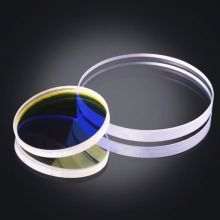
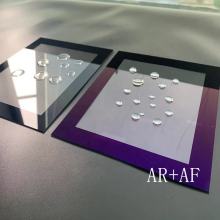
Yes, our optical glass substrates are fully compatible with thin-film anti-reflection coatings, including broadband AR coatings (400–700 nm, R < 0.5%), dual-band AR coatings (532 nm + 1064 nm), and single-wavelength V-coatings. We offer both electron-beam evaporation and ion-assisted deposition (IAD) coating processes depending on your environmental durability requirements.
What is the typical lead time for custom optical glass orders?
Standard optical glass blanks in N-BK7 and H-K9L are typically available from stock with 3–5 business day dispatch. Custom-cut blanks requiring specific dimensions ship within 7–10 business days. Finished components with polishing and coating generally ship within 2–4 weeks depending on complexity, with express options available for urgent projects.
Do you provide optical glass samples for testing?
We offer complimentary optical glass sample kits containing 25 mm diameter × 5 mm thick polished witness samples of N-BK7 and H-K9L, complete with interferometric measurement data. This allows your engineering team to verify optical properties in your own metrology setup before committing to a production order. Contact us to request your evaluation kit.
Need Expert Guidance on Optical Glass Selection?
Our optical engineers are available to discuss your specific optical glass requirements — whether you need standard N-BK7 blanks, H-K9L custom components, or help selecting the right material for your application.

- What is your MOQ for custom optical glass and display glass parts?
Felix Glass offers highly flexible MOQ to support client projects, including prototype testing, small batch trial orders and large-volume mass production. All products can be fully customized according to your drawings, tolerances and application standards. Send us your specs to get an accurate price quote within 24 hours.
- Can I get free glass samples for testing before bulk order?
Yes, our FELIX GLASS factory supports sample testing for a wide range of precision optical glass components and assemblies. The lead time for sample production is 3 to 7 working days. Please contact us today to arrange samples and obtain a customized solution that meets your needs.
- What is the production lead time for custom optical glass components?
What is the production lead time for custom optical glass components?
Answer: The lead time for standard samples is 3–7 business days, while mass production takes 15–25 business days, depending on product complexity and order volume. We provide reliable, rapid delivery for orders serving the industrial, medical, automotive, and aerospace sectors. Please submit your project details to receive an accurate delivery schedule.
- Are your optical glass products ISO, CE and RoHS certified?
All FELIX GLASS precision optical glass components comply with ISO quality system standards, as well as CE and RoHS requirements. We provide comprehensive test reports, material certificates, and inspection documentation for customer review. Please feel free to request full certification details and a formal quotation today.
- Do you offer one-stop custom optical glass processing services?
Yes. We provide a full range of in-house processing services, including CNC machining, precision grinding, optical polishing, vacuum coating (AR, AF, AG, IR), tempering, and screen printing. Every step—from raw material to finished product—is carried out within our own facility. Please let us know your requirements, and we will provide you with the most cost-effective solution.
- Name
- *Title
- *Content